Stories
Haunted St. Augustine Walking Tour
Walking tour · Saint Augustine

Haunted St. Augustine Walking Tour

Ghostly settings and the history beneath them

1 h 3 min8 stops1.6 mi

Start the walk

Stop 1 is free, no sign-up. All 8 for $4.99, refunded within 7 days if it isn't for you.

See the 8 stops

The 8 stops

  1. 1Start hereFree

    Castillo de San Marcos

    The Fort Nobody Could Break Into

    Free sample · 2:45
    0:002:45

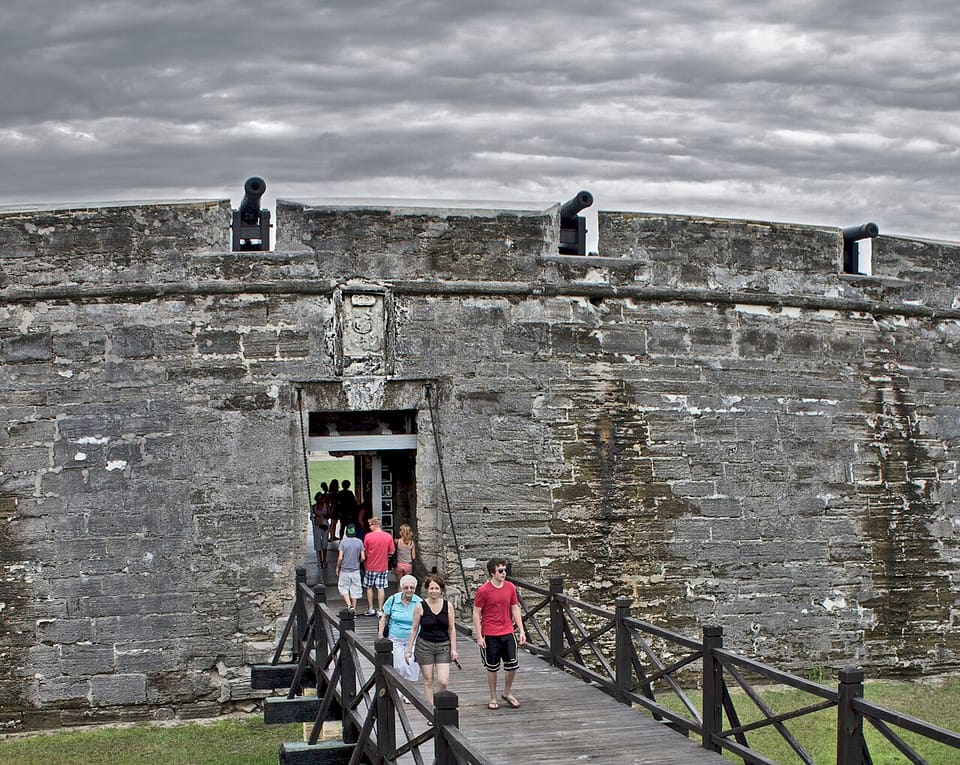
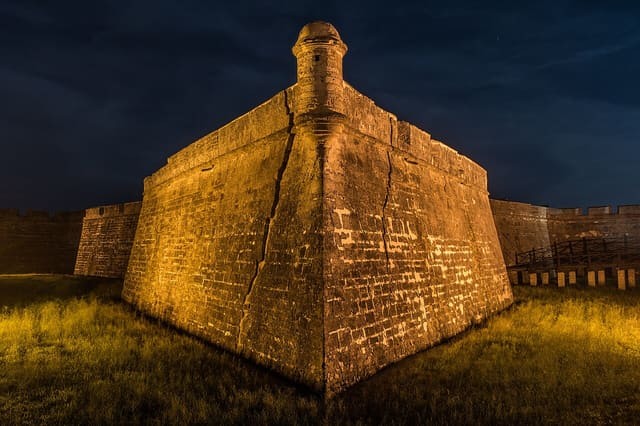
    You're standing at the drawbridge of the Castillo de San Marcos, the old Spanish fort on the edge of Matanzas Bay. Look at the walls in front of you. That gray, rough stone isn't ordinary rock. Get close and you'll see it's made of ancient shells that have bonded together into rock. The Spanish called it coquina, which means "small shells." Hold on to that, because those shells are why this fort is still standing.

    In 1668 an English privateer named Robert Searles raided St. Augustine, and the town was burned. The Spanish had already built nine wooden forts here, one after another, and wood had proved inadequate. The answer was masonry. A Spanish engineer named Ignacio Daza designed this star-shaped fort, and the first coquina blocks were laid in 1672. The stone was cut across the bay on Anastasia Island and ferried over. Most of the labor came from Native people from Spain's nearby missions, along with enslaved Africans and skilled workers brought from Havana. It took 23 years.

    The test came in 1702. Carolina's governor, James Moore, marched south and laid siege to the town. About 1,500 residents and soldiers crowded inside these walls for two months. The English cannons fired, and something strange happened. The cannonballs didn't shatter the walls. They sank into the coquina instead.

    The Castillo was attacked again in 1740, and it changed hands between four governments over the years. But it was never taken by force. Not once.

    Which makes its most famous escape a story about getting out. After Florida became American in 1821, the Army renamed this place Fort Marion and used it as a prison for Native Americans, beginning with the Seminole people. Osceola, the famous Seminole war chief, was held here. In 1837, twenty Seminole prisoners slipped out through one of the narrow musket openings in the wall. A fortress built to keep armies out couldn't keep twenty determined people in.

    And the ghosts? Ghost tour guides talk about the phantom watchmen, shadowy figures said to patrol the grounds. Others tell of two lovers, Dolores Martí, the young wife of a Spanish colonel, and Captain Manuel Abela of the garrison. Those are stories told by tour companies, not documented history. What is documented is stranger in its own way: 251 years of continuous military possession, until the fort was deactivated in 1933. If anything is still keeping watch up there, it's had a lot of practice.

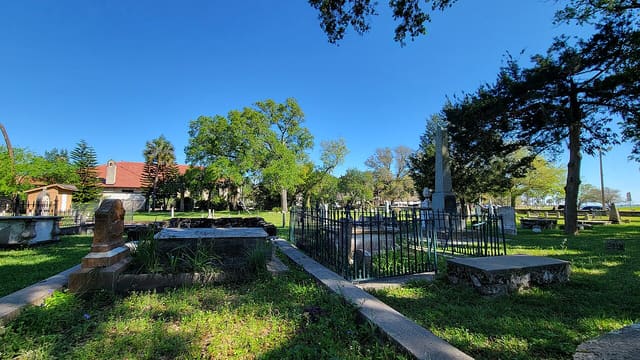
    When you're ready, walk south, then turn left onto Drawbridge, about 450 meters and seven minutes, to the Huguenot Cemetery, where St. Augustine buried those who didn't fit in the Catholic graveyards.
The whole walk

8 stories across Saint Augustine

1 h 3 min · 8 stops · 1.6 mi

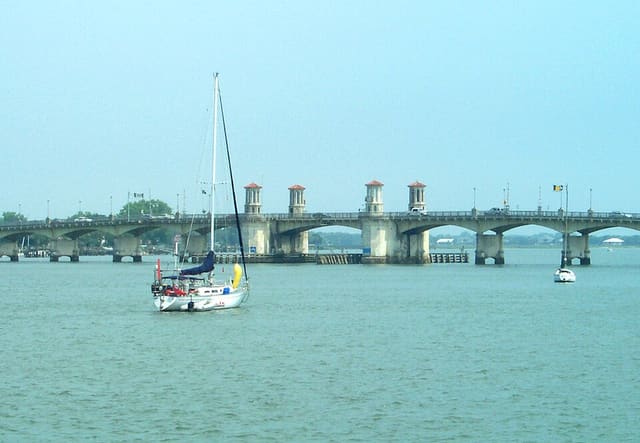
Starts at Castillo de San Marcos and ends at Bridge of Lions.

  • Plays right here in your browser, or in the app
  • One purchase for your group, on up to 4 phones
  • Refunded within 7 days if it isn't for you

Plan your walk

    How long

    About 1 h 3 min for 1.6 mi with all 8 stories. Going inside the sites adds time.

    Start and finish

    Starts at Castillo de San Marcos and ends at Bridge of Lions.

    Add it to my calendar

    Know someone who'd love this walk? or see more gift ideas.

    Questions people ask

    Can you do a ghost tour of St. Augustine on your own?

    Yes. This walk plays a story at each of eight stops in the historic district, from the Castillo de San Marcos to the Bridge of Lions, including the Huguenot and Tolomato cemeteries. Start whenever you like.

    How long is the tour?

    About 1 hour 3 minutes in all, walking 1.6 miles and listening to all eight stories.

    Is St. Augustine haunted?

    It has more than 450 years of history, from the Spanish fort to its old burial grounds, and plenty of ghost stories grew out of it. This walk tells each story and then what the records say about the people behind it.

    Where does the tour start and end?

    It starts at the Castillo de San Marcos and ends at the Bridge of Lions.

    What stops are on the tour?

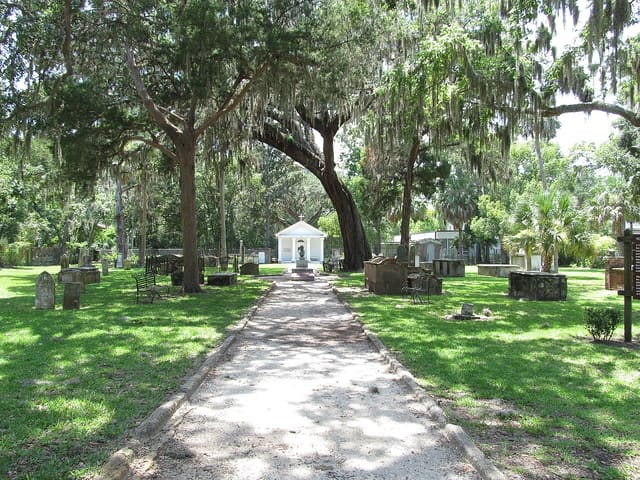
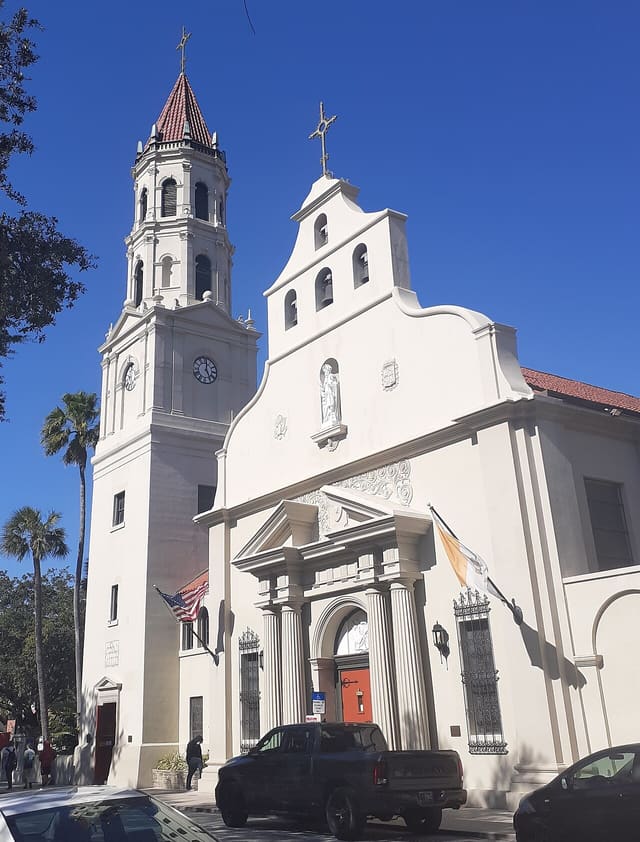
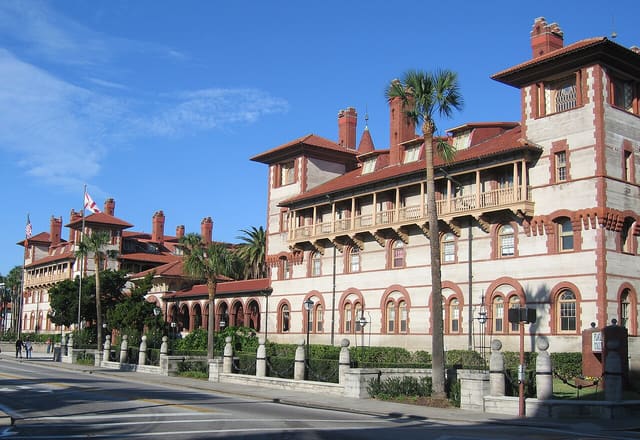
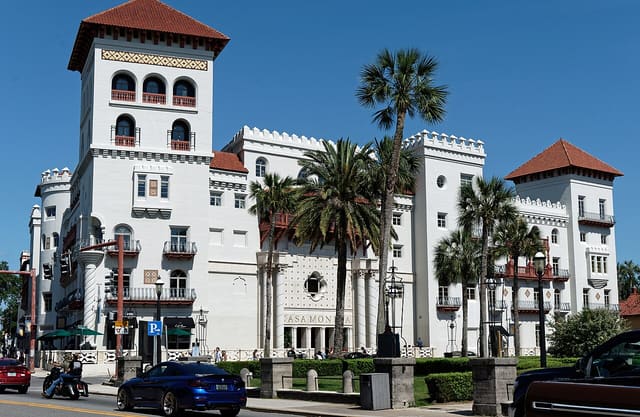
    The eight stops are Castillo de San Marcos, Huguenot Cemetery, Tolomato Cemetery, Cathedral Basilica of St. Augustine, Flagler College, Casa Monica Hotel, Spanish Military Hospital and Bridge of Lions.

    Do I need the app?

    No. After you unlock, the tour plays right here in your browser: keep the screen on and tap each stop. The free Stories app adds GPS auto-play, so each story starts by itself when you arrive, with your phone in your pocket, and works offline.

    How many people can listen?

    One purchase covers your group on up to 4 phones. Share the link from your receipt, or everyone can sign in to the app with the same email.

    Does it work offline?

    In the app, yes: download the tour on Wi-Fi before you go. In the browser you need a signal, which is fine on most city streets; open the tour once before you leave.

    When can I start?

    Any time. It is self-guided, so there are no departure times and no group to keep up with. Pause for coffee and pick up where you left off.

    Can I give this tour as a gift?

    Yes. Tap "Give it as a gift", type their email and a note, and pick the day it arrives (Christmas morning works). They open it in their phone's browser; you get the receipt.

    Can I get a refund?

    Yes. If the tour did not work for you, email support@getstories.app within 7 days and we will refund it.

    Who made this tour?

    Stories writes each tour from public sources, checks every claim against them, and narrates it with a synthetic voice. The sources are listed at the end of this page; if you spot a mistake, tell us at support@getstories.app.

    About this tour and its sources

    You're standing at the Castillo de San Marcos, the stone fort on the western shore of Matanzas Bay. Look at those grey walls. They're coquina, a rock made of tiny compressed seashells. That sounds like a poor choice for a fortress. It turned out to be an excellent one, because cannonballs tended to sink into it rather than shatter it. In 1702, English cannonballs did exactly that, while about 1,500 residents and soldiers crowded inside for two months.

    Spain began building the Castillo in 1672, to a design by the engineer Ignacio Daza, after a privateer's raid in 1668 burned much of the town. Long before that, this shore was Timucua land, and the city around you grew on it.

    St. Augustine is called the oldest city, and it has the ghost stories to match: soldiers on the ramparts, lights in hotel windows, figures among the graves. At every stop we'll set the legend beside the record. Behind these ghosts are real people: fever victims in a cemetery with no known Huguenots, patients in a military hospital, and Guale Christians whose village burial ground became Tolomato. The true stories are stranger than the legends.

    Cross with the lights, watch the uneven old streets, and take your time.

    Let's begin right here, with the fort that was never taken by force.

    Written from public sources, every claim checked against them, narrated by a synthetic voice. Last checked October 2026.

    Share this walk