The whole storyStop 8 of Haunted St. Augustine Walking Tour
The Lions a Doctor Never Saw
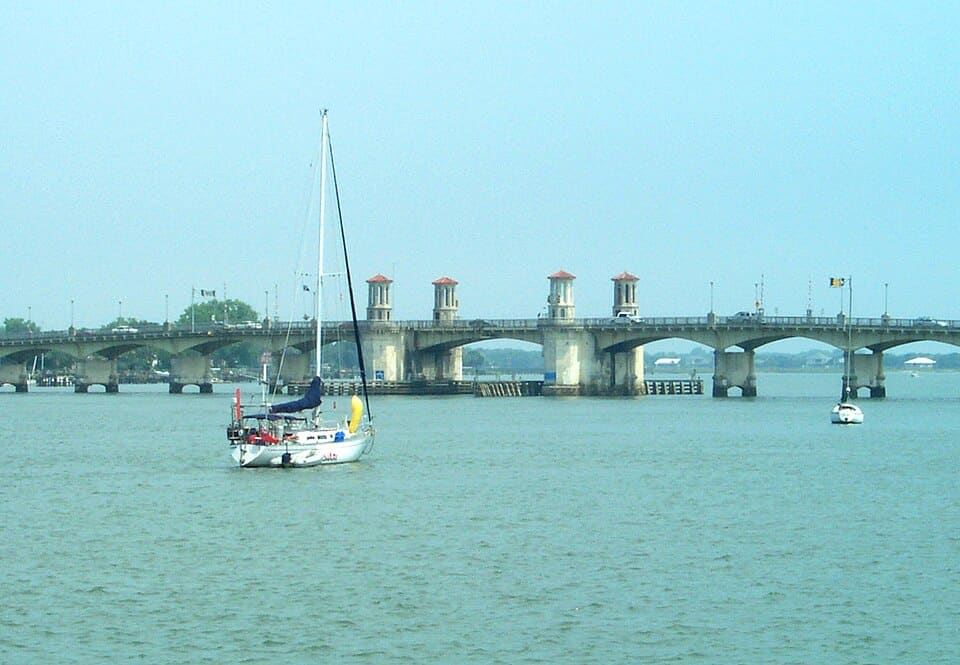
You're standing at the downtown end of the Bridge of Lions, where St. Augustine reaches across Matanzas Bay to Anastasia Island. Find the two white marble lions guarding the approach, one on either side. The bridge takes its name from them. And they're a fitting place to end, because the man who gave them never got to see them here.
His name was Dr. Andrew Anderson. He was a medical doctor, a former mayor of St. Augustine, and the builder of a grand house called Markland. In the last decade of his life, Anderson made a kind of mission of putting works of art in public places around the Ancient City. A decade earlier, the Romanelli Studios in Florence, Italy had made him smaller lions, which he set on the front steps at Markland. For the new bridge, he ordered big ones from the same studio: Carrara marble copies of the Medici lions, the ones in the Loggia dei Lanzi in Florence, and the same lions copied for the throne room of the Royal Palace in Madrid.
They were his last gift. Andrew Anderson died in 1924. Work on the bridge began in 1925, when the railway man behind the project, Henry Rodenbaugh, had his young daughter Jean pour the first bucket of concrete. Anderson did not live long enough to see his lions installed.
And the timing went sour in other ways. The bridge rose at the height of the extravagant Florida land boom of the 1920s, designed as a work of art, and it cost ten times as much as plainer bridges built nearby at the same time. It was finished after the boom busted, and the city, cash-strapped, had to pair the 1927 dedication with its annual Ponce de Leon Celebration. Even so, people hailed it as the Most Beautiful Bridge in Dixie.
Now comes the strangest thread, and it's all on the record. On May 26, 2006, the old bridge held its closing ceremony before a long rehabilitation. A woman named Isabella Heard was there in a wheelchair to tie the ribbon. Seventy-nine years earlier, she had been one of the young girls on the lead float at the bridge's opening. One person, present at both ends of the old bridge's life.
The lions waited out the construction in safe storage. They came back early on the morning of March 15, 2011, after a six-year absence. The doctor had named them Firm and Faithful, and after that long wait, they earned it.
So here is a doctor's last gift, delivered after his death, and still watching the edge of the water.
Take a minute to watch the bay from beside Firm and Faithful before you go. Thank you for walking St. Augustine with us, and good night.
Hear it where it happened. It plays at stop 8 of Haunted St. Augustine Walking Tour (3 min), narrated as you walk. Unlock the tour for the audio, or try stop 1 free first.