Haunted St. Augustine Walking Tour
Walk from the old fort to the Bridge of Lions through a city where centuries of history linger in stone and soil.
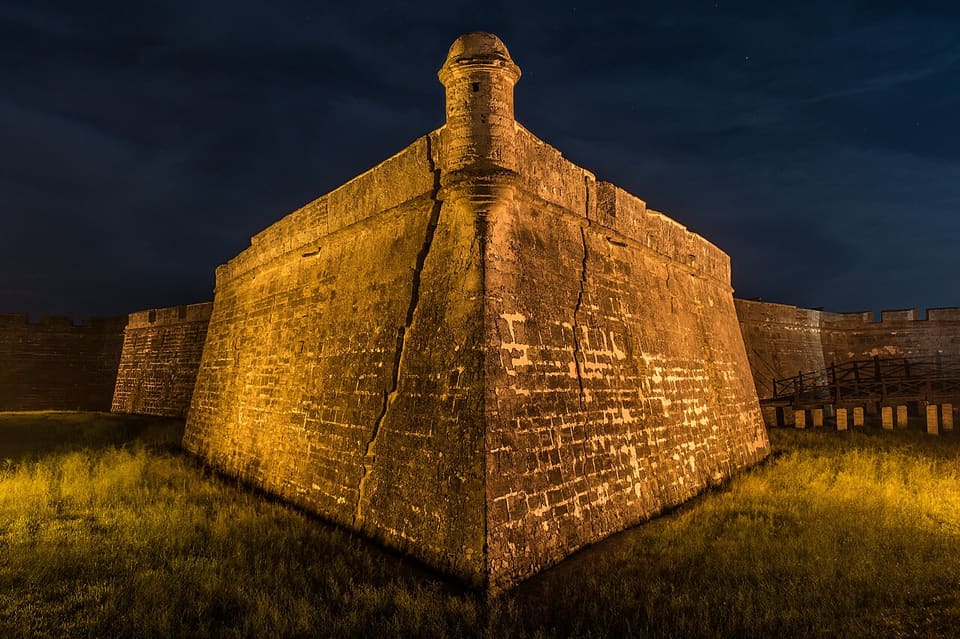 Photo: Photo: Juliancolton, CC BY-SA 4.0, via Wikimedia Commons
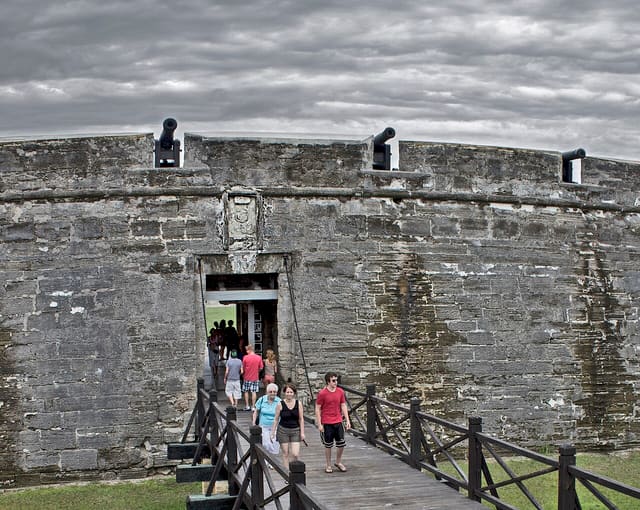
Drawbridge, Saint Augustine, Florida
The Castillo de San Marcos (Spanish for “St. Mark’s Castle”) is the oldest masonry fort in the continental United States; it is located on the western shore of Matanzas Bay in…
You're standing at the Castillo de San Marcos, on the edge of Matanzas Bay, looking at the great stone star that has guarded St. Augustine for more than three centuries. Walk up close to the wall if you can and look at the stone itself. It isn't smooth. It's pitted and rough, and if you look carefully you'll see it's packed with tiny broken shells. That stone is the whole story.
It's called coquina, Spanish for small shells. Ancient shells, pressed together over ages into a soft rock a bit like limestone. And for nearly a century before this fort, the Spanish had tried to protect their town with wood. After Sir Francis Drake attacked in 1586, they built nine wooden forts, one after another. Then in 1668 an English pirate named Robert Searle raided St. Augustine and burned the town to the ground. Wood, everyone agreed, was not going to cut it.
So Mariana, the Queen Regent of Spain, approved a fort of stone. A Spanish engineer named Ignacio Daza drew up the design, and on October 2, 1672, the first coquina blocks went down. The stone came from the King's Quarry on Anastasia Island, across the bay, ferried over by boat. It's worth saying plainly who did that work. Most of it was done by Native people from Spain's nearby missions, with skilled workers brought from Havana and enslaved Africans owned by the Spanish. It took 23 years. The core of the fort was finished in 1695.
The test came just seven years later. In 1702, Carolina's governor, James Moore, laid siege to St. Augustine. About 1,500 townspeople and soldiers crammed inside these walls for two months. And here's the surprise. Everyone assumed soft stone would be a weakness. Instead, the English cannonballs simply sank into the coquina, like a fist into a pillow. The walls didn't shatter. They swallowed the shot. When a Spanish fleet arrived from Havana, the English burned their own ships rather than lose them, and walked home to Carolina.
That's the turn that made this place last. The fort was besieged again in 1740 and never taken by force. It changed hands five times, between Spain, Britain, the United States and the Confederacy, and every time it was handed over on paper, not won in battle.
The record here isn't all triumph. These walls also held Seminole prisoners, including the war chief Osceola, and later Apache and Plains people taken from their homelands. And long before that, enslaved people fleeing the Carolinas came here and were freed by Spain, leading to Fort Mose, the first free Black settlement in what's now the United States.
So take one more look at that shell-studded wall. It's the oldest masonry fort in the continental United States, and it's still standing because its builders found strength in stone soft enough to give.
When you're ready, walk south, turn left onto Drawbridge, then right onto Saint George Street, about five minutes, to a small wooden schoolhouse that claims to be the oldest in the nation.
$15 for adults 16 and over, good for 7 days; 15 and under free with an adult.
On Matanzas Bay at the north end of the old city. It is stop 1 of both St. Augustine walks, so its story plays free.
Checked November 2026. Check the official site before you go.
No. Entry is $15 for adults 16 and over, good for seven days, and free for children 15 and under with an adult.
It was attacked several times and besieged twice, by Carolina governor James Moore in 1702 and by Georgia governor James Oglethorpe in 1740. Neither siege took it.
It's the oldest masonry fort in the continental United States, built by Spain from 1672 to 1695 out of coquina, a shell stone that absorbed cannonballs instead of shattering.
Walk from the old fort to the Bridge of Lions through a city where centuries of history linger in stone and soil.
Walk from the Spanish fort through the old colonial town to the grand hotels that made St. Augustine a winter destination.
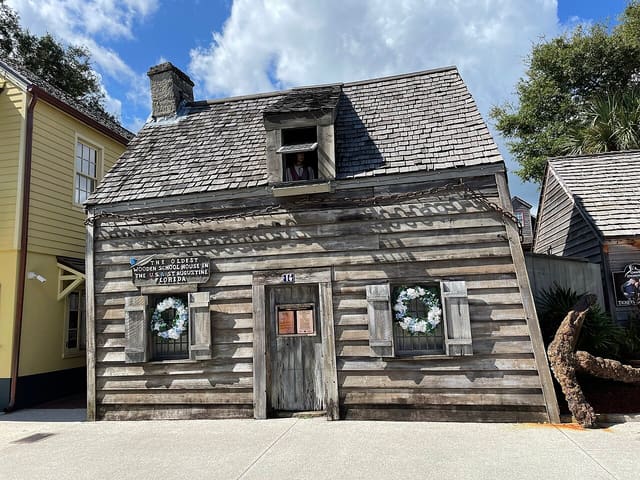
The Oldest Wooden School House is a wooden structure located at 14 St. George Street in…
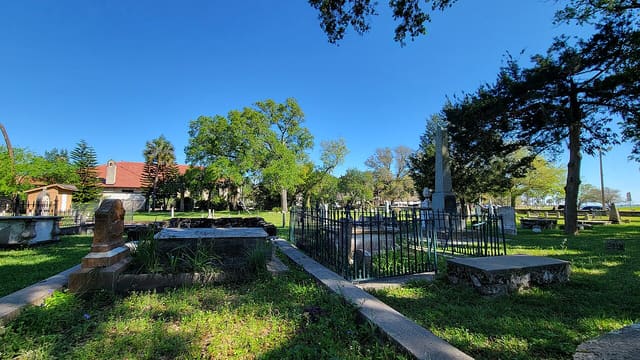
The Huguenot Cemetery (also known as the St. Augustine Public Burying Ground) in…
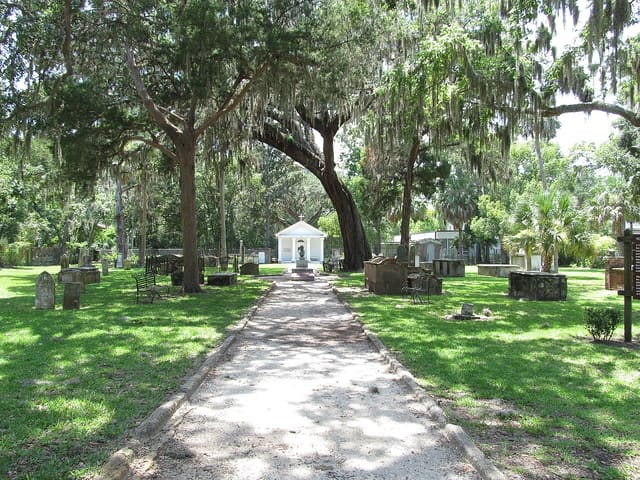
Tolomato Cemetery (Spanish: Cementerio de Tolomato) is a Catholic cemetery located on Cordova Street in St. Augustine…
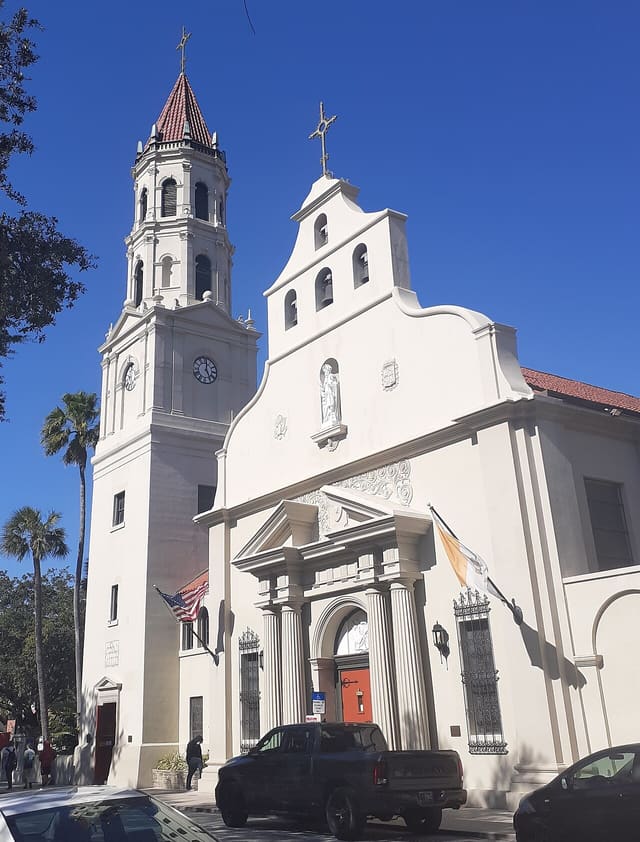
The Cathedral Basilica of St. Augustine (Spanish: Catedral basílica de San Agustín) is a historic cathedral in…
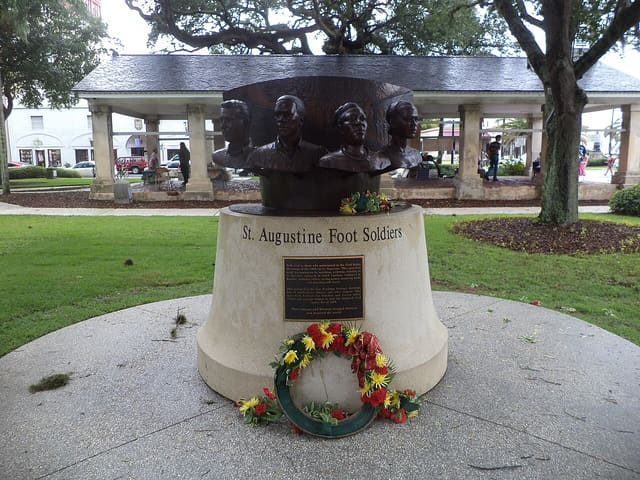
St. Augustine Foot Soldiers Monument is located near the corner of King…
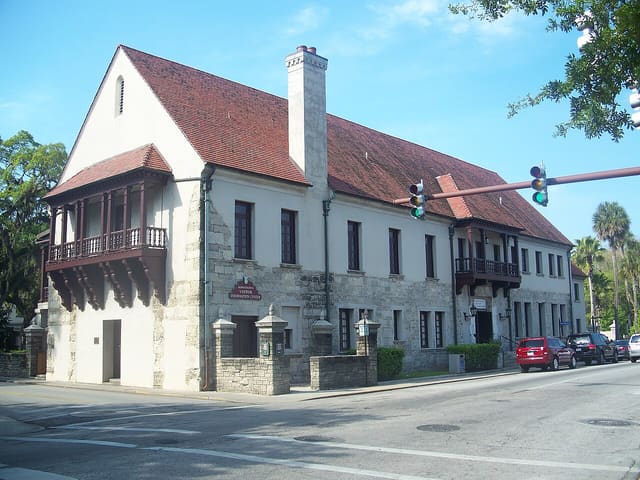
Government House (Spanish: Casa del gobierno), also known as Governor's House, is located at 48 King Street in St…
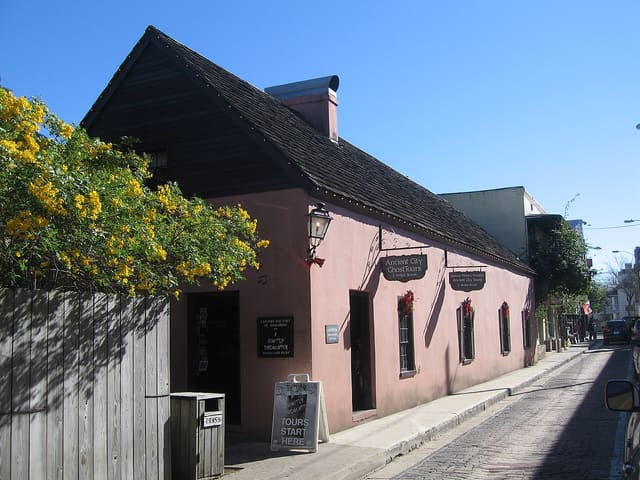
The Spanish Military Hospital Museum is located at 3 Aviles Street, St. Augustine, Florida.
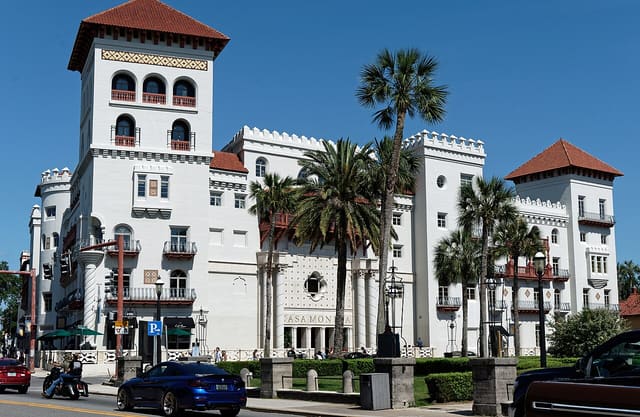
The Casa Monica Hotel is a historic hotel located in St. Augustine, Florida, in the United States.