The whole storyStop 6 of Philadelphia Walking Tour: Independence Hall to Elfreth's Alley
How Do You Make a Bishop Without a King?
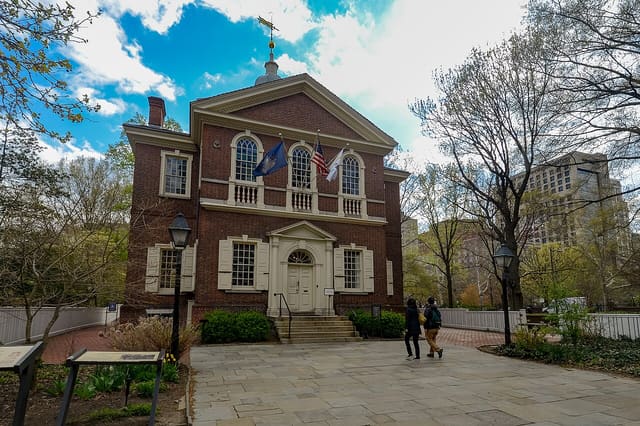
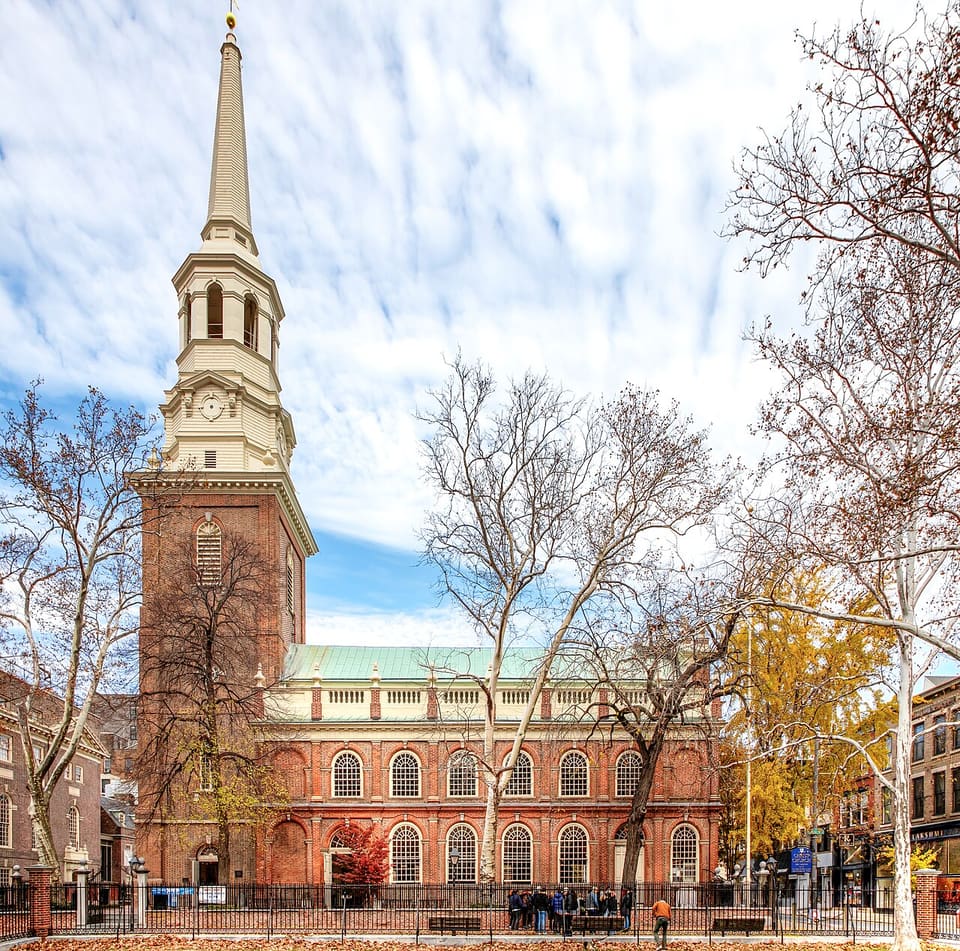
You're on North 2nd Street in Old City, standing in front of Christ Church. Tip your head back and follow that white steeple all the way up. When it was finished in 1754, it stood 196 feet tall, which made it the tallest building in what would become the United States. For years, the highest point in the colonies belonged to the Church of England.
That's the problem at the heart of this story. Christ Church was founded in 1695 as a Church of England parish, and the Church of England had a head: the king. Yet the congregation that filled these pews included 15 signers of the Declaration of Independence. George Washington and Robert Morris worshipped here, and brass plaques still mark the pews where they sat.
So when the war ended, the church faced an odd question. How do you keep a church that needs bishops when you've just rebelled against the Church of England's head?
The man who worked out an answer was William White, the rector of Christ Church. During the war he had served as chaplain to the Continental Congress. In September 1785, clerical and lay deputies from several states met inside this building and organized as a general convention. They chose White as their president. He prepared a draft constitution for the new church, and he was largely responsible for the liturgy of the first American Book of Common Prayer. Then he did something that sounds almost cheeky. He wrote an address to the archbishops and bishops of the Church of England, asking them for the episcopate at their hands.
The catch was the law. It took a special act of Parliament to clear the way. In 1786 White was elected the first bishop of Pennsylvania. He sailed to England with Samuel Provoost of New York, and early in 1787 the archbishops of Canterbury and York consecrated them both. White returned to Philadelphia that Easter Sunday, which is either very good timing or very good planning.
Two years later, in 1789, under White's direction, the first House of Bishops met inside Christ Church, marking the first true General Convention of the Episcopal Church. White served this congregation for decades, and he's buried inside, in the chancel.
Before you go, look at the baptismal font. It was sent from London in 1697, and it's the font in which William Penn was baptized. It's still in use today.
Hear it where it happened. It plays at stop 6 of Philadelphia Walking Tour: Independence Hall to Elfreth's Alley (3 min), narrated as you walk. Unlock the tour for the audio, or try stop 1 free first.