The whole storyStop 8 of Philadelphia Walking Tour: Independence Hall to Elfreth's Alley
The Flag House Next Door
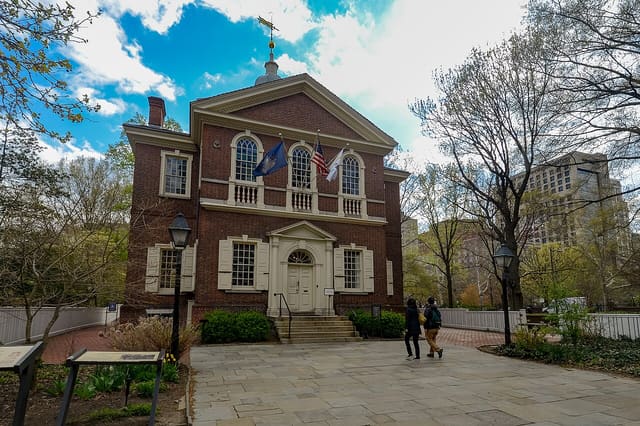
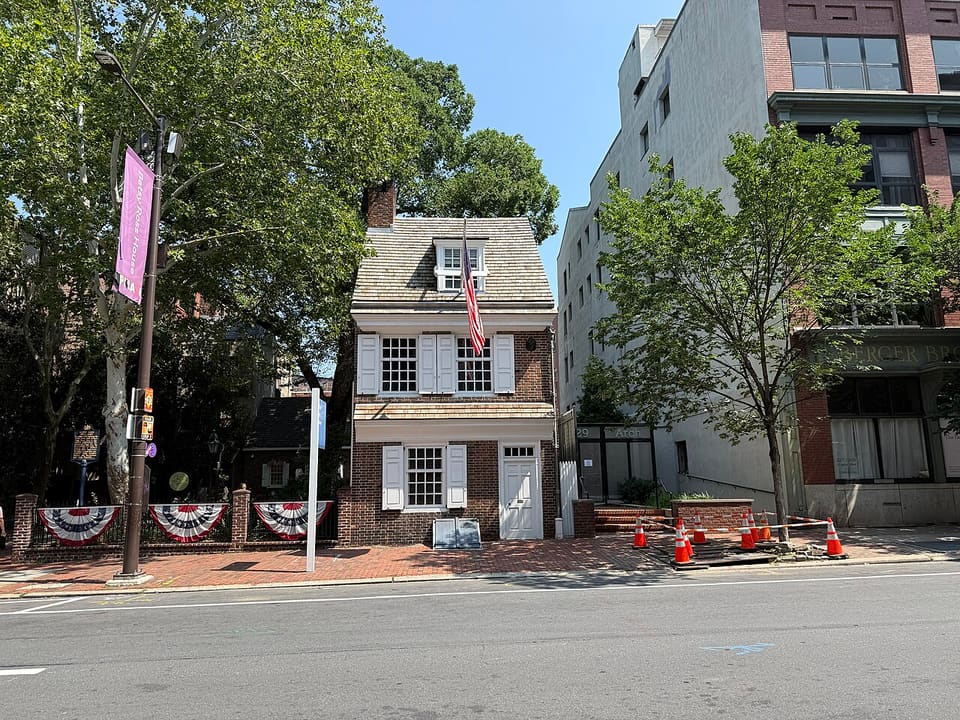
You're standing on Arch Street in Old City, in front of the little brick house with the flag out front. Look at the front of it: narrow, tall, and squeezed in tight. The front part went up around 1740, in the Pennsylvania colonial style. Hold on to that picture, because the question of which house this really is turns out to be the whole story.
Betsy Ross was an upholsterer, a working tradeswoman, born in 1752 and gone by 1836. Here's the catch with this address: had she lived here, she would have moved in around 1776, the year her first husband, John Ross, died, and stayed until about 1779. That "had" is doing a lot of work.
The story everyone knows is that she sewed the first American flag. But that story didn't come from the Revolution. It traces back to her relatives, particularly her grandsons, William and George Canby, and to the celebrations of the Centennial in 1876.
Then the legend needed a house. Evidence for the exact location came from several surviving family members, and this house was selected as the Flag House. Here's the problem. The best archival evidence indicates her home would have been adjacent to the one still standing.
And that neighbor is gone. The 1937 Philadelphia Guide noted that after this house was selected, the adjacent building, where Ross may have indeed lived, was torn down to lessen the hazards of fire, "perhaps adding a touch of irony to what may well have been an error in research."
Even the house you're looking at has been reshaped. In 1937 radio mogul A. Atwater Kent offered up to $25,000 for a restoration. Original elements were kept wherever possible, and materials from demolished period homes filled the gaps. The front stairway and dormer were entirely replaced, and the front doorway was moved to the opposite corner. So if the doorway looks just right, that's partly thanks to the 1930s.
Historians still debate whether she lived here, and whether she designed and sewed the first flag. Either way, the house now tells the story of a widow, a working mother and a business owner.
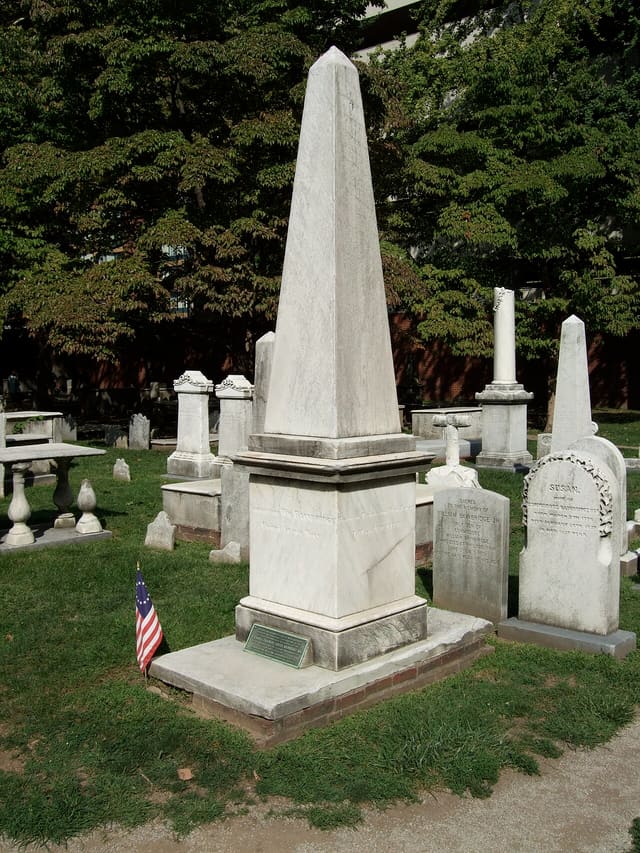
Walk into the courtyard if it's open, past the fountain added in 1974. In preparation for the Bicentennial, remains deemed to be those of Ross and her third husband, John Claypoole, were moved to graves here. Deemed to be. At this address, even the burial comes with a question mark. Philadelphia has long observed Flag Day here anyway.
When you're ready, walk south, then turn left onto North 5th Street, about six minutes, to Christ Church Burial Ground, where a printer's grave still collects pennies from strangers.
Hear it where it happened. It plays at stop 8 of Philadelphia Walking Tour: Independence Hall to Elfreth's Alley (3 min), narrated as you walk. Unlock the tour for the audio, or try stop 1 free first.