The whole storyStop 8 of St. Augustine Walking Tour: Nights of Lights and the Old City
A Hotel Bought for a Hobby
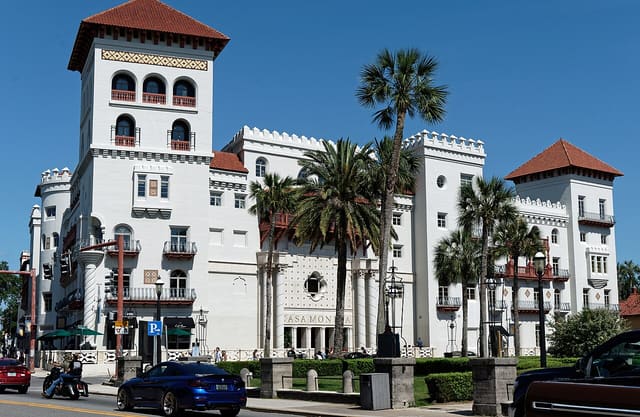
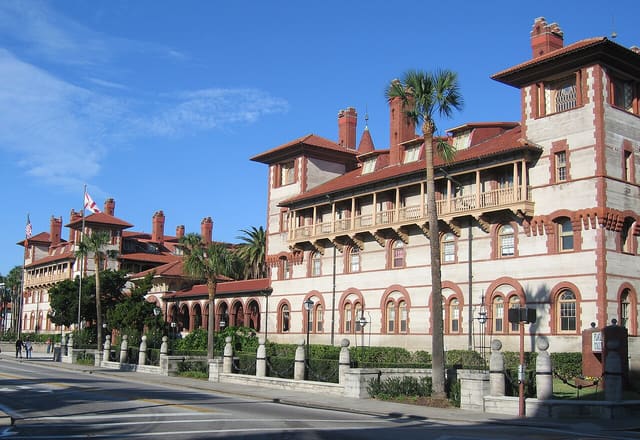
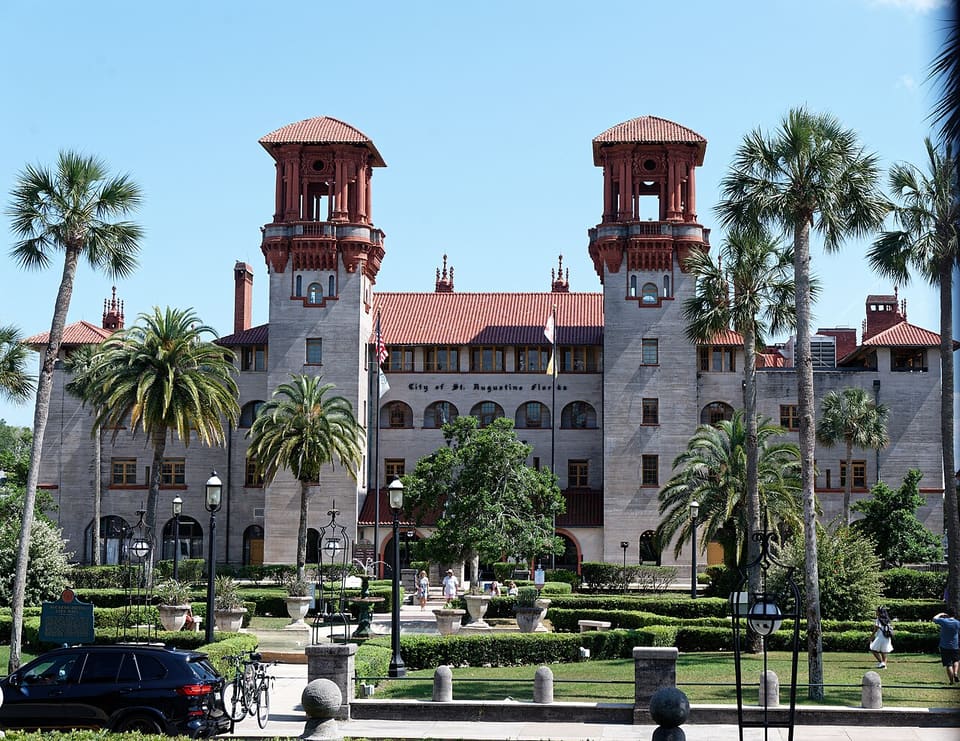
You're standing outside the Lightner Museum, the big building with the twin towers right across from Flagler College. Locals still call it by its first name, the Hotel Alcazar. Put a hand on the wall if you like. It's poured concrete, and in 1887 that made this one of the earliest buildings of its kind anywhere in the world.
Henry Flagler built it. You met him at the last stop, the Standard Oil man behind the Hotel Ponce de Leon. The Ponce was for the very richest guests. The Alcazar was built to fill up the winter crowd riding south on Flagler's railroad. Two young New York architects, Carrère and Hastings, designed both buildings. Years later they would design the New York Public Library.
The Alcazar was built for people who came to be pampered. It had steam rooms, sulfur baths, a massage parlor, a gymnasium, a ballroom three stories tall, and what was called the largest indoor swimming pool in the world. Guests came every winter to sweat, soak and dance.
Then the money ran out. Florida's boom faded, the Great Depression arrived, and in 1932 the Alcazar closed its doors. A building made for crowds sat silent.
Enter Otto Lightner, a Chicago publisher who could never stop collecting. His magazine was about hobbies, and he had gathered a huge collection of Victorian things. In 1947 he bought the empty Alcazar to give it all a home. He didn't keep it for himself, though. He turned the building over to the city of St. Augustine, and the museum opened in 1948.
One detail says a lot about him. Among his treasures are player pianos and music machines. A collector of paintings wants things to look at. Lightner also wanted things that perform. He collected the everyday marvels of the Victorian age, not only the fine art, and the machines are a clue to how wide his curiosity ran.
Now for the payoff. That giant swimming pool was drained long ago. Today it holds the Cafe Alcazar. You can eat lunch at the bottom of what was once the deep end.
So here is the whole turn in a sentence. A hotel built for winter luxury failed, and a man with a hobby too big for his house gave it a second life. If you can, step into the courtyard, with its palm trees and stone bridge over a koi pond, and picture the guests who strolled there more than a century ago.
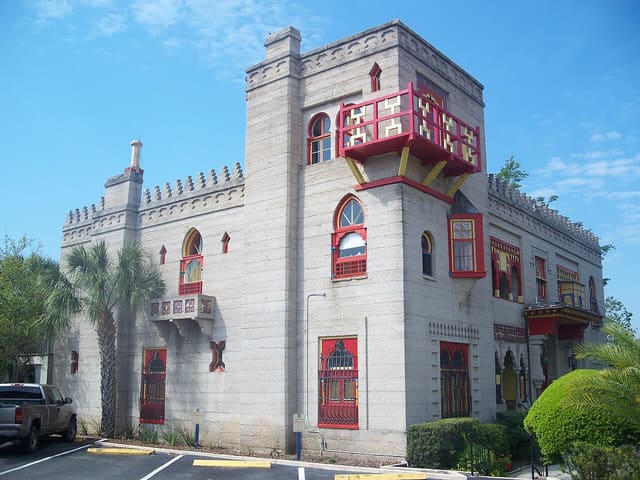
When you're ready, walk north, then turn left onto Trolley Path. It's about 150 meters, two minutes, to Villa Zorayda, a Boston millionaire's take on a Moorish palace.
Hear it where it happened. It plays at stop 8 of St. Augustine Walking Tour: Nights of Lights and the Old City (3 min), narrated as you walk. Unlock the tour for the audio, or try stop 1 free first.