The whole storyStop 4 of Central Park Walking Tour: The Pond to Belvedere Castle
An Angel Who Celebrates Clean Water
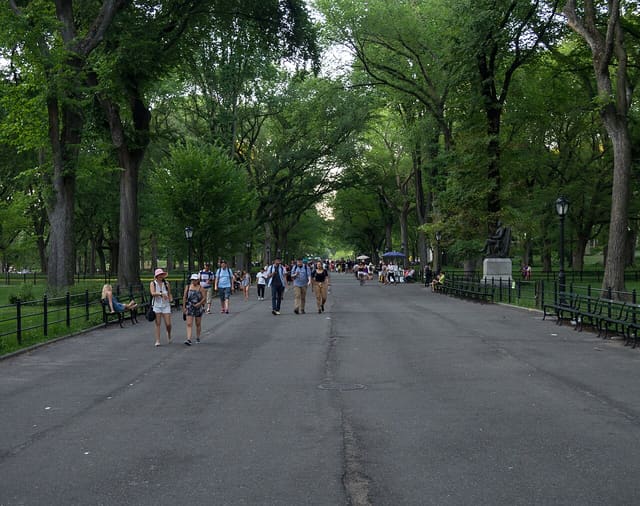
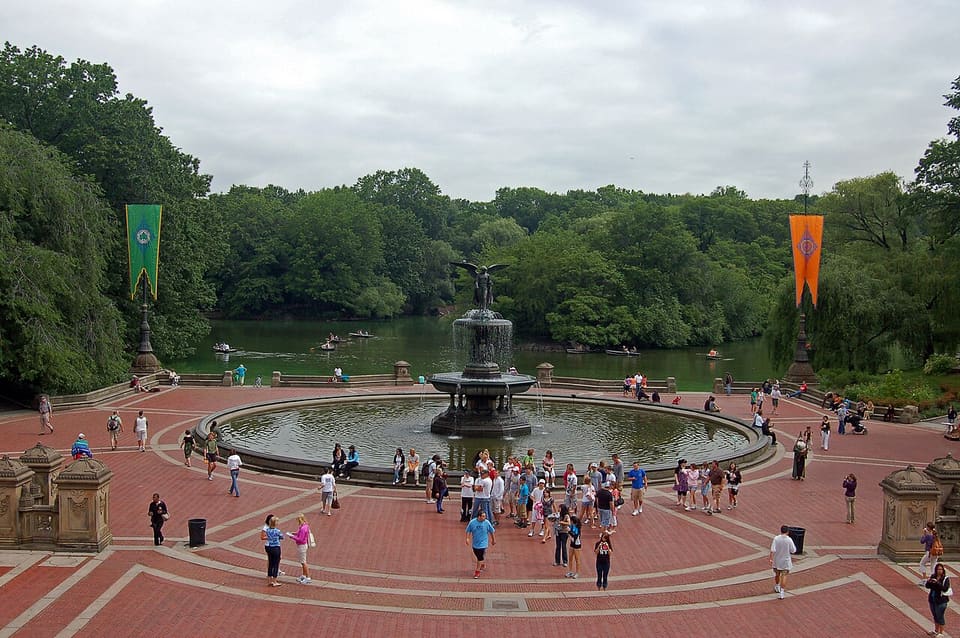
You've reached the end of the Mall, at the top of Bethesda Terrace. Below you, two grand staircases fold down to a wide brick plaza, and beyond it lies the Lake. In the middle of that plaza stands a bronze angel with her wings spread, touching down on top of a fountain. Keep your eyes on her. She was made by a woman New York had never trusted with a job like this.
The woman was Emma Stebbins, a sculptor from a well-connected New York family. In the 1860s, while the Civil War was still being fought, workers here were cutting and setting the warm, mustard-colored sandstone around you. The park's commissioners then went looking for a sculptor for the fountain. They chose Stebbins. She became the first woman to receive a public commission for a major work of art in New York City. Her angel would also be the only statue the city paid for in the park's original design.
Stebbins took her idea from the Gospel of John. In that story, an angel stirs the waters of the Pool of Bethesda and gives them the power to heal. That's why the whole terrace is named Bethesda. On Olmsted and Vaux's plan it had a much plainer name: the Water Terrace.
The Bible story wasn't the only thing on Stebbins's mind. In 1842, the Croton Aqueduct had begun carrying fresh water into the city, and part of that system ran across the very ground that became Central Park. For the first time, New Yorkers had clean water piped in from the countryside. Look at the angel's hands. One holds a lily, for purity. The other blesses the water below her. Under her feet, four small cherubs stand for temperance, purity, health and peace. In other words, this is a grand religious monument that is quietly celebrating the city's plumbing. The angel was unveiled in 1873.
She didn't always get the respect she deserved. By the 1970s, the fountain had run completely dry. The terrace had become a hippie gathering spot and then a place for drug dealing. The stone was cracking and the arcade roof leaked. When the Central Park Conservancy set out to rescue the park, this fountain was the first thing it restored, in 1980 and 1981.
As you walk down to the angel, run your eye along the carved stone railings of the stairs. Jacob Wrey Mould, the designer who worked alongside Calvert Vaux, filled them with symbols of the seasons. There are lambs for spring, berries for summer, and pine cones and holly for fall. If you look closely, you'll also find ice skates, a rooster, and a witch on a broomstick for Halloween.
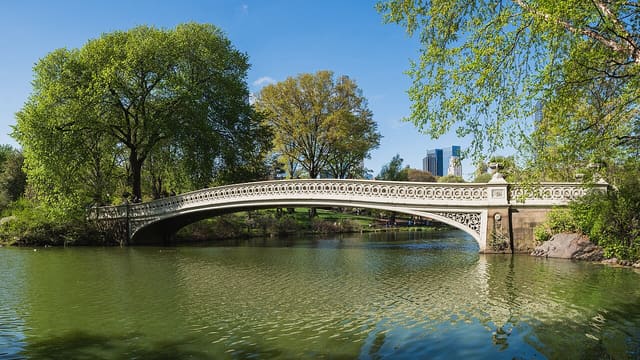
When you're ready, walk northeast for about five minutes, roughly 320 meters, to Bow Bridge. It's a slender cast-iron curve over the Lake, and you can already see the water it crosses from here.
Hear it where it happened. It plays at stop 4 of Central Park Walking Tour: The Pond to Belvedere Castle (3 min), narrated as you walk. Unlock the tour for the audio, or try stop 1 free first.