Stories
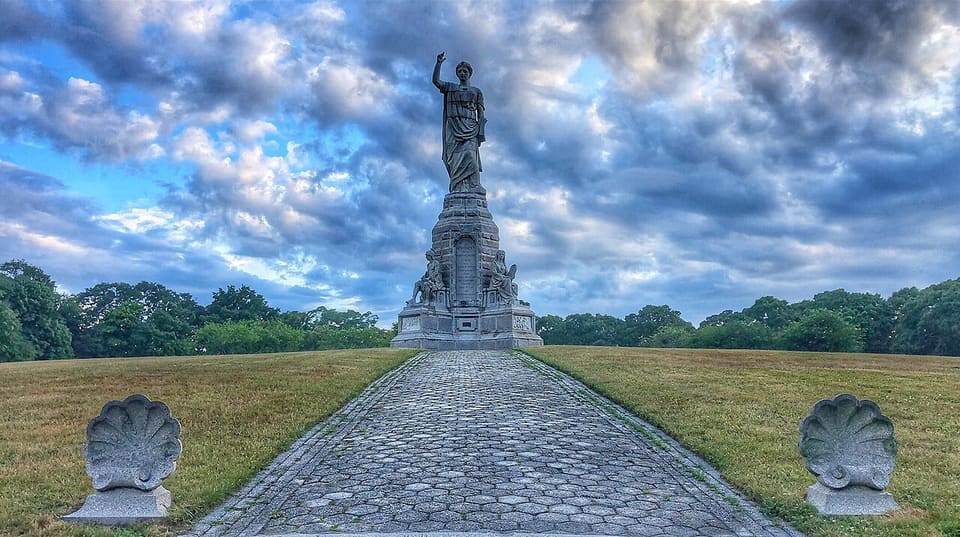
National Monument to the ForefathersPhoto: C0r3ySh33han319, CC BY-SA 4.0, via Wikimedia Commons
Walking tour · Plymouth

Plymouth Walking Tour: Plymouth Rock and the Pilgrims

Early Plymouth, from the waterfront to its oldest surviving houses

1 h 20 min9 stops2.2 mi

Start the walk

Stop 1 is free, no sign-up. All 9 for $4.99, refunded within 7 days if it isn't for you.

See the 9 stops

The 9 stops

  1. 1Start hereFree

    National Monument to the Forefathers

    A Granite Giant Who Shrank

    Free sample · 3:03
    0:003:03

    You're standing on Allerton Street, at the circular drive around the National Monument to the Forefathers. Look up at the woman on top. She's called Faith. Her right hand points to heaven, her left clutches a Bible, and she is 36 feet tall, standing on a granite pedestal that lifts the whole monument to about 81 feet. It's thought to be the largest solid granite monument in the world.

    The man who dreamed her up was Hammatt Billings, a Boston architect, illustrator and sculptor. Billings did not think small. His first design was 150 feet tall, a Pilgrim answer to the Colossus of Rhodes. Then, shortly before he died in 1874, he reduced the size of the monument. His brother Joseph took over, and with other sculptors, including Alexander Doyle, Carl Conrads and James Mahoney, reworked the design, though the basic components remained. Faith herself grew from a 9-foot plaster model by William Rimmer, made in 1875, which was enlarged and altered. The monument was dedicated on August 1, 1889, and it faces northeast, toward Plymouth Harbor and, roughly, toward Plymouth, England.

    Now walk your eyes down to the four seated figures on the buttresses around her. They are Morality, Law, Education and Liberty, each carved from a solid block of granite. Beneath them are marble scenes from Pilgrim history: Embarkation, Treaty, Compact and Landing. On the front, the inscription says the monument was erected by a grateful people, in remembrance of the Pilgrims' labors, sacrifices and sufferings for the cause of civil and religious liberty. On the sides are the names of those who came over on the Mayflower.

    Notice what is carved here. These are not portraits of 1620. They are virtues: morality, law, education, liberty. The monument honors the Pilgrims' ideals as the United States later embraced them, and that's the idea behind the name, forefathers.

    But look at who the stone names, and who it doesn't. The panel called Treaty sits beneath the figure of Law. In 1621 Plymouth Colony made an agreement with Massasoit, leader of the Wampanoag, the people whose homeland this was and still is. The sources don't say this relief shows that agreement, but the word on the stone invites the question. What is certain is that the names cut into the side panels are the Mayflower passengers'. The Wampanoag, who were here first, are not among them.

    One irony to end on. It's called the National Monument, but it isn't one, not in the federal sense. It belongs to the Commonwealth of Massachusetts, and together with Plymouth Rock it makes up Pilgrim Memorial State Park.

    Walk southeast, then turn right onto Allerton Street, about 890 meters and 13 minutes, to the next stop.
The whole walk

9 stories across Plymouth

1 h 20 min · 9 stops · 2.2 mi

Starts at National Monument to the Forefathers and ends at Jabez Howland House.

  • Plays right here in your browser, or in the app
  • One purchase for your group, on up to 4 phones
  • Refunded within 7 days if it isn't for you

Plan your walk

    How long

    About 1 h 20 min for 2.2 mi with all 9 stories. Going inside the sites adds time.

    Start and finish

    Starts at National Monument to the Forefathers and ends at Jabez Howland House.

    Add it to my calendar

    Know someone who'd love this walk? or see more gift ideas.

    Questions people ask

    Is Plymouth Rock worth seeing?

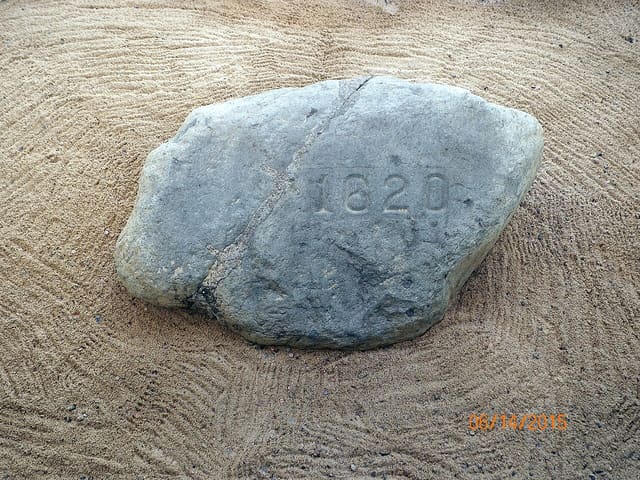
    It's a short stop: the rock sits under a granite portico on the waterfront and is free to see. It's worth it for the story of how it became a landmark 121 years after the Pilgrims landed, with the Mayflower II and Cole's Hill a few steps away.

    Is Plymouth Rock real?

    It's a real boulder, but no Pilgrim account mentions it. The claim that the Mayflower passengers landed on it was first made in 1741 by 94-year-old Thomas Faunce. It broke in two in 1774 and has been moved several times since.

    How long does the Plymouth walking tour take?

    About 80 minutes for 2.2 miles with the stories, from the National Monument to the Forefathers down to the waterfront and up Leyden Street and Burial Hill to the Jabez Howland House.

    What are the stops on the Plymouth walk?

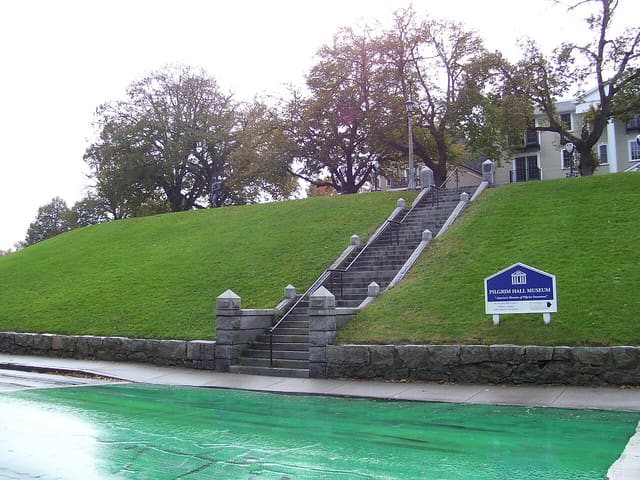
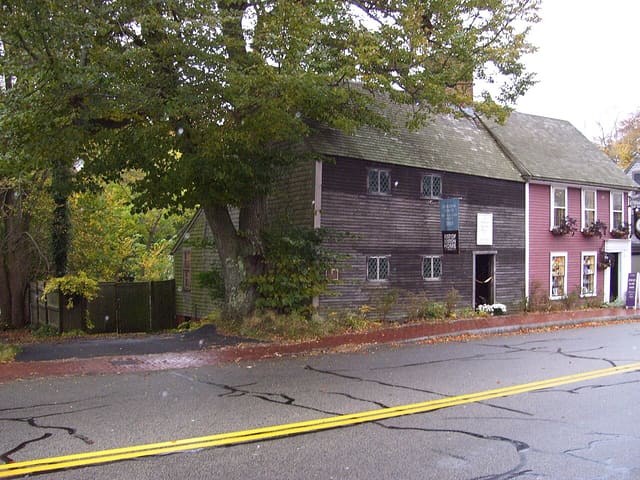
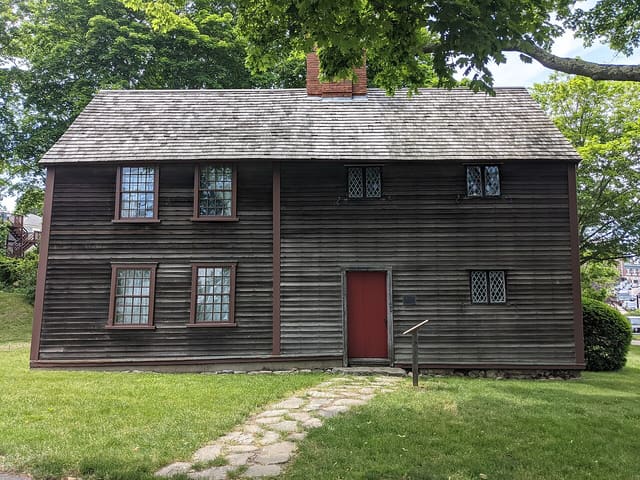
    The National Monument to the Forefathers, Pilgrim Hall Museum, the Mayflower II, Plymouth Rock, Cole's Hill, Leyden Street, Burial Hill, the Richard Sparrow House and the Jabez Howland House.

    Do I need the app?

    No. After you unlock, the tour plays right here in your browser: keep the screen on and tap each stop. The free Stories app adds GPS auto-play, so each story starts by itself when you arrive, with your phone in your pocket, and works offline.

    How many people can listen?

    One purchase covers your group on up to 4 phones. Share the link from your receipt, or everyone can sign in to the app with the same email.

    Does it work offline?

    In the app, yes: download the tour on Wi-Fi before you go. In the browser you need a signal, which is fine on most city streets; open the tour once before you leave.

    When can I start?

    Any time. It is self-guided, so there are no departure times and no group to keep up with. Pause for coffee and pick up where you left off.

    Can I give this tour as a gift?

    Yes. Tap "Give it as a gift", type their email and a note, and pick the day it arrives (Christmas morning works). They open it in their phone's browser; you get the receipt.

    Can I get a refund?

    Yes. If the tour did not work for you, email support@getstories.app within 7 days and we will refund it.

    Who made this tour?

    Stories writes each tour from public sources, checks every claim against them, and narrates it with a synthetic voice. The sources are listed at the end of this page; if you spot a mistake, tell us at support@getstories.app.

    About this tour and its sources

    You're standing at the National Monument to the Forefathers. Look up at the woman at the top. She is Faith, carved in granite, one hand raised toward the sky. She stands 36 feet tall, on a monument that rises about 81 feet. And she was supposed to be even bigger: the sculptor's first design was 150 feet tall, and he scaled it back shortly before he died in 1874.

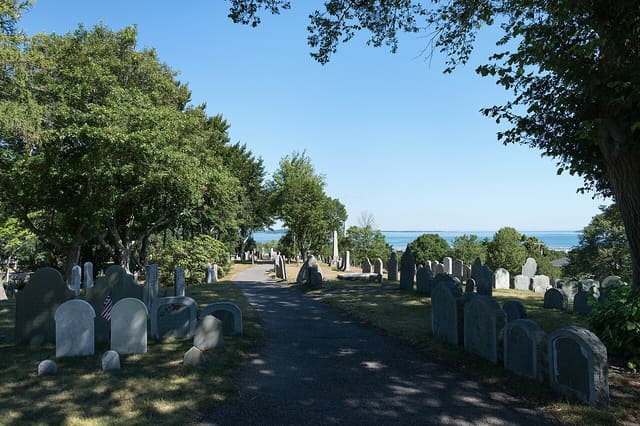
    That gap between the grand version and the real one runs through this whole walk. The town is full of things built to remember the Pilgrims. A famous rock that neither of the two main Pilgrim accounts mentions. A ship that's a copy. A hill where bones were once washed into the harbor by a storm. At each stop you'll ask a simple question: what actually happened here, and what did we add later?

    Part of the answer is older than the Pilgrims. This harbor was Patuxet, a Wampanoag village emptied by an epidemic just before the Mayflower arrived. The colony was built on Wampanoag land, and in 1621 it made an agreement with Massasoit, the Wampanoag leader.

    The walk ends at a house tied to the Pilgrims' children: the Jabez Howland House, home of a son of Mayflower passengers. Take your time, and cross with the lights.

    Now look back up at Faith. Your first story is about her.

    Written from public sources, every claim checked against them, narrated by a synthetic voice. Last checked October 2026.

    Share this walk