The whole storyStop 6 of Plymouth Walking Tour: Plymouth Rock and the Pilgrims
The Street That Kept Changing Its Name
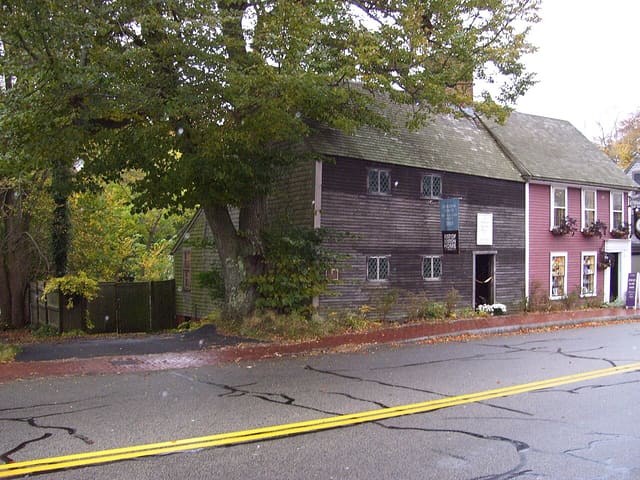
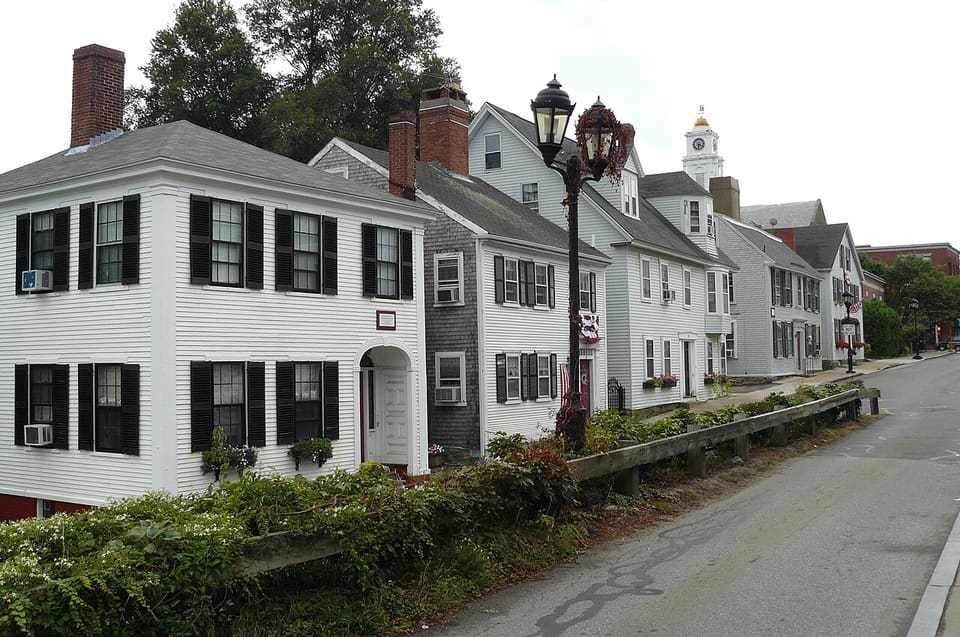
You're standing on Leyden Street, the short, narrow road that runs between the waterfront and the hill. Turn so you're facing uphill and follow the street with your eyes as it climbs toward the rise at its top. That rise is Burial Hill. The whole length of what you're looking at was the town of Plymouth, once.
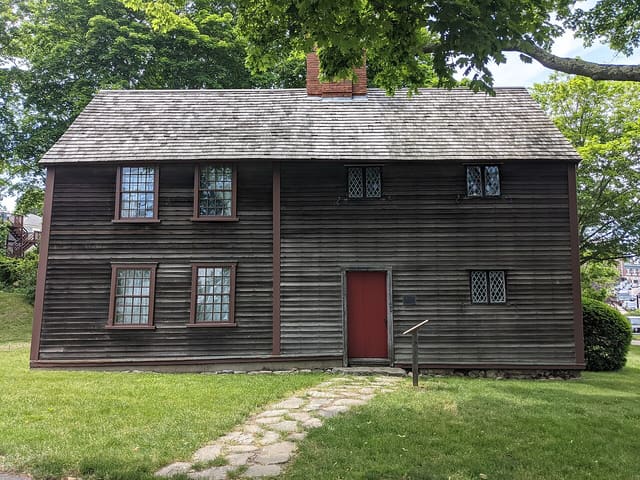
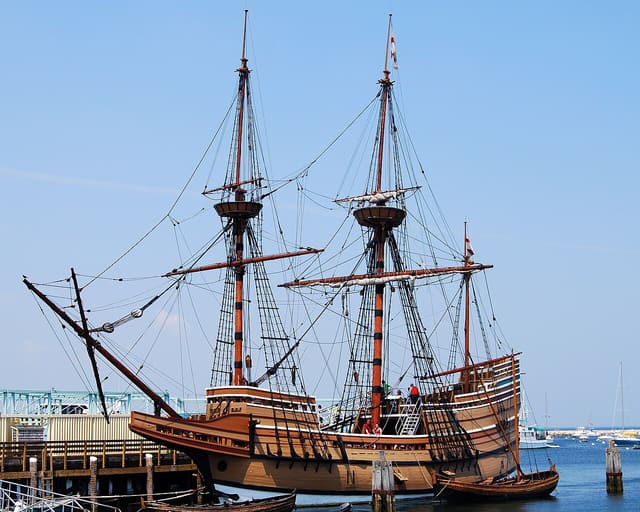
In December 1620, the Mayflower passengers had a problem. Winter had arrived and they were still living aboard a crowded ship anchored in the harbor. They needed shelter on land, and fast. So before Christmas they began laying out a single street. It ran from the shore up to the base of that hill, where they would put their fort. Town Brook, just alongside, gave them drinking water. Families drew lots along both sides. William Bradford, who would govern the colony for most of its first decades, had a lot here. So did Dr. Samuel Fuller, the colony's physician, and a settler named Peter Browne. One of the first buildings was a common house, a shared shelter for people and supplies, near the bottom of the street.
It's worth saying plainly whose ground this was. The street was laid out on Wampanoag land, at a place the Wampanoag called Patuxet. The village that had stood here was empty because an epidemic brought by earlier European contact had killed most of its people a few years before. The Pilgrims built their first street in a place emptied by loss.
The settlers didn't bother with a fancy name. They called it First Street, which, to be fair, it was. Later the colony's records called it Great and Broad Street, a generous description of a lane you can nearly cross in a few strides. And locals have long simply called it The Street.
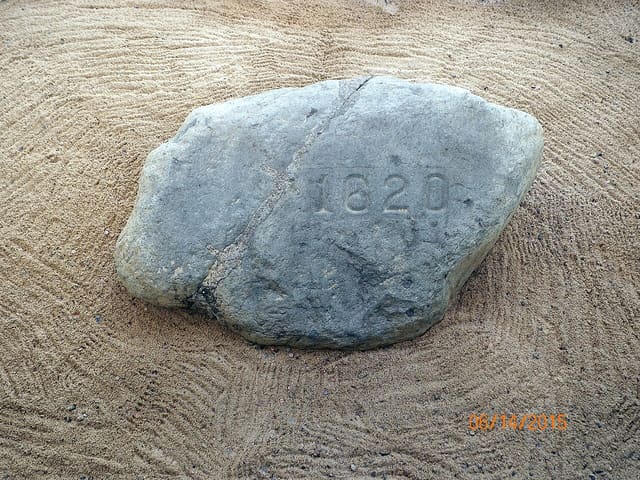
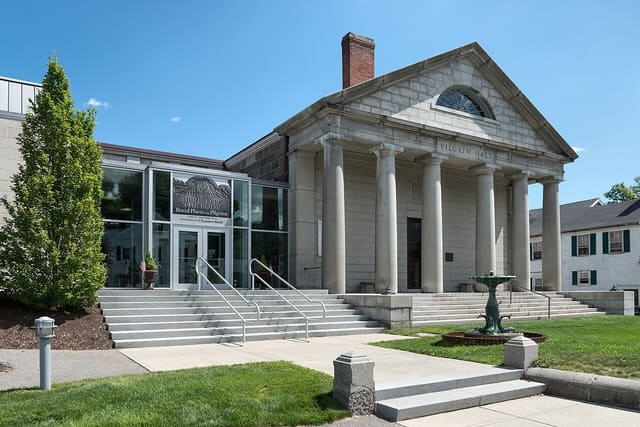
The name on the sign today came much later, in 1823. That year Plymouth renamed the road Leyden Street, after the Dutch city of Leiden, where many of these same families had lived as religious refugees for about a decade before they sailed. Here's the insight in that date. Two centuries on, Plymouth was busy turning its founders into a national story. The Rock was being celebrated, and Pilgrim Hall would open the very next year. Renaming the street after Leiden wasn't just honoring a city. It was the town choosing which part of the Pilgrims' story to put on the map: exiles who found refuge, then came here.
The street makes a bold claim, too. It's called the oldest continuously inhabited street in the original thirteen colonies, used ever since those first houses went up. The famous harvest feast of 1621, the one we call the First Thanksgiving, was likely held somewhere close by. So when you walk uphill from here, you're tracing the colony's oldest route, from the water to the fort on the hill.
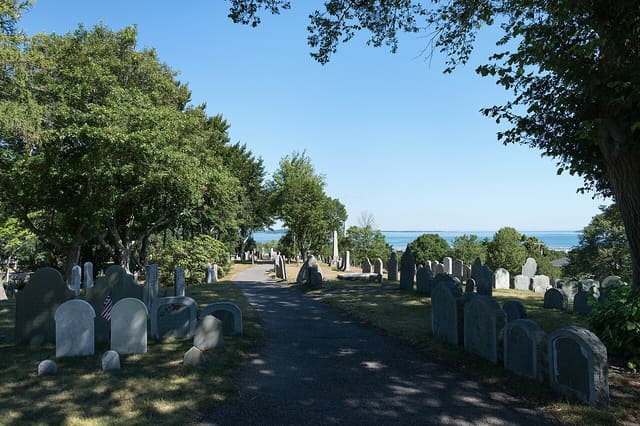
Walk southwest, up toward the hill, about four minutes, to Burial Hill. The Pilgrims' fort once stood up there, and the colony buried its dead on the same slope.
Hear it where it happened. It plays at stop 6 of Plymouth Walking Tour: Plymouth Rock and the Pilgrims (3 min), narrated as you walk. Unlock the tour for the audio, or try stop 1 free first.