The whole storyStop 8 of Plymouth Walking Tour: Plymouth Rock and the Pilgrims
The Surveyor Who Came Late
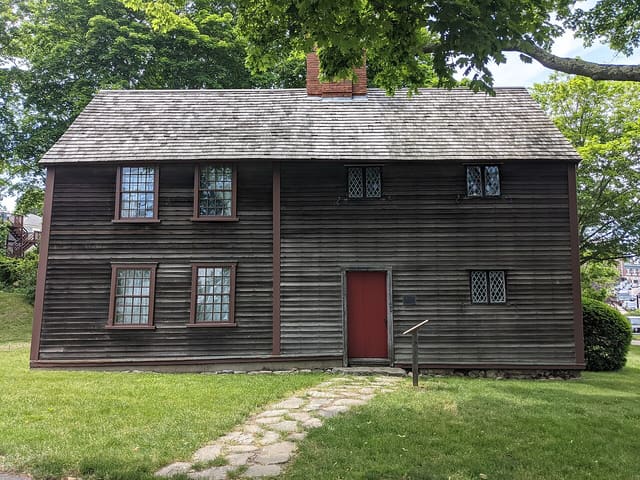
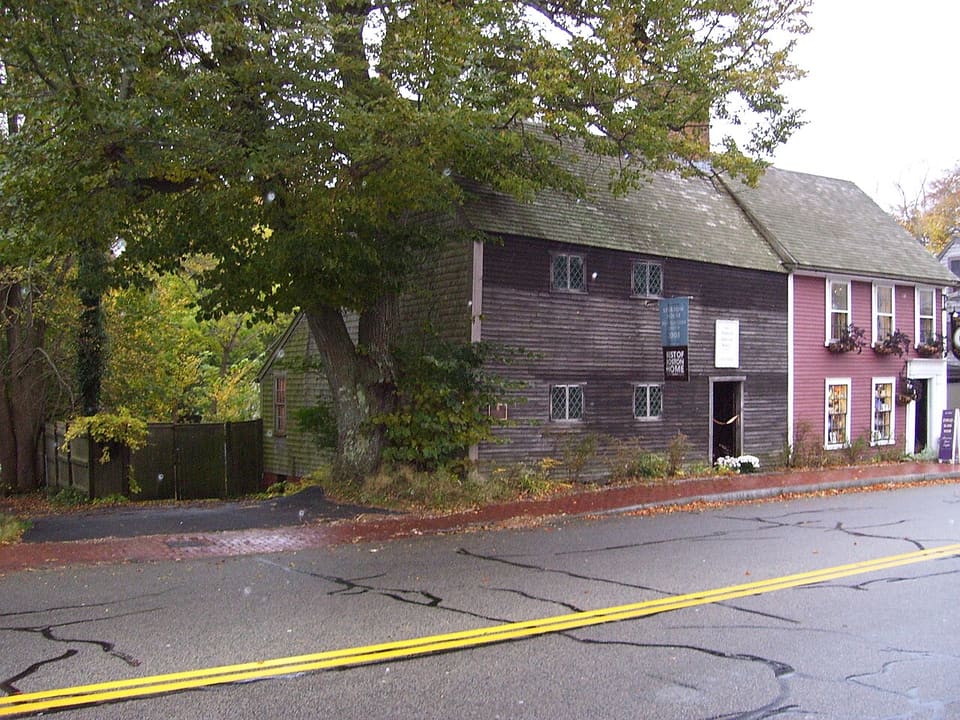
You've come down from Burial Hill to Summer Street, and the old house in front of you is the Richard Sparrow House. Locals have long called it Plymouth's oldest surviving house. Take a good look at it from the street, because the man who built it is the reason it's here at all.
Richard Sparrow was an English surveyor. He was not on the Mayflower. He reached Plymouth in 1636, sixteen years after that ship came in. By then the colony had buried its first dead on Cole's Hill, laid out First Street, and settled into a second, quieter chapter. Plymouth was growing, and new arrivals needed land.
So in 1636 the colony granted Richard Sparrow a tract of about 16 acres. That land was Wampanoag homeland, granted by English settlers to one another. Around 1640, Sparrow built this house on it.
Think about what that means for the Plymouth you've been walking through today. Not one house built by the Mayflower passengers survives. The first homes were small and quickly made. What lasted was built a little later, by people like Sparrow, who came once the colony looked like a place worth staying in.
And here's the turn. Sparrow didn't stay. In 1653 he moved away to Eastham, out on Cape Cod. A surveyor, a man whose job was measuring land and marking boundaries, left the land he'd been given. The house stayed behind and outlived him by centuries.
That's how it ended up with its title. The house is more than 375 years old, it was added to the National Register of Historic Places in 1974, and it sits within Plymouth's village historic district. Today it's a house museum, where you can walk through the actual rooms. It's also a gallery of fine American crafts. Plymouth's oldest home, in other words, now has a gift shop, which may be the most New England way possible to keep an old house standing.
One honest footnote. That word, oldest, is being tested. In recent years researchers have used tree-ring dating, reading the growth rings in old timbers, to look again at Plymouth's earliest houses. The science is still adding new insight. For now, the Sparrow House holds the claim it has held for generations.
When you're ready, walk northeast about five minutes to the Jabez Howland House, where a son of two Mayflower passengers made his home.
Hear it where it happened. It plays at stop 8 of Plymouth Walking Tour: Plymouth Rock and the Pilgrims (2 min), narrated as you walk. Unlock the tour for the audio, or try stop 1 free first.