The whole storyStop 3 of Plymouth Walking Tour: Plymouth Rock and the Pilgrims
The Ship That Needed a Home First
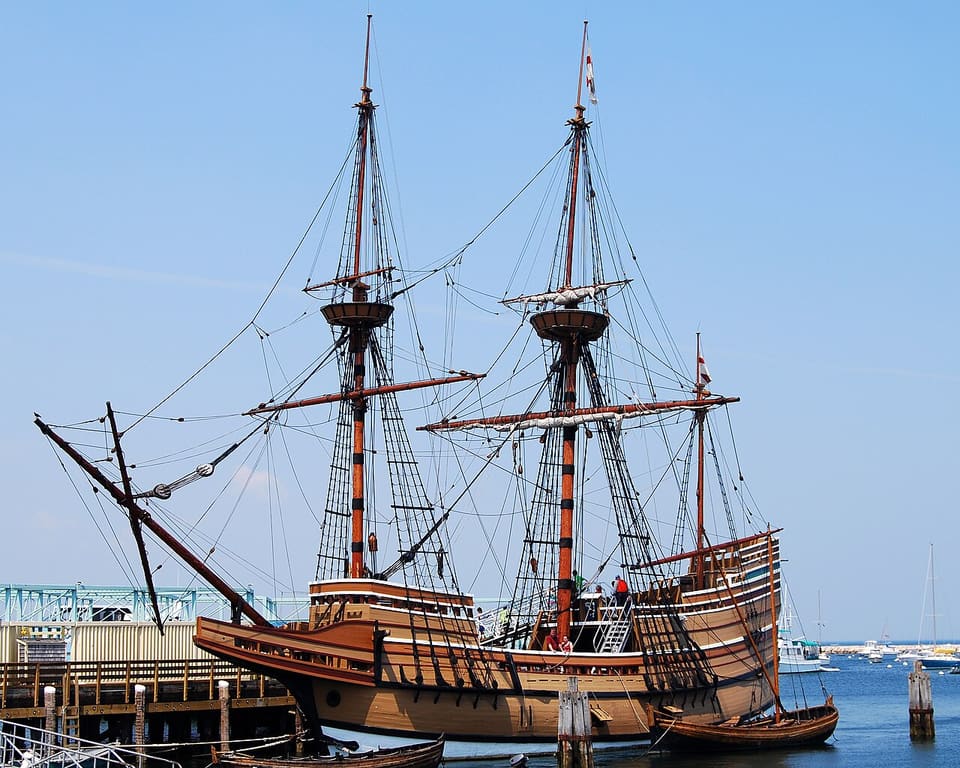
You're on the waterfront in Plymouth, at the state pier off Water Street, and the tall wooden ship tied up in front of you is Mayflower II. Look at her hull: a deep brown, trimmed with dark-red strapwork, the colors of an English merchant ship of the 1600s, worked out from Dutch and English paintings. Then find her stern. Carved there is a small blossom, a hawthorn, which the English call a mayflower.
This ship exists because of a British veteran named Warwick Charlton, who had fought alongside American allies in North Africa. In August 1954 he had an idea: build a copy of the Mayflower in England and sail her to America, as a thank-you for that wartime friendship.
His group, Project Mayflower, knew how grand gestures like this end. Earlier replica ships had made their big voyages and then rotted away once interest in them faded. So before they built anything, they went looking for a permanent home.
They found one here, at a living history museum then called Plimoth Plantation, which had been planning its own Mayflower for years. In 1951 it had commissioned a naval architect from MIT, William A. Baker, to draw up detailed plans. Those were finished before Charlton's group even announced its goals. The museum had also built a waterline model of the hull, but nothing more. They had a design and a model. They didn't have a ship.
By the spring of 1955 the two sides struck a bargain. Plimoth Plantation would supply Baker's plans and advice, and guarantee to maintain and exhibit the vessel permanently. Charlton's project would build her and sail her across the Atlantic.
She went up at the Upham Shipyard in Brixham, in Devon, built by elderly English craftsmen using traditional methods: English oak, hand-forged nails, hand-sewn linen sails, hemp cordage and Stockholm tar. At her launch in 1956 she was toasted from a gold loving cup, which was then thrown into the water in the traditional manner and quickly retrieved by a diver. Tradition only goes so far with gold.
In April 1957 she sailed under Commander Alan Villiers. He feared her slender spars and authentic rigging might be dismasted by Atlantic storms on a direct route, so he swung south with the trade winds. She still met one real gale, off Bermuda, called at Provincetown, and arrived here in Plymouth on June 13, 1957.
On Thanksgiving 1970, members of the American Indian Movement led by Russell Means seized Mayflower II in protest. The deck that celebrated one arrival became a stage for people who wanted the other side of that story heard.
And the rot Charlton's group feared? The promise to keep her is why she's still in front of you. After repairs and restoration in Mystic, Connecticut, she returned permanently to Plymouth in 2020, in time for the 400th anniversary of the Pilgrims' arrival.
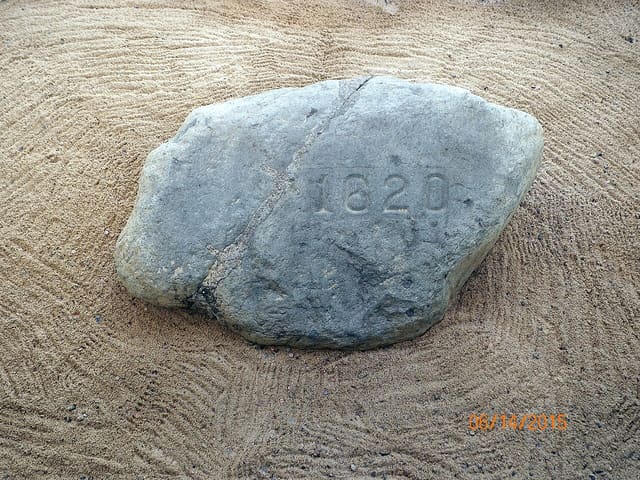
When you're ready, walk southwest along State Pier, about 260 meters and four minutes, to Plymouth Rock, a famous boulder with a story far stranger than its legend.
Hear it where it happened. It plays at stop 3 of Plymouth Walking Tour: Plymouth Rock and the Pilgrims (3 min), narrated as you walk. Unlock the tour for the audio, or try stop 1 free first.