Stories
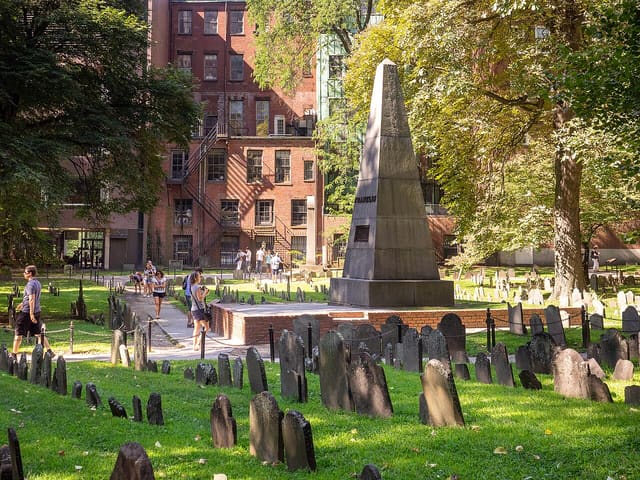
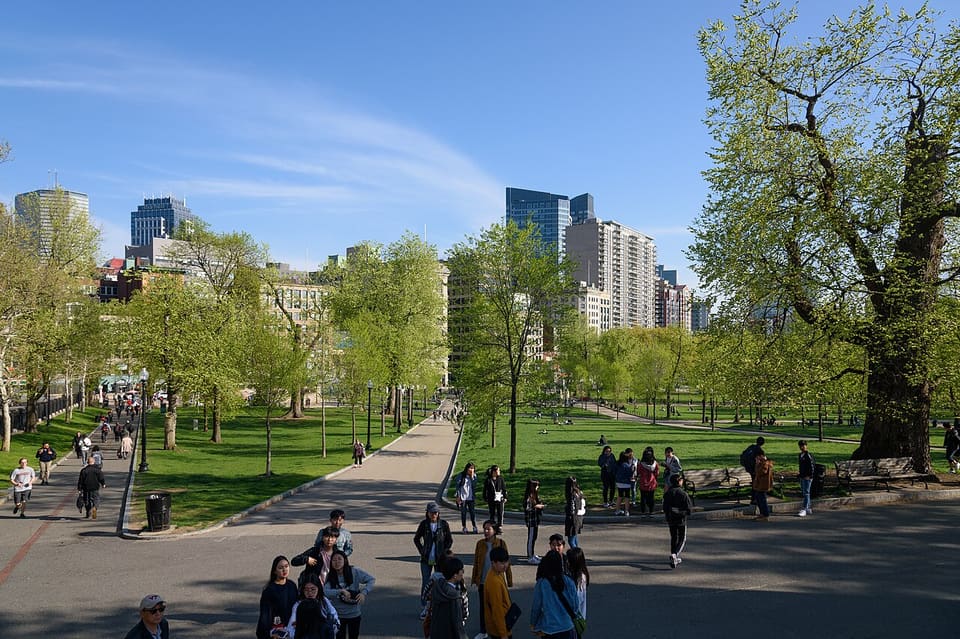
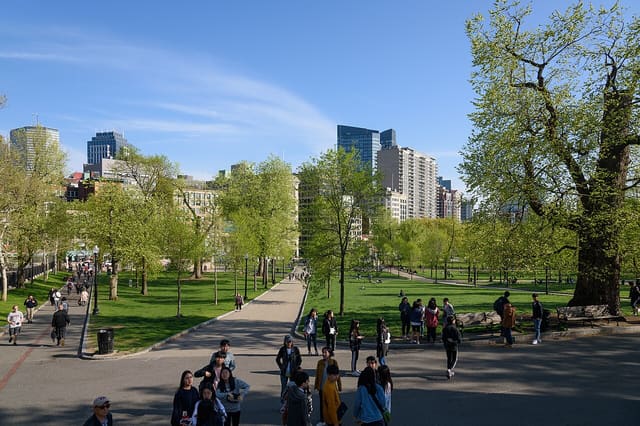
Boston CommonPhoto: King of Hearts, CC BY-SA 4.0, via Wikimedia Commons
Walking tour · Boston

Freedom Trail Walking Tour

Ten stops where Boston's colonists argued, gambled and risked everything.

1 h 17 min10 stops2 mi

Start the walk

Stop 1 is free, no sign-up. All 10 for $4.99, refunded within 7 days if it isn't for you.

See the 10 stops

The 10 stops

  1. 1Start hereFree

    Boston Common

    The Night the Pasture Became a Shore

    Free sample · 2:34
    0:002:34

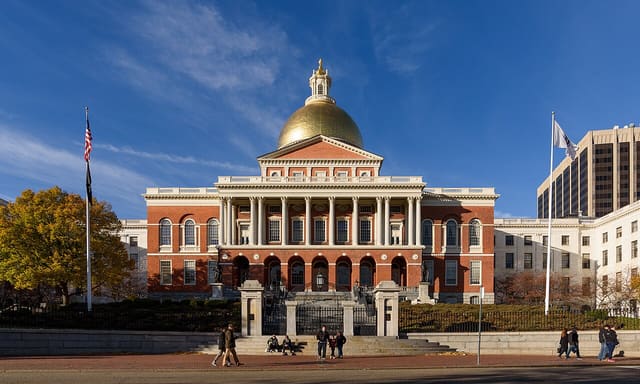
    You're standing on Boston Common, by the visitor center on the Tremont Street side. Look across the open grass and paths, and up the slope to your right you'll catch a gold dome on the hilltop. That's the State House, your next stop. Now turn your eyes the other way, west, toward the low far edge of the park, out toward Charles Street. On the night this story happens, that far edge was water.

    First, the bargain. In 1634 the Puritan town bought 44 acres for £30 from William Blaxton, the man who had lived alone on the peninsula for five years and had grown tired of his Puritan neighbors. The governor raised the money through a one-time tax on residents, six shillings a head. The town got a cow pasture.

    Then, in 1768, the pasture got soldiers. Boston had made itself a problem for the Crown, and Britain sent Redcoats to sit on the town. They camped and drilled right here, among the grazing cattle. The cows, by the way, stayed on. They were formally banned only in 1830, so the King's army spent these years sharing its parade ground with the neighbors' livestock.

    On the night of April 18, 1775, about 700 British Regulars gathered in the dark at the foot of the Common, down where that western edge met the Back Bay. Their orders pointed them toward Concord. Boats were waiting at the shoreline. The soldiers were rowed across the bay to Cambridge, and from there the march began. The Common had been a British camp before the war, and it was from here that the troops set off for Lexington and Concord. The occupation of the Common itself ended only when the British left Boston in March 1776.

    Now look west again. That shoreline is gone. In the 1800s Boston filled in the Back Bay, and the water's edge where those soldiers stepped into their boats lies somewhere under lawn and city.

    The Common has a darker record too. It was the town's execution ground, with public hangings until 1817. The most famous victim was the Quaker Mary Dyer, hanged from a great oak on June 1, 1660, for repeatedly defying a law that banned Quakers from the colony. The ground where Redcoats drilled and cattle grazed was also the place where a woman died for her faith.

    When you're ready, walk northwest, then turn right onto Lafayette Mall, about seven minutes, toward that gold dome.
The whole walk

10 stories across Boston

1 h 17 min · 10 stops · 2 mi

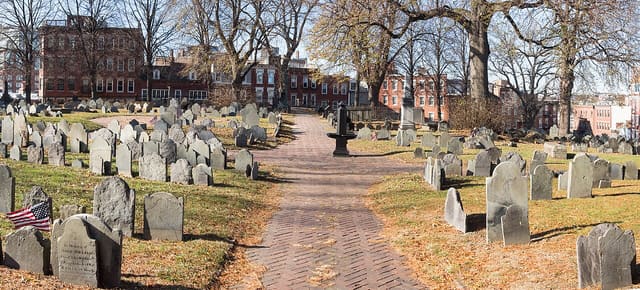
Starts at Boston Common and ends at Copp's Hill Burying Ground.

  • Plays right here in your browser, or in the app
  • One purchase for your group, on up to 4 phones
  • Refunded within 7 days if it isn't for you

Plan your walk

    How long

    About 1 h 17 min for 2 mi with all 10 stories. Going inside the sites adds time.

    Start and finish

    Starts at Boston Common and ends at Copp's Hill Burying Ground.

    Add it to my calendar

    Know someone who'd love this walk? or see more gift ideas.

    Questions people ask

    Can I do the Freedom Trail by myself?

    Yes. The trail is a line of red brick and paint in the sidewalk, and you can follow it any time. This tour plays a story at each of 10 sites from Boston Common to Copp's Hill Burying Ground, so you get the history without a guide.

    Where does the Freedom Trail start and end?

    The official trail starts at Boston Common and ends at the Bunker Hill Monument in Charlestown. This walk covers the 10 sites from Boston Common to Copp's Hill Burying Ground in the North End; the USS Constitution and Bunker Hill are across the Charlestown Bridge from the last stop.

    How long does it take to walk the Freedom Trail?

    This walk is 2 miles and takes about 1 hour 17 minutes with all 10 stories. Going inside sites like the Old State House or the Paul Revere House adds time, so many people make a half day of it.

    Does it cost money to walk the Freedom Trail?

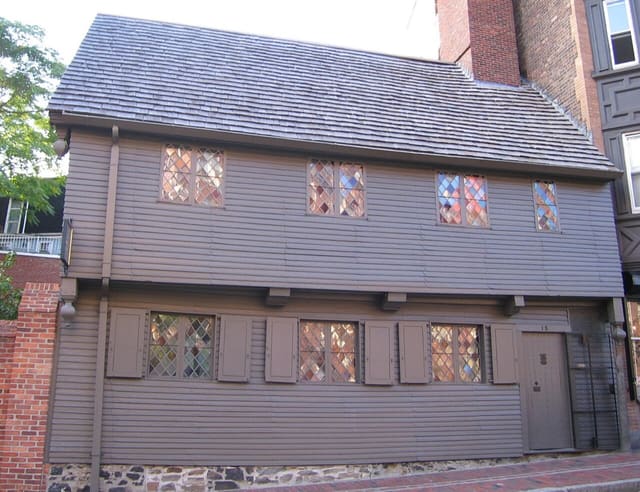
    Walking the trail is free. Some sites charge to go inside, including the Paul Revere House, the Old State House and the Old South Meeting House. On this audio tour the first stop is free and the other nine unlock with one purchase.

    What should I not miss on the Freedom Trail?

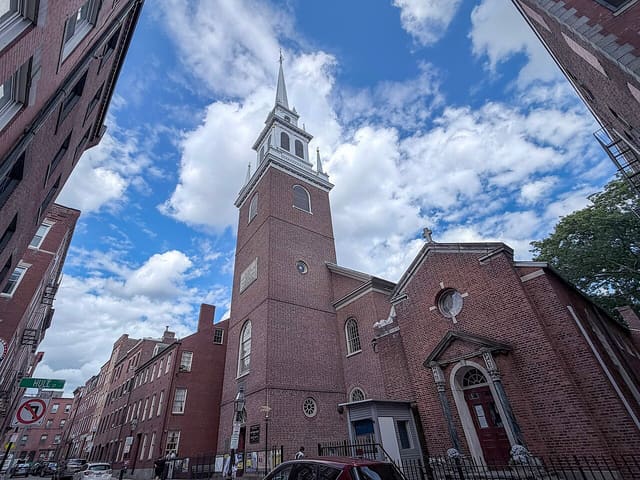
    Old North Church (1723), where two lanterns were hung on the night of Paul Revere's ride; the Old State House (1713), where the Declaration of Independence was read to Boston; and the Granary Burying Ground, where Paul Revere, Samuel Adams and John Hancock are buried.

    Do I need the app?

    No. After you unlock, the tour plays right here in your browser: keep the screen on and tap each stop. The free Stories app adds GPS auto-play, so each story starts by itself when you arrive, with your phone in your pocket, and works offline.

    How many people can listen?

    One purchase covers your group on up to 4 phones. Share the link from your receipt, or everyone can sign in to the app with the same email.

    Does it work offline?

    In the app, yes: download the tour on Wi-Fi before you go. In the browser you need a signal, which is fine on most city streets; open the tour once before you leave.

    When can I start?

    Any time. It is self-guided, so there are no departure times and no group to keep up with. Pause for coffee and pick up where you left off.

    Can I give this tour as a gift?

    Yes. Tap "Give it as a gift", type their email and a note, and pick the day it arrives (Christmas morning works). They open it in their phone's browser; you get the receipt.

    Can I get a refund?

    Yes. If the tour did not work for you, email support@getstories.app within 7 days and we will refund it.

    Who made this tour?

    Stories writes each tour from public sources, checks every claim against them, and narrates it with a synthetic voice. The sources are listed at the end of this page; if you spot a mistake, tell us at support@getstories.app.

    About this tour and its sources

    You're standing on Boston Common, the oldest public park in the country. Look across the open grass toward the gold dome rising on the hill. That's the Massachusetts State House, and the walk will climb to it. But first, the ground under your feet.

    In 1634, the town of Boston bought about 44 acres of this land from William Blaxton, the first English settler on the peninsula, for 30 pounds. The money came from a tax of six shillings per resident. Before English settlement, this was the homeland of the Massachusett people. For about two centuries the Common was a cow pasture, and cows were not formally banned until 1830. The cradle of liberty had a lot of livestock in it.

    This ground kept changing roles. British troops camped and drilled here in 1768. Public hangings took place here until 1817. And the people who later challenged the Crown were merchants, printers, silversmiths and ministers, with families and a great deal to lose. Why did they risk it? Every stop gives a piece of the answer.

    This is a working city, so cross with the lights, watch the brick underfoot, and take your time.

    Now, stay right here on the Common. Your first story begins on a night when this pasture became a shore.

    Written from public sources, every claim checked against them, narrated by a synthetic voice. Last checked October 2026.

    Share this walk