The whole story
The Family at the Upstairs Windows
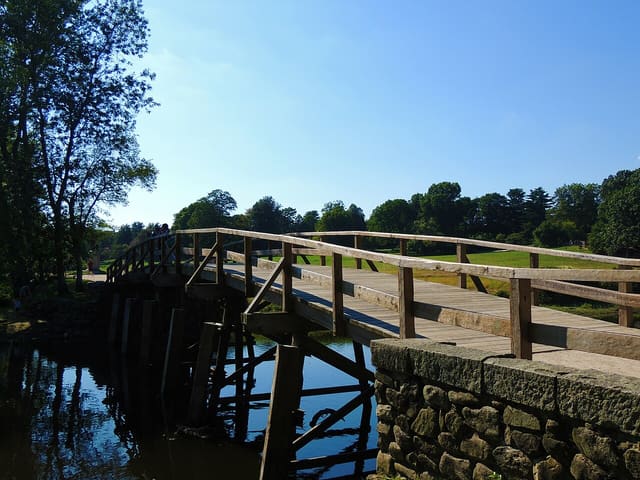
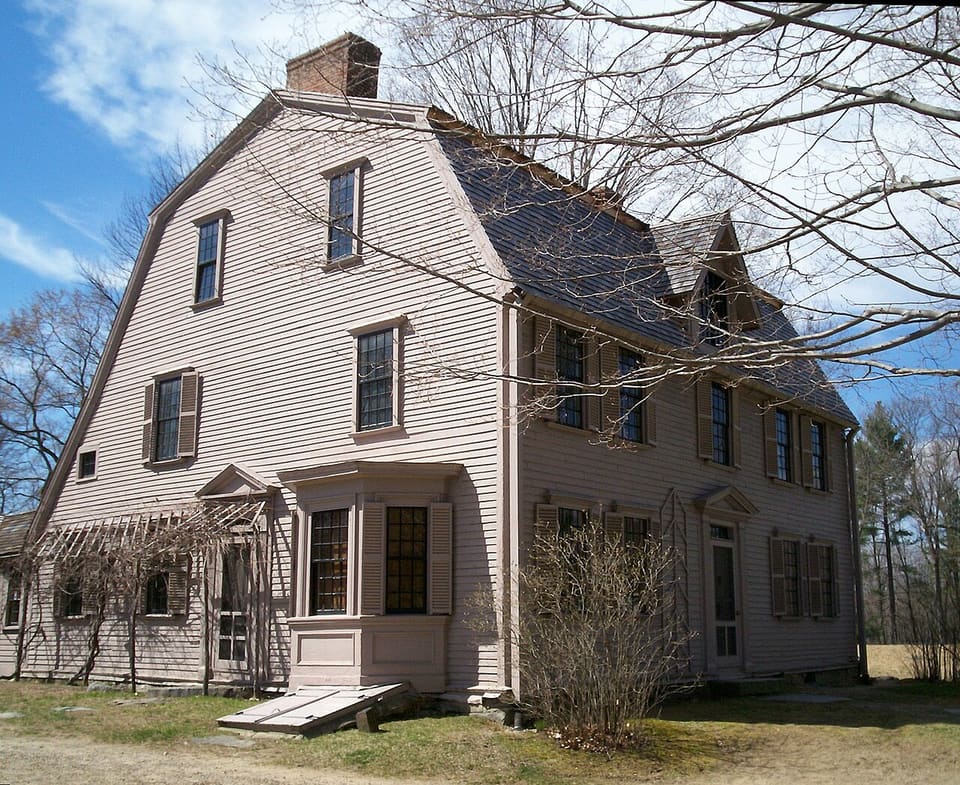
You've pulled up on Monument Street in Concord, at the Old Manse, a gray clapboard house set back at the end of a long lane. Behind it, out of sight from here, runs the Concord River. Look at the upstairs windows on the front of the house. On the morning of April 19, 1775, a family stood at windows like those and watched the fight at the North Bridge.
The house was brand new then. It was built in 1770 for the Reverend William Emerson, Concord's town minister. The autumn before, in October 1774, the Provincial Congress met in Concord, and Emerson served as its chaplain. The Trustees of Reservations call him a patriot minister, and his house stood right beside the North Bridge.
So when the fight came, it came almost to his back fields. Emerson watched from his farmland. His wife, Phebe Bliss Emerson, stayed in the house with their children, and they watched from the upstairs windows.
William Emerson's part in the war didn't end that morning. He later became a chaplain to the Continental Army and went north to Fort Ticonderoga. In October 1776, on his way home, he died in West Rutland, Vermont. He never saw this house again.
Phebe Emerson stayed. She married the Reverend Ezra Ripley, who had succeeded her husband as minister at First Parish Church and went on to serve as Concord's town minister for 63 years. The family continued to live in the Old Manse.
In October 1834, William Emerson's grandson came to board here with his aging step-grandfather, Ezra Ripley. The grandson was Ralph Waldo Emerson. While he lived here, he wrote the first draft of his essay "Nature," a foundational work of the Transcendentalist movement. And in 1837 he wrote "Concord Hymn," about the fight at the bridge. You know its most famous line, about the shot heard round the world. He wrote it about a battle his grandfather's family had watched from these windows.
The house kept collecting writers. In 1842, Nathaniel Hawthorne rented it for 100 dollars a year and moved in with his new wife, Sophia. Before they arrived, Henry David Thoreau planted them a vegetable garden as a wedding gift. Upstairs, in the room Hawthorne used as his study, the couple etched affectionate inscriptions into the window panes with her diamond ring. Not every house gets a war and a honeymoon in the same set of windows.
Hear it where it happened. Unlock its tour for the audio.