The whole storyStop 4 of Brooklyn Bridge and Lower Manhattan Walking Tour
The Little Chapel That Stood
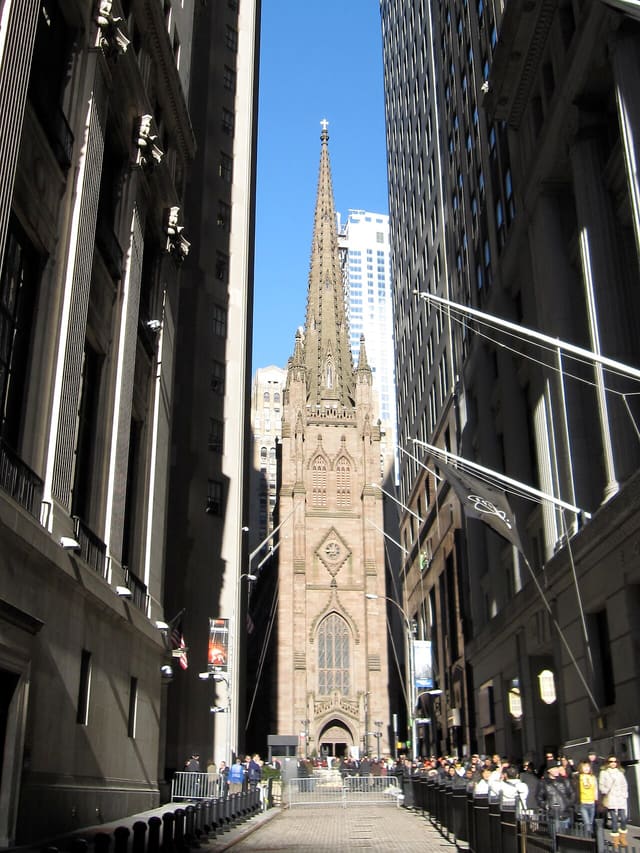
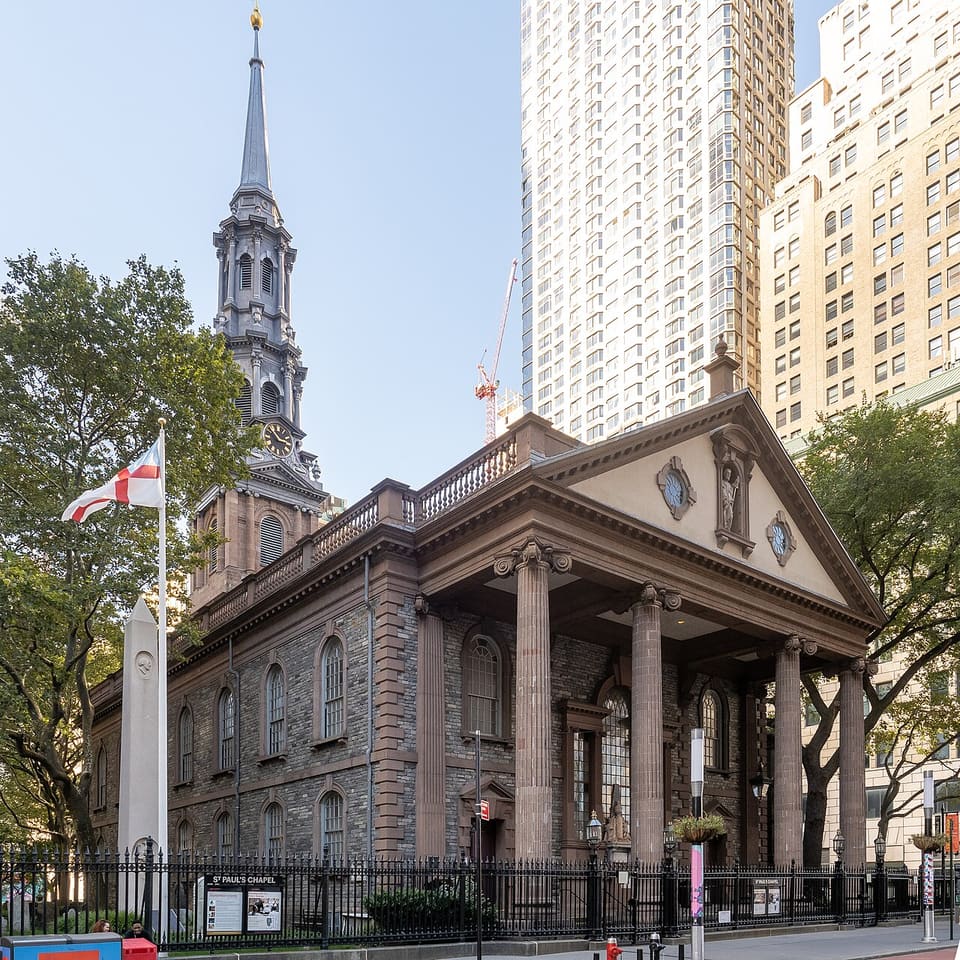
You're on Broadway between Fulton and Vesey Streets, standing in front of St. Paul's Chapel. Look up at the spire, an octagon rising from a square base. Then bring your eyes down to the figure of Saint Paul on the Broadway side. It's a resin replica. The original, carved from tulip poplar and installed in 1790, was moved indoors in 2016 to protect it from the weather.
When St. Paul's was finished in 1766, it stood in a field some distance from the growing port city to the south. It was built on land granted by Queen Anne, land that had been Lenape country long before any crown claimed the right to give it away. It was a chapel-of-ease, meaning a second church for parishioners who found the mother church, Trinity, inconvenient to reach. On completion it was the tallest building in New York City. Today it is the oldest surviving church building in Manhattan.
The first close call came in 1776. The British had just captured the city, and a great fire burned through about a quarter of it. Trinity Church, the mother church, burned. St. Paul's came through. Later, George Washington worshipped here, along with members of Congress, on his Inauguration Day, April 30, 1789, and he attended services here during the two years New York was the nation's capital.
The second close call came 225 years after the first. The back of the chapel faces Church Street, opposite the east side of the World Trade Center site. On September 11, 2001, the towers collapsed behind it. St. Paul's didn't lose a single window. The building was largely protected by a sycamore tree on the northwest corner of the property, which was hit by falling debris and took the brunt of the damage.
For nine months afterward, hundreds of volunteers worked 12-hour shifts around the clock. They served meals, made beds, counseled and prayed with firefighters, police and construction workers. Massage therapists, chiropractors, podiatrists and musicians tended to their needs. The building put up as a convenience for colonial churchgoers became a place where exhausted people could rest.
Meanwhile, the fence around the grounds filled with flowers, photos and teddy bears. Trinity's officials put up panels so visitors could add their own messages, and they estimated they would need 15. They needed 400.
That's how St. Paul's got its nickname: the Little Chapel That Stood. Inside, the chapel still keeps many of the memorial banners around the sanctuary.
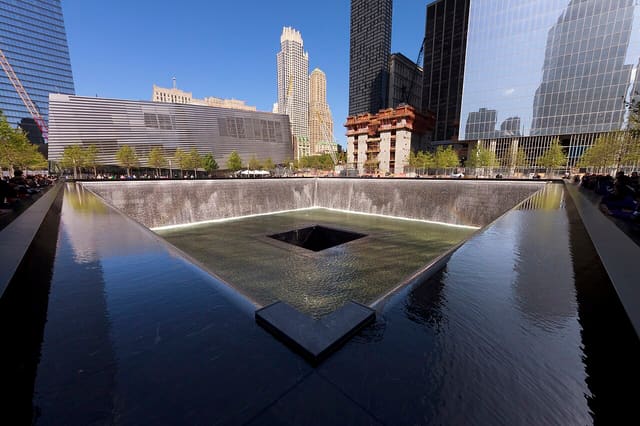
When you're ready, walk northwest, about 490 meters and seven minutes, to the 9/11 Memorial, where two vast pools sit in the footprints of the towers this chapel faced.
Hear it where it happened. It plays at stop 4 of Brooklyn Bridge and Lower Manhattan Walking Tour (3 min), narrated as you walk. Unlock the tour for the audio, or try stop 1 free first.