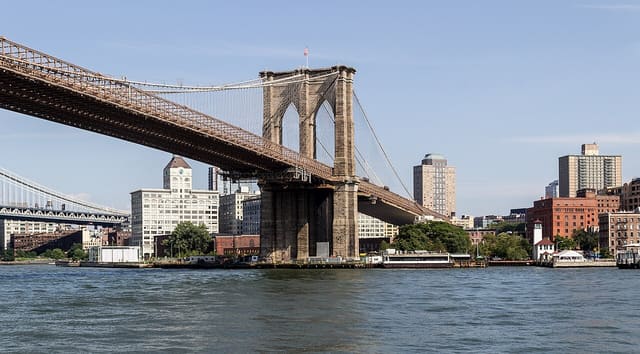
Brooklyn Bridge and Lower Manhattan Walking Tour
From the Brooklyn Bridge to the harbor, follow the places where New York built upward and a new nation took shape.
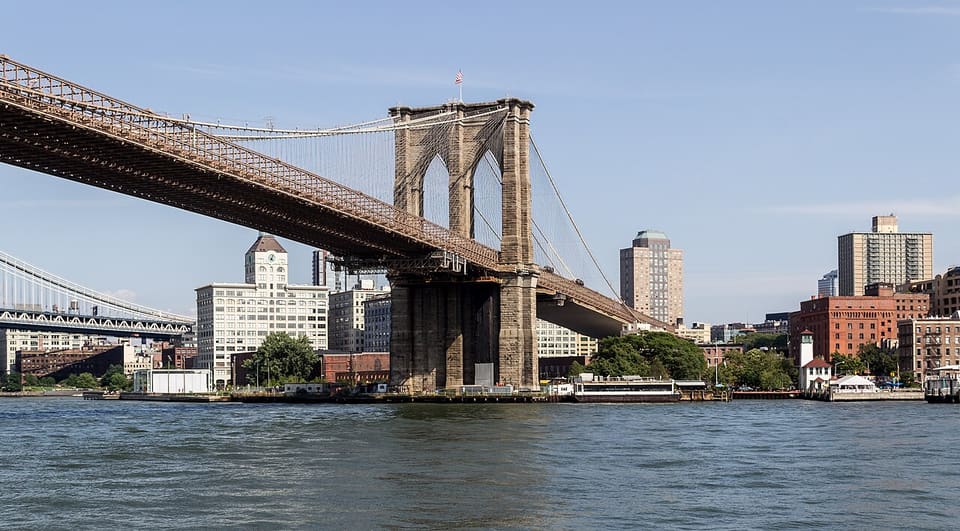 Photo: Dietmar Rabich, CC BY-SA 4.0, via Wikimedia Commons
Catherine Slip, New York, New York
Emily Roebling was the first person to cross the Brooklyn Bridge by carriage, holding a rooster. She had supervised day-to-day construction for more than ten years while chief engineer Washington Roebling was bedridden with caisson disease. She also relayed his instructions to the engineers.
You're standing at the Manhattan end of the Brooklyn Bridge, where the walkway starts its long climb out over the East River. Look ahead to the first great stone tower and its pointed Gothic arches. Then follow the four thick main cables as they sweep down from the top of that tower. Each one holds more than 5,000 steel wires, bundled tight. Remember those wires. They come back.
When this bridge opened on May 24, 1883, it was the longest suspension bridge in the world, and the first fixed crossing of the East River. Before it, getting to Brooklyn meant a boat. But the man most people credit with building it never set foot on the finished deck.
John Roebling designed it. In 1869, before construction really began, he was injured in an accident at the bridge site and died of tetanus. The job passed to his son, Washington Roebling, a civil engineer who had served in the Civil War. Washington went down into the caissons, the giant chambers sunk beneath the river to build the tower foundations. He came up too fast, and he developed what was then called caisson disease, what divers now call the bends. It left him bedridden.
So the chief engineer of the most ambitious bridge on earth was stuck in bed. The only person who visited him was his wife, Emily Warren Roebling. She carried his instructions to the engineers on site and brought back their reports. Along the way she taught herself the hard parts: the strength of materials, stress analysis, cable construction, the mathematics of how a hanging cable curves. For more than ten years, Emily Roebling ran much of the day-to-day work. She handled politicians and rival engineers so well that people came to believe she had designed the bridge. She hadn't. But in 1882, when officials moved to strip Washington of his title, it was Emily who argued his case in meeting after meeting, and won.
She had plenty to manage. The project was controlled by the Tammany Hall political machine, and it dragged on for thirteen years. A supplier even swapped in inferior wire for some of those cables you're looking at. Luckily, John Roebling had built the bridge to be six to eight times stronger than he thought it needed to be. After the fraud, engineers figured it was only four times as strong. Still plenty.
Before the official opening, Emily Roebling became the first person to cross the bridge by carriage. On her lap, as a sign of victory, she held a rooster.
One last thing to notice as you walk out. This bridge isn't quite the same length all year. Between the coldest and hottest days, it stretches and shrinks by more than a foot.
When you're ready, walk northwest along the Brooklyn Bridge Promenade, then turn right onto Beekman Street, about 18 minutes, to City Hall Park, the young city's old town commons.
From the Brooklyn Bridge to the harbor, follow the places where New York built upward and a new nation took shape.
Stop 1 of 9 on Brooklyn Bridge and Lower Manhattan Walking Tour, before City Hall Park.
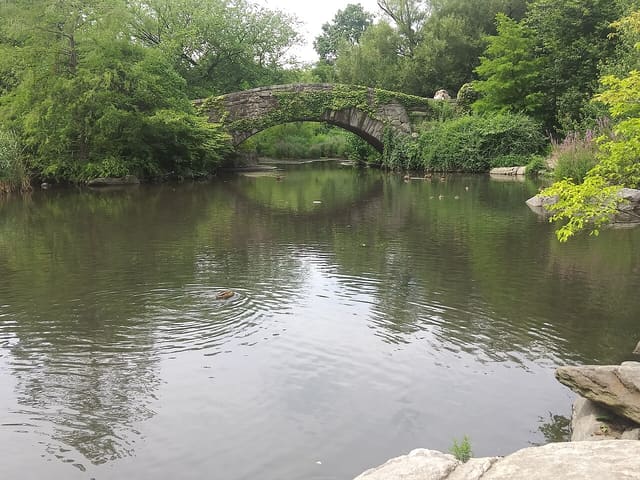
Follow the paths, bridges and terraces of Olmsted and Vaux’s Greensward plan, from the Pond to Belvedere Castle.
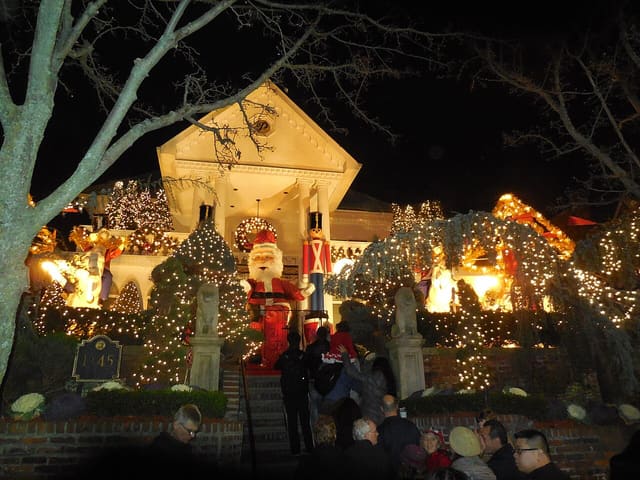
Walk the glowing streets where neighbors turned Christmas decorating into a Brooklyn tradition.
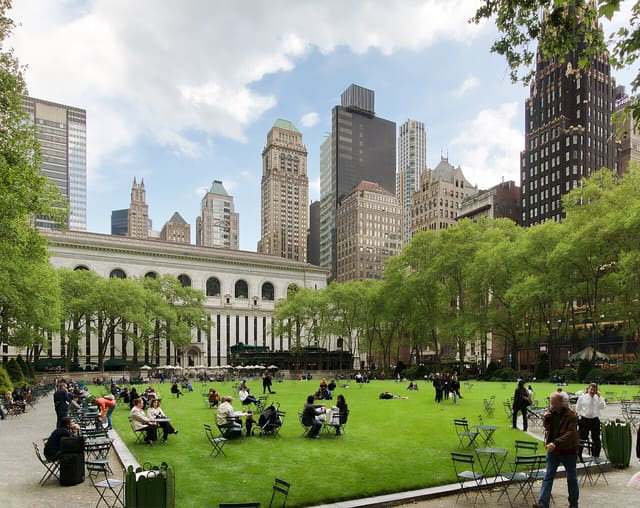
Follow Midtown’s holiday glow from Bryant Park to the Plaza, past wreath-wearing lions and the Rockefeller Center skating rink.
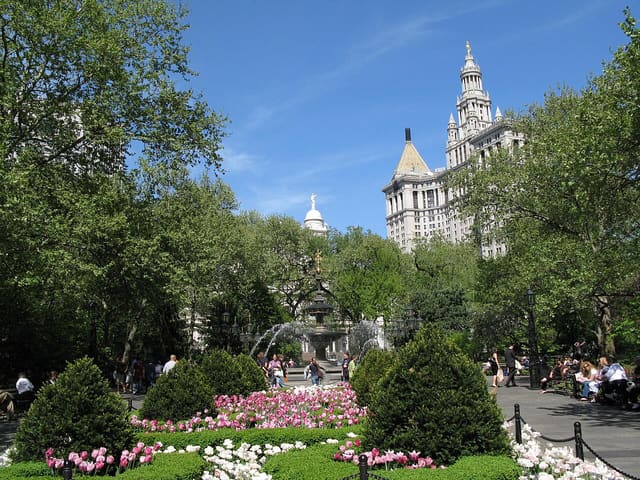
British soldiers chopped down the Liberty pole, and it was replaced five times.
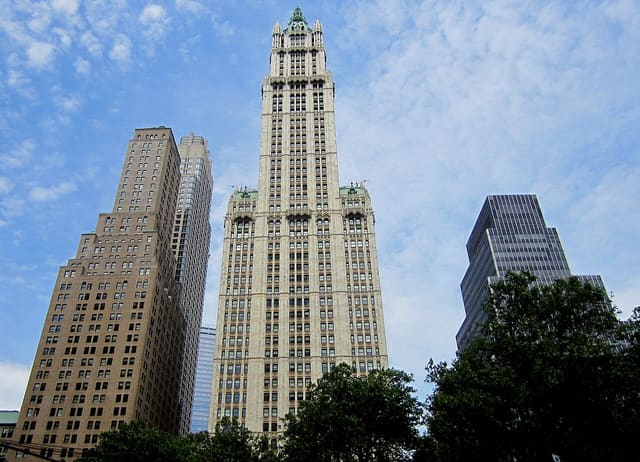
The Woolworth Building was once the world's tallest building and has its own ZIP code.
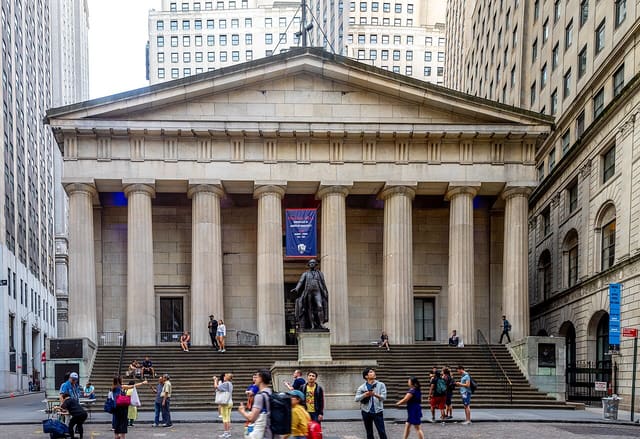
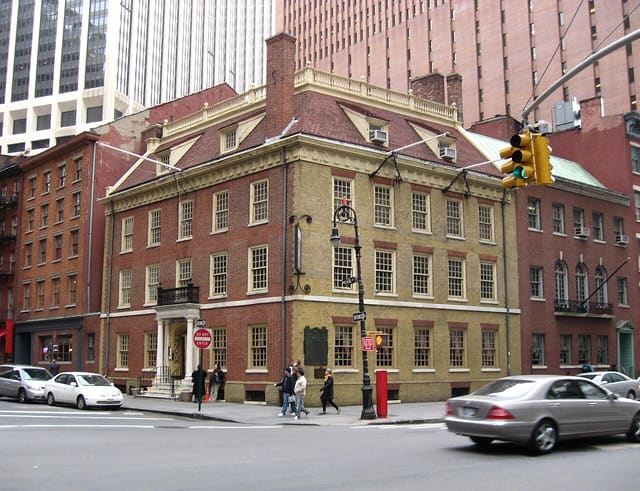
The Federal Hall where Washington took the oath was demolished in 1812.
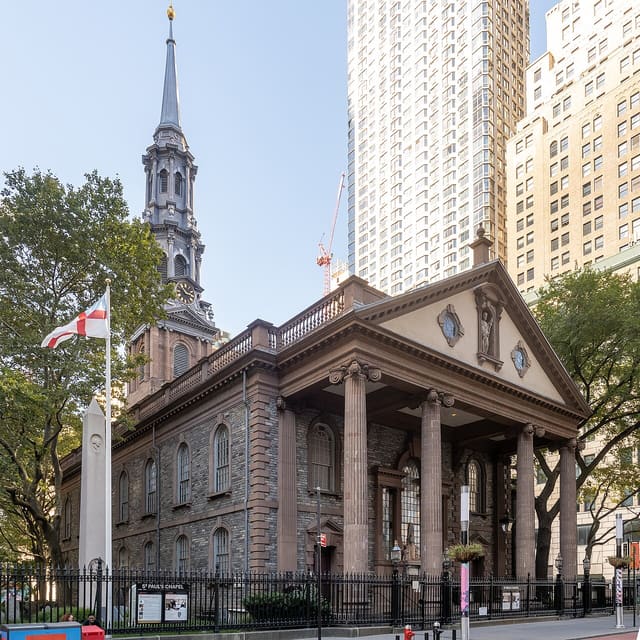
A sycamore took the brunt of falling debris on 9/11, and the chapel lost no windows.
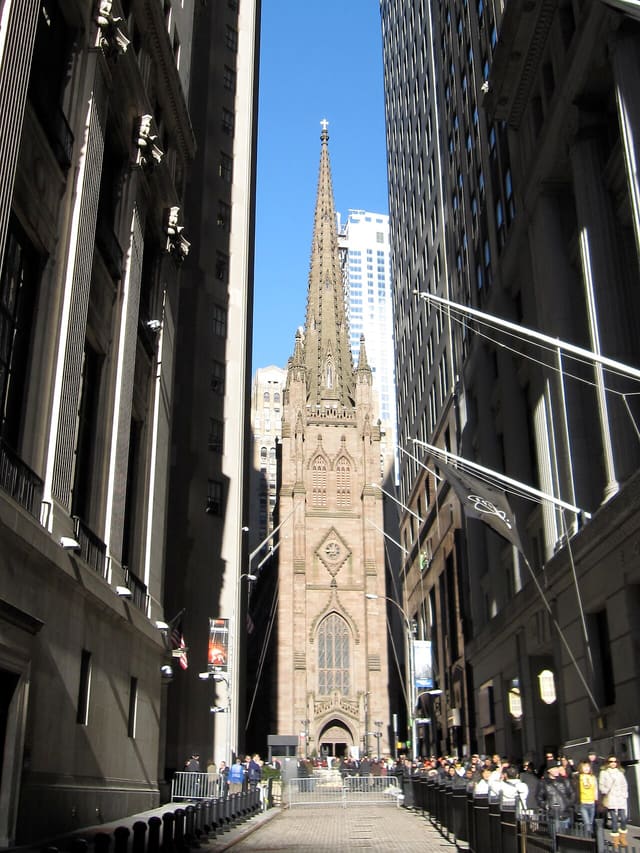
Trinity Church's original land grant required rent of 60 bushels of wheat a year.
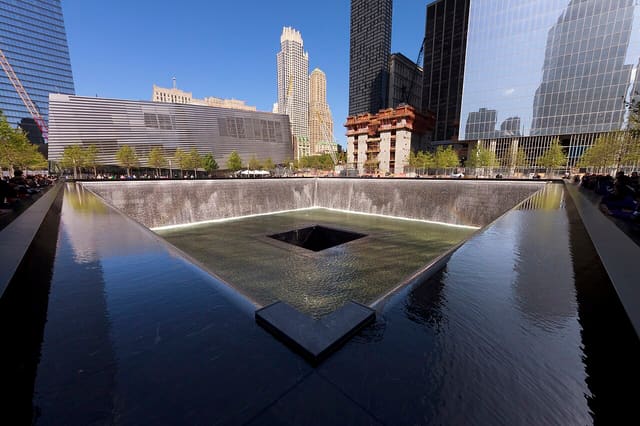
The winning memorial design was the only finalist to reject buildings over the tower footprints.
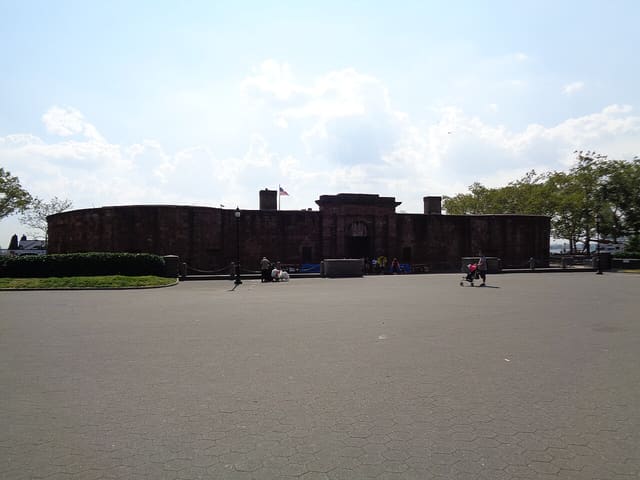
Castle Clinton had 28 heavy cannon but never fired a shot in the War of 1812.