The story
The Night the Pasture Became a Shore
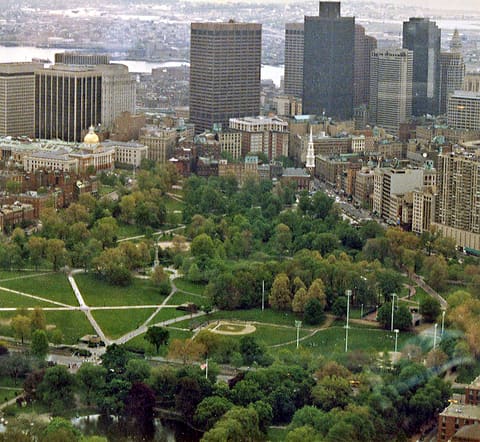
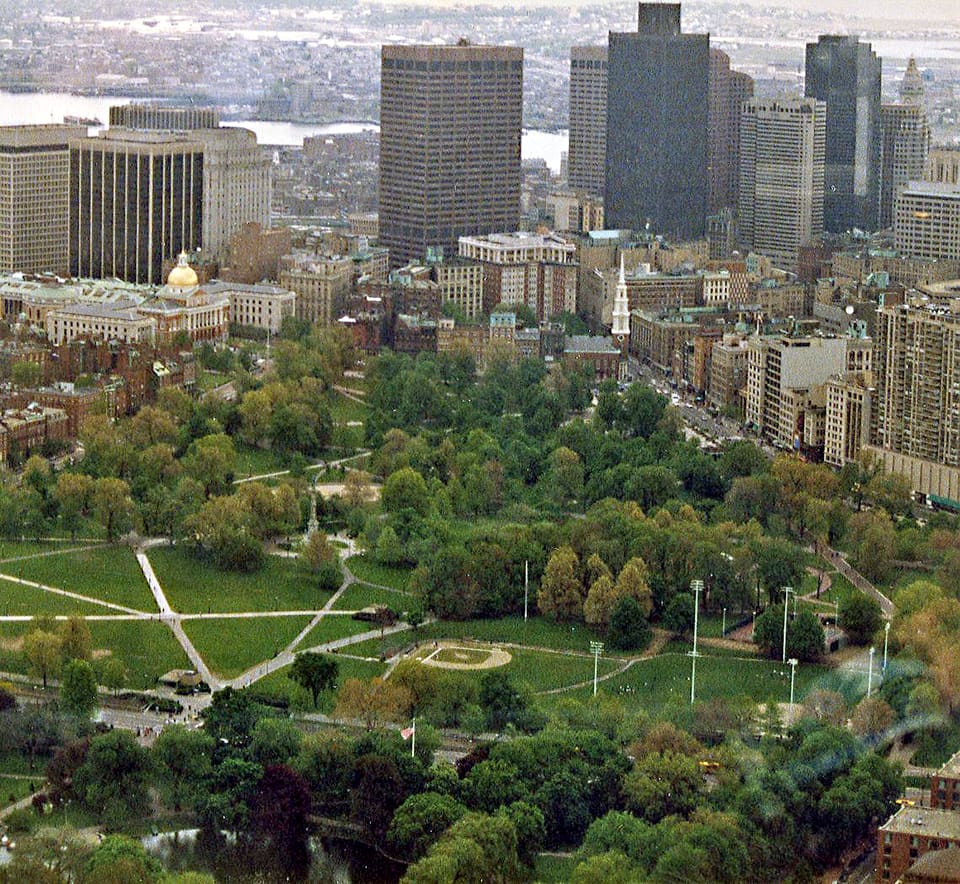
Stop 1 · Boston Common · 2:34You're standing on Boston Common, by the visitor center on the Tremont Street side. Look across the open grass and paths, and up the slope to your right you'll catch a gold dome on the hilltop. That's the State House, your next stop. Now turn your eyes the other way, west, toward the low far edge of the park, out toward Charles Street. On the night this story happens, that far edge was water.
First, the bargain. In 1634 the Puritan town bought 44 acres for £30 from William Blaxton, the man who had lived alone on the peninsula for five years and had grown tired of his Puritan neighbors. The governor raised the money through a one-time tax on residents, six shillings a head. The town got a cow pasture.
Then, in 1768, the pasture got soldiers. Boston had made itself a problem for the Crown, and Britain sent Redcoats to sit on the town. They camped and drilled right here, among the grazing cattle. The cows, by the way, stayed on. They were formally banned only in 1830, so the King's army spent these years sharing its parade ground with the neighbors' livestock.
On the night of April 18, 1775, about 700 British Regulars gathered in the dark at the foot of the Common, down where that western edge met the Back Bay. Their orders pointed them toward Concord. Boats were waiting at the shoreline. The soldiers were rowed across the bay to Cambridge, and from there the march began. The Common had been a British camp before the war, and it was from here that the troops set off for Lexington and Concord. The occupation of the Common itself ended only when the British left Boston in March 1776.
Now look west again. That shoreline is gone. In the 1800s Boston filled in the Back Bay, and the water's edge where those soldiers stepped into their boats lies somewhere under lawn and city.
The Common has a darker record too. It was the town's execution ground, with public hangings until 1817. The most famous victim was the Quaker Mary Dyer, hanged from a great oak on June 1, 1660, for repeatedly defying a law that banned Quakers from the colony. The ground where Redcoats drilled and cattle grazed was also the place where a woman died for her faith.
When you're ready, walk northwest, then turn right onto Lafayette Mall, about seven minutes, toward that gold dome.