Stories
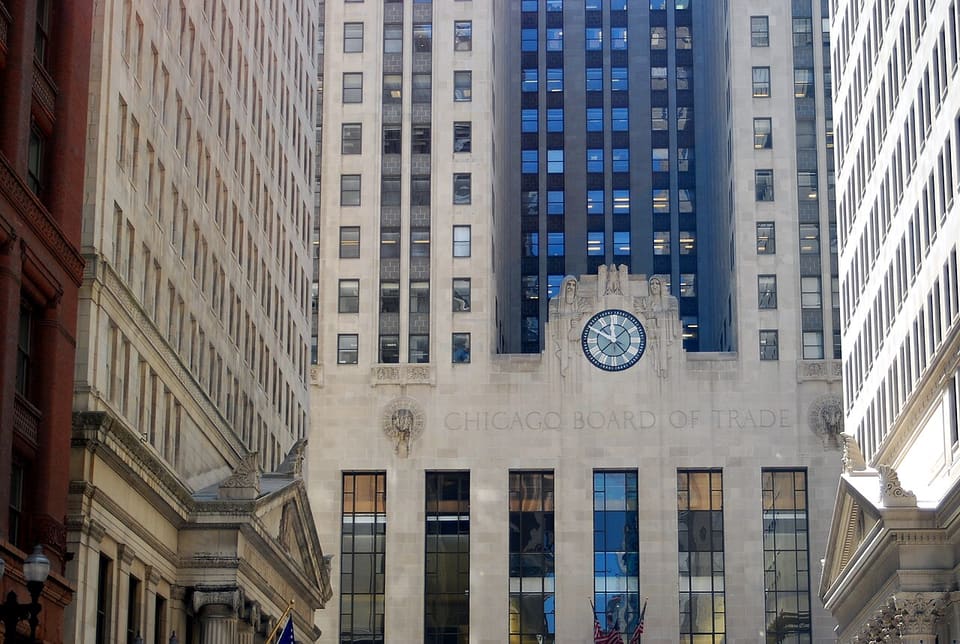
Chicago Board of Trade BuildingPhoto: southie3, CC BY 2.0, via Wikimedia Commons
Walking tour · Chicago

Chicago Loop Architecture Walking Tour

Skyscrapers, ambition, and reinvention after the Great Fire

1 h 19 min8 stops2.2 mi

Start the walk

Stop 1 is free, no sign-up. All 8 for $4.99, refunded within 7 days if it isn't for you.

See the 8 stops

The 8 stops

  1. 1Start hereFree

    Chicago Board of Trade Building

    The Tower That Mud Next Door Toppled

    Free sample · 2:29
    0:002:29

    You're standing on Jackson Boulevard at the foot of LaSalle Street, where the street's canyon of towers comes to a stop against one gray limestone wall. That's the Chicago Board of Trade Building, opened in 1930. Tip your head all the way back to the copper pyramid on top, and the figure standing on it. That's Ceres, Roman goddess of grain, three stories tall and made of aluminum. She's up there because grain built this place.

    But this isn't the first Board of Trade on this spot. It's the second, and the first one has the better story.

    In 1885 the traders moved into a palace here designed by William W. Boyington, the architect best known for the Chicago Water Tower. It had granite from Maine, mahogany interiors, a great hall under a stained-glass skylight, and a clock tower 320 feet high topped with a copper weather vane shaped like a ship. It was the tallest building in Chicago, the first in the city past 300 feet, and the first commercial building in Chicago with electric light.

    It also cost about two million dollars, in the middle of an economic depression. On the night of the opening banquet, a column of labor activists marched on it, led by Albert Parsons, Lucy Parsons and Lizzie Holmes. They denounced it as the crowning symbol of all that was hateful in the private property system. Thousands of spectators cheered them. Police blocked them at Jackson, then at LaSalle, and they got within half a block of a building bathed in that brand-new electric light.

    Here's the turn. The marchers never touched the building. What doomed it was the mud. It was built on caissons surrounded by muck, and in the 1920s, when construction began across the street on the Federal Reserve Bank, the Board of Trade was left structurally unsound. In 1929 it was demolished.

    The firm of Holabird and Root built this replacement, and it became the first building in Chicago to exceed 600 feet. Nothing in the city stood taller for decades, until 1965, when the Richard J. Daley Center surpassed it.

    Now look at the north face, where bull heads protrude from the stone, a nod to a rising market. And one dry footnote: the building's own history says Al Capone kept a lockbox in the vault in the basement. Even the gangsters trusted LaSalle Street with their money.

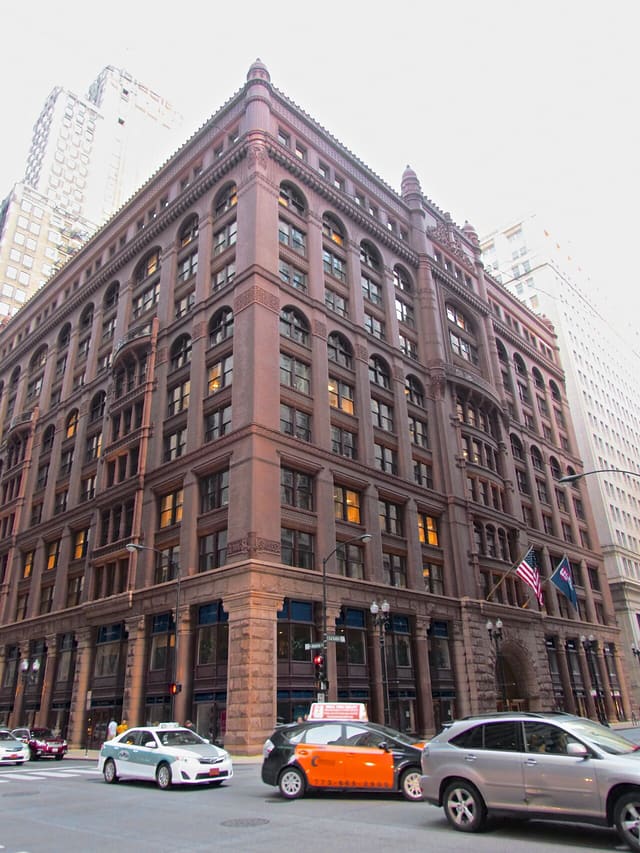
    When you're ready, walk east about two minutes to the Rookery, where two architects built a masterpiece and then moved in themselves.
The whole walk

8 stories across Chicago

1 h 19 min · 8 stops · 2.2 mi

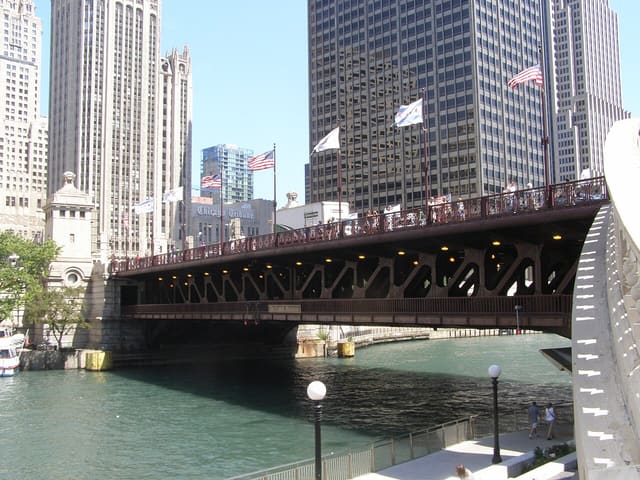
Starts at Chicago Board of Trade Building and ends at DuSable Bridge.

  • Plays right here in your browser, or in the app
  • One purchase for your group, on up to 4 phones
  • Refunded within 7 days if it isn't for you

Plan your walk

    How long

    About 1 h 19 min for 2.2 mi with all 8 stories. Going inside the sites adds time.

    Start and finish

    Starts at Chicago Board of Trade Building and ends at DuSable Bridge.

    Add it to my calendar

    Know someone who'd love this walk? or see more gift ideas.

    Questions people ask

    Can you do a self-guided architecture tour of Chicago?

    Yes. This walk plays a story at each of eight Loop buildings and bridges, from the Chicago Board of Trade to the Michigan Avenue Bridge. Start any time; there are no tickets to buy for the street.

    How long does the tour take?

    About 1 hour 19 minutes in all, walking 2.2 miles and listening to all eight stories.

    Can you go inside the Rookery?

    The lobby, remodeled by Frank Lloyd Wright in 1905, is usually open to visitors during business hours.

    Where does the tour start and end?

    It starts at the Chicago Board of Trade Building and ends at the Michigan Avenue Bridge.

    What stops are on the tour?

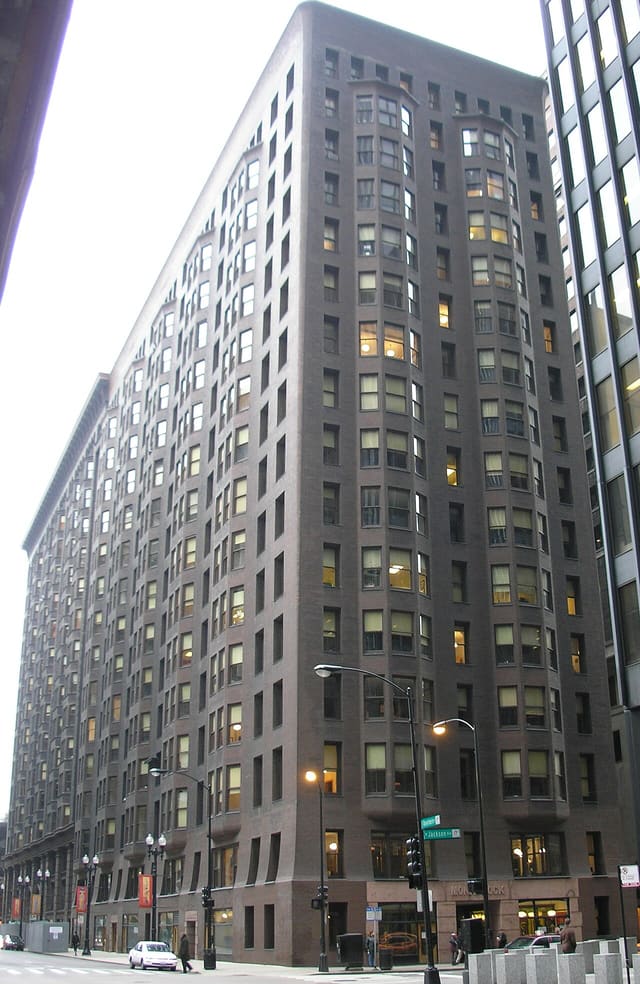
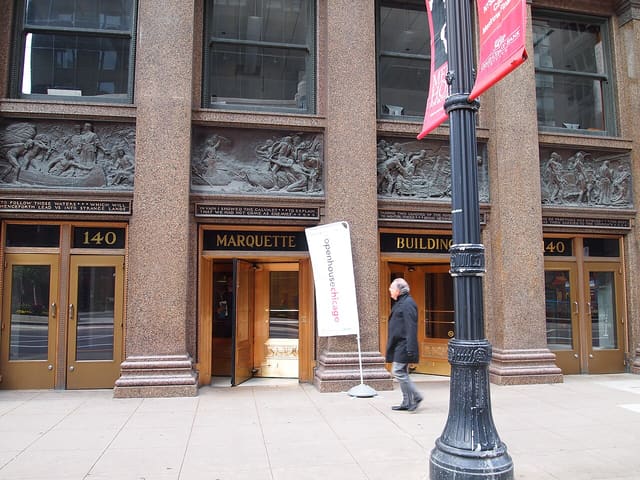
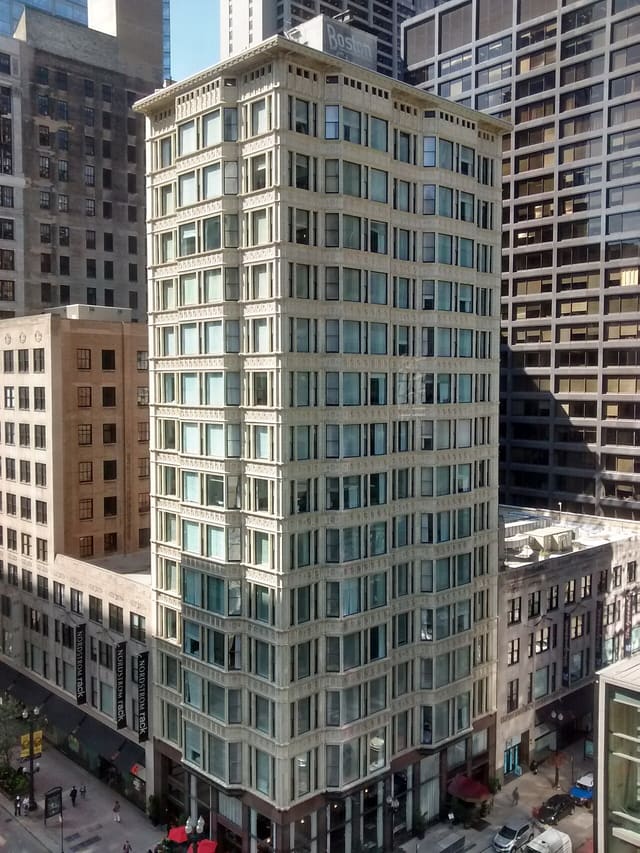
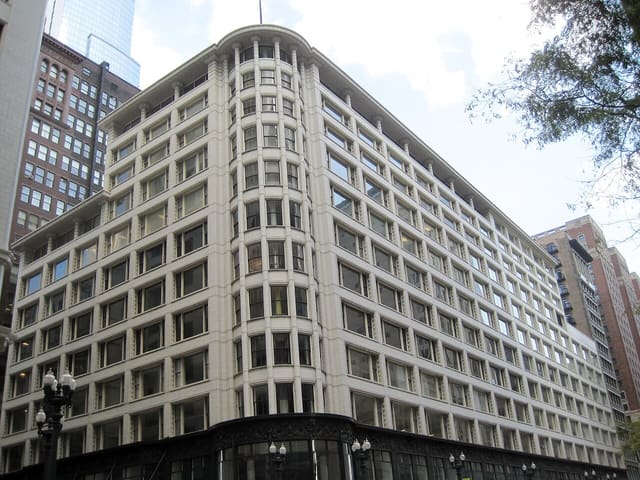
    The eight stops are the Chicago Board of Trade Building, The Rookery, Monadnock Building, Marquette Building, Reliance Building, the Carson, Pirie, Scott Building, Chicago Cultural Center and Michigan Avenue Bridge.

    Do I need the app?

    No. After you unlock, the tour plays right here in your browser: keep the screen on and tap each stop. The free Stories app adds GPS auto-play, so each story starts by itself when you arrive, with your phone in your pocket, and works offline.

    How many people can listen?

    One purchase covers your group on up to 4 phones. Share the link from your receipt, or everyone can sign in to the app with the same email.

    Does it work offline?

    In the app, yes: download the tour on Wi-Fi before you go. In the browser you need a signal, which is fine on most city streets; open the tour once before you leave.

    When can I start?

    Any time. It is self-guided, so there are no departure times and no group to keep up with. Pause for coffee and pick up where you left off.

    Can I give this tour as a gift?

    Yes. Tap "Give it as a gift", type their email and a note, and pick the day it arrives (Christmas morning works). They open it in their phone's browser; you get the receipt.

    Can I get a refund?

    Yes. If the tour did not work for you, email support@getstories.app within 7 days and we will refund it.

    Who made this tour?

    Stories writes each tour from public sources, checks every claim against them, and narrates it with a synthetic voice. The sources are listed at the end of this page; if you spot a mistake, tell us at support@getstories.app.

    About this tour and its sources

    You're standing at the foot of LaSalle Street, where the Chicago Board of Trade Building closes off the end of the canyon like a period at the end of a sentence. Look up. The tower opened in 1930, designed by the firm Holabird & Root. It was the first building in Chicago to pass 600 feet, and it stayed the city's tallest until 1965. At the very top stands Ceres, the Roman goddess of grain, a three-story aluminum figure above a copper pyramid, keeping watch over a building where fortunes rose and fell on the price of wheat. The sculptor gave her no detailed face.

    Here is the question this tour chases. In 1871 the Great Fire burned the heart of Chicago. Within a generation, the city was raising some of its boldest towers. How did that happen? The answer runs through architects who argued, investors who counted every penny, and a few buildings that nearly didn't stand up. It all happened on land the Potawatomi, Ojibwe and Odawa nations ceded in the Treaty of Chicago in 1833.

    The walk covers about 1.75 miles. Cross with the lights, keep looking up, and take your time.

    Written from public sources, every claim checked against them, narrated by a synthetic voice. Last checked October 2026.

    Share this walk