Chicago Loop Architecture Walking Tour
Walk the Loop’s canyons and see how Chicago’s architects made height a symbol of commercial ambition.
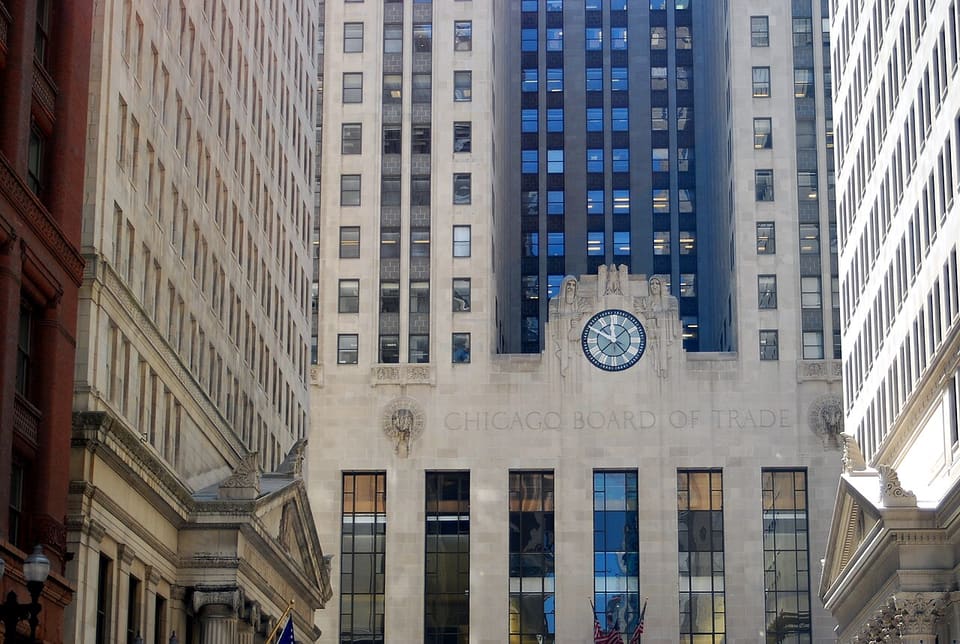 Photo: Photo: southie3, CC BY 2.0, via Wikimedia Commons
West Jackson Boulevard, Chicago, Illinois
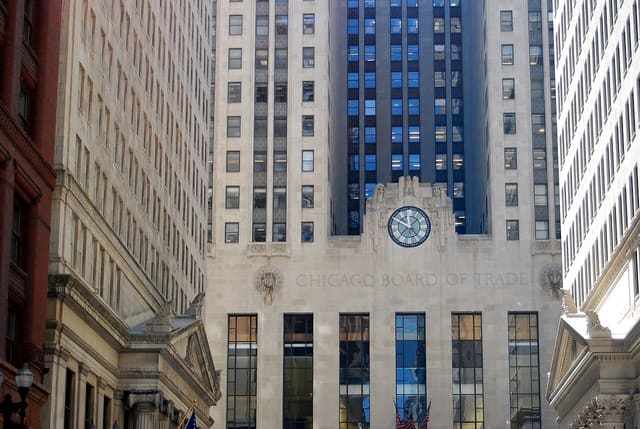
The Chicago Board of Trade Building is a 44-story, 604-foot (184 m) Art Deco skyscraper located in the Chicago Loop, standing at the foot of the LaSalle Street "canyon". Built in 1930 for the Chicago Board of Trade (CBOT), it has served as the primary trading venue of the CBOT and later the CME Group, formed in 2007 by the merger of the CBOT and the Chicago Mercantile Exchange.
You're standing on Jackson Boulevard at the foot of LaSalle Street, where the street's canyon of towers comes to a stop against one gray limestone wall. That's the Chicago Board of Trade Building, opened in 1930. Tip your head all the way back to the copper pyramid on top, and the figure standing on it. That's Ceres, Roman goddess of grain, three stories tall and made of aluminum. She's up there because grain built this place.
But this isn't the first Board of Trade on this spot. It's the second, and the first one has the better story.
In 1885 the traders moved into a palace here designed by William W. Boyington, the architect best known for the Chicago Water Tower. It had granite from Maine, mahogany interiors, a great hall under a stained-glass skylight, and a clock tower 320 feet high topped with a copper weather vane shaped like a ship. It was the tallest building in Chicago, the first in the city past 300 feet, and the first commercial building in Chicago with electric light.
It also cost about two million dollars, in the middle of an economic depression. On the night of the opening banquet, a column of labor activists marched on it, led by Albert Parsons, Lucy Parsons and Lizzie Holmes. They denounced it as the crowning symbol of all that was hateful in the private property system. Thousands of spectators cheered them. Police blocked them at Jackson, then at LaSalle, and they got within half a block of a building bathed in that brand-new electric light.
Here's the turn. The marchers never touched the building. What doomed it was the mud. It was built on caissons surrounded by muck, and in the 1920s, when construction began across the street on the Federal Reserve Bank, the Board of Trade was left structurally unsound. In 1929 it was demolished.
The firm of Holabird and Root built this replacement, and it became the first building in Chicago to exceed 600 feet. Nothing in the city stood taller for decades, until 1965, when the Richard J. Daley Center surpassed it.
Now look at the north face, where bull heads protrude from the stone, a nod to a rising market. And one dry footnote: the building's own history says Al Capone kept a lockbox in the vault in the basement. Even the gangsters trusted LaSalle Street with their money.
When you're ready, walk east about two minutes to the Rookery, where two architects built a masterpiece and then moved in themselves.
Walk the Loop’s canyons and see how Chicago’s architects made height a symbol of commercial ambition.
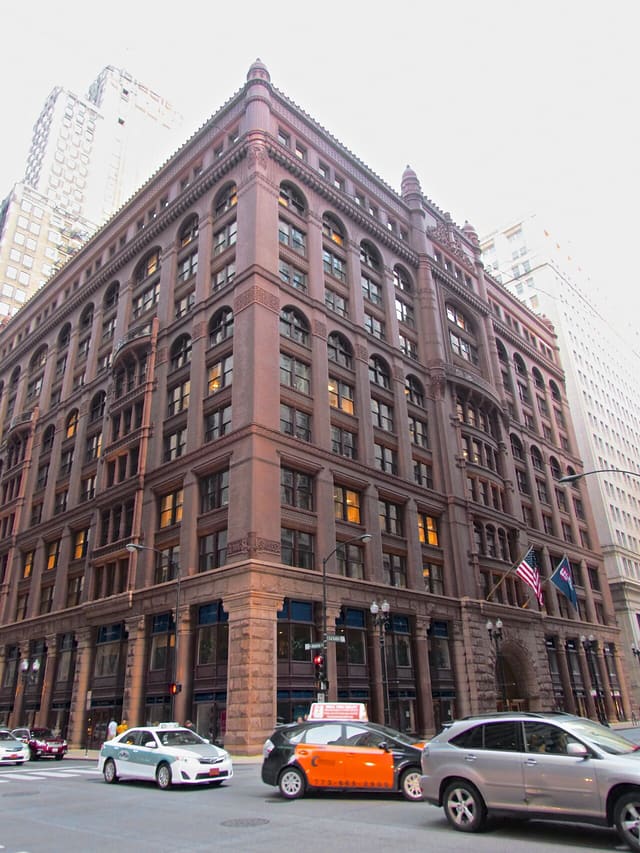
The Rookery Building is a historic office building at 209 South LaSalle Street in the Loop community area of downtown…
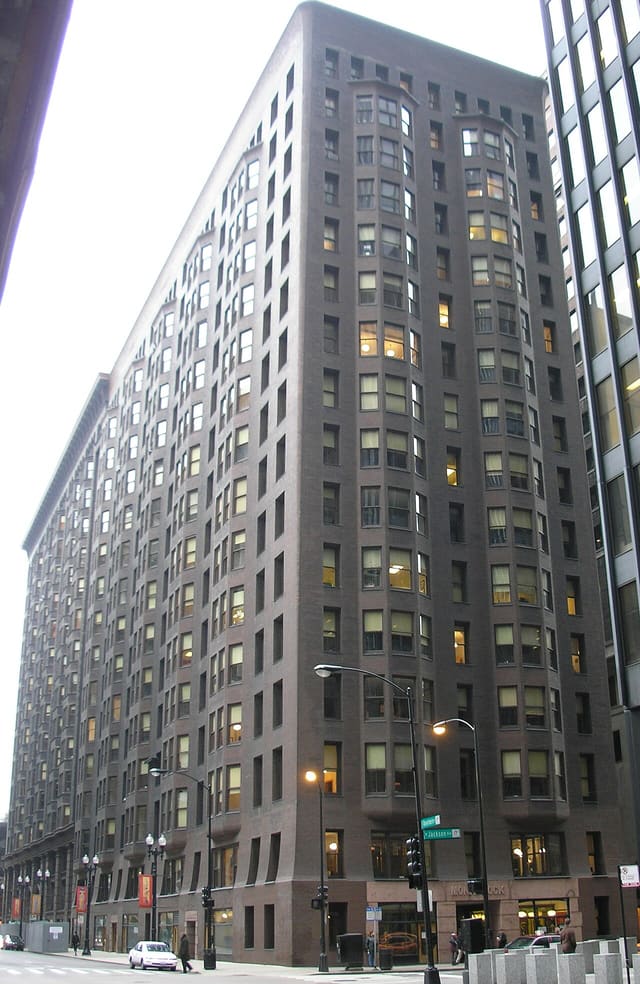
The Monadnock Building (historically the Monadnock Block; pronounced mə-NAD-nok) is a 16-story skyscraper located at…
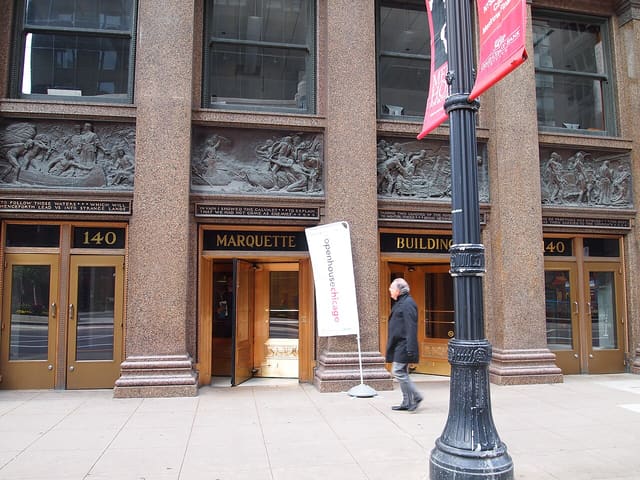
The Marquette Building, completed in 1895, is a Chicago Landmark that was built by the George A. Fuller Company and…
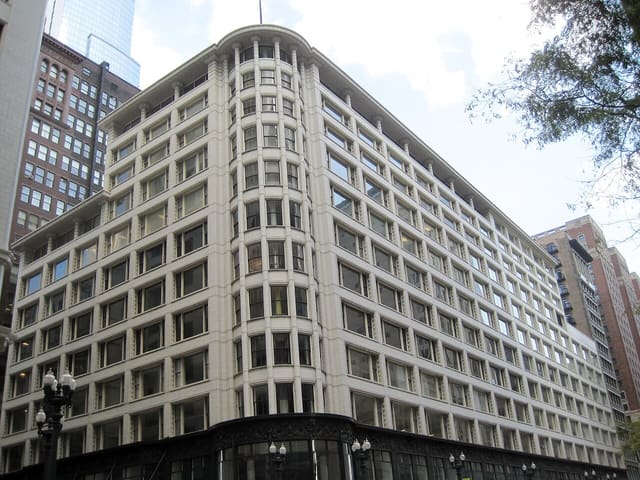
Sullivan Center (formerly known as the Schlesinger & Mayer Building, Carson Pirie Scott Building, or Carson, Pirie…
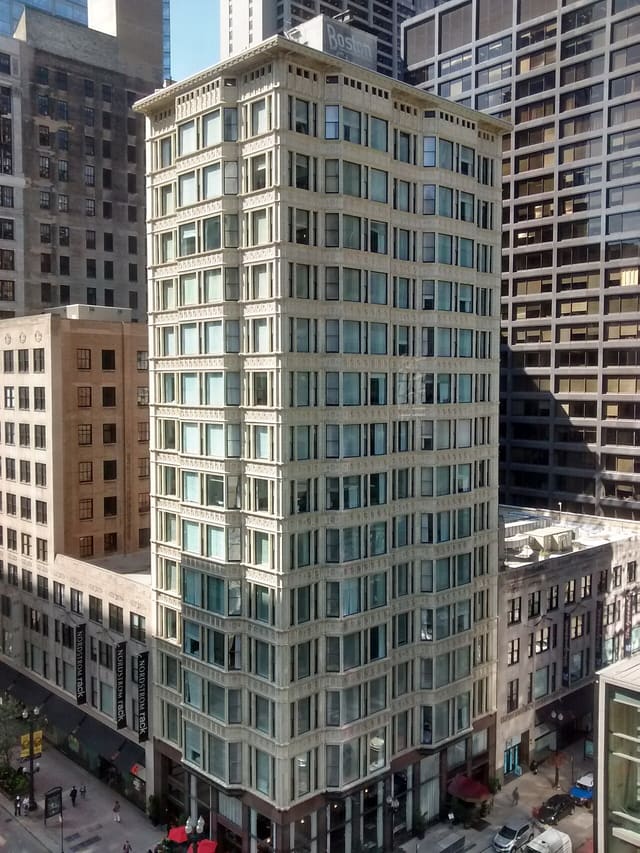
The Reliance Building is a skyscraper at 1 West Washington Street in the Loop community area of Chicago, Illinois.
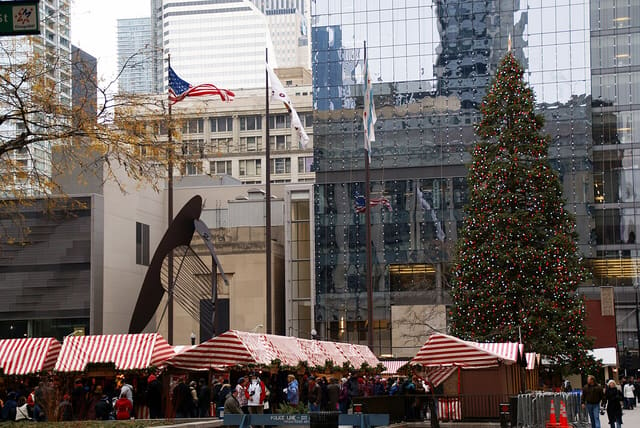
Christkindlmarket is a Christmas market held annually at Daley Plaza in Chicago, Illinois, United States. The festival…
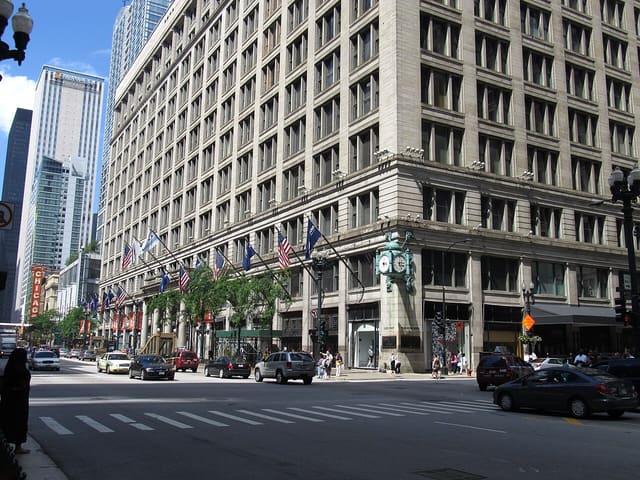
The Marshall Field and Company Building is a department store building and National Historic Landmark on State Street…
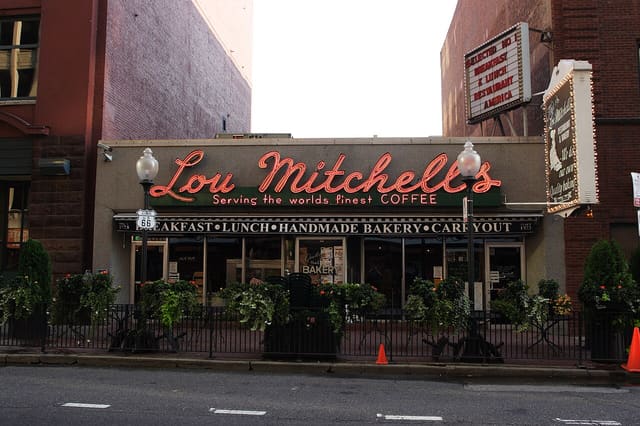
Lou Mitchell's, also known as Lou Mitchell's Restaurant, is a Chicago diner located at 565 W. Jackson Boulevard.