The whole storyStop 8 of Charleston Walking Tour: Rainbow Row to the Battery
Major Anderson's Midnight Move
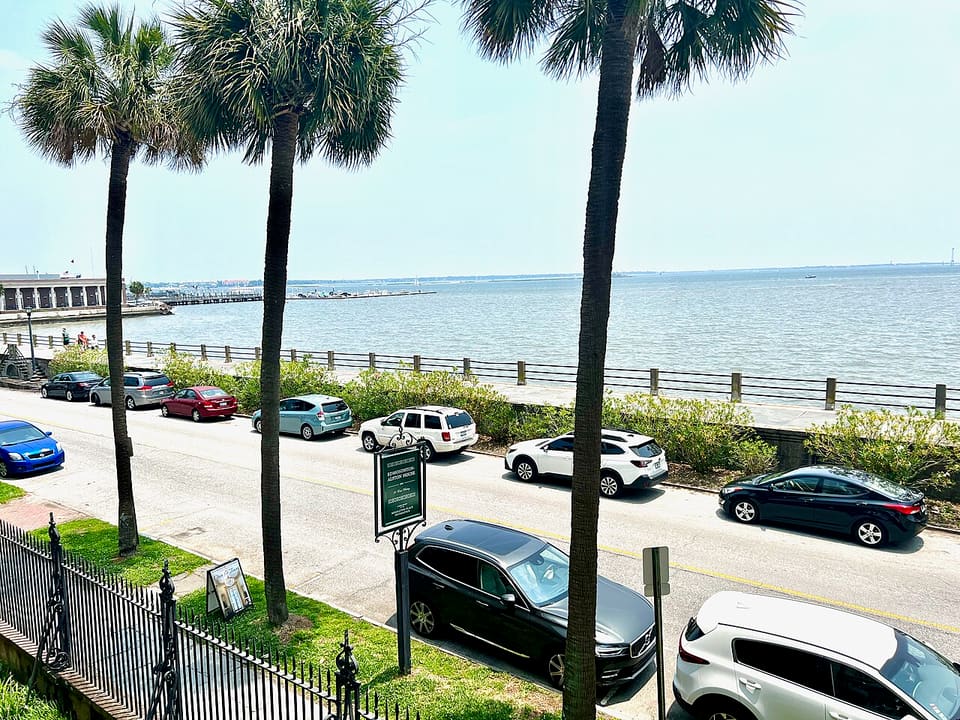
You're standing on the Battery, at the southern tip of the Charleston peninsula, where the Ashley and Cooper rivers meet to form Charleston Harbor. If you're up on the High Battery, the raised walk along East Battery, look out toward the mouth of the harbor. That low, flat shape sitting right on the water is Fort Sumter. Off to the side is Sullivan's Island, where Fort Moultrie stands. A short stretch of water separates the two forts, and one man's decision to cross it began a war's first chapter.
December 1860. South Carolina has seceded from the Union, and slavery sits at the center of that decision. Holding the harbor for the United States falls to Major Robert Anderson, an army officer commanding the garrison at Fort Moultrie. Moultrie sits on Sullivan's Island, exposed to anyone who comes against it. Fort Sumter, by contrast, stands on its own artificial island at the harbor's mouth, and it is still unfinished.
On December 26, 1860, Anderson moves his garrison from Moultrie across the water to Fort Sumter. The National Park Service counts the force at five officers, 64 artillerymen and nine musicians. Nine musicians, in a fort about to become a target.
The move buys him a few months, not a rescue. In January 1861, cadets from The Citadel fire on a supply ship, the Star of the West, as it approaches the harbor. Then, on April 12, 1861, Confederate guns open fire on Fort Sumter. Crowds of Charleston civilians watch. The day after the bombardment, Anderson surrenders, and he carries the fort's flag away with him.
Now follow that flag. On April 14, 1865, four years later, Anderson comes back to Fort Sumter and raises it again. The fort where the war began sees it nearly end under that same cloth.
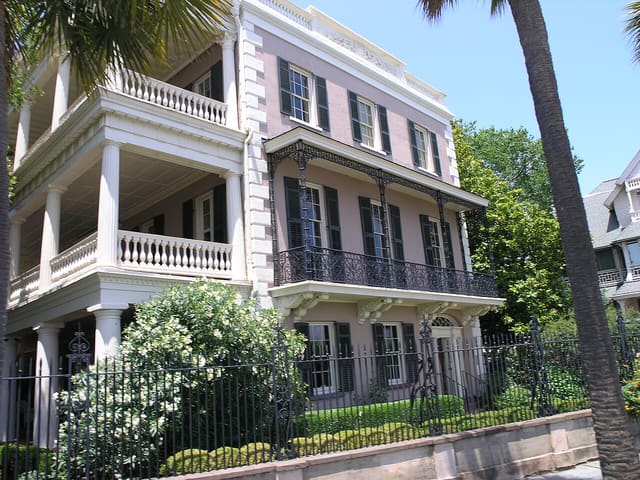
Before you go, look at the grand houses behind you along East Battery. Many are antebellum, built before the war whose first shots were fired out there. The name of this spot comes from an artillery battery the British originally built here, and the promenade you're standing on dates to 1838. But the story that matters most is the one in front of you. Take one last look at Fort Sumter, small and low on the horizon. A man left it carrying a flag, and he came back for it.
Our walk ends here, so take your time. Stay at the rail, find Fort Sumter once more on the water, and thank you for walking old Charleston with us.
Hear it where it happened. It plays at stop 8 of Charleston Walking Tour: Rainbow Row to the Battery (3 min), narrated as you walk. Unlock the tour for the audio, or try stop 1 free first.