The whole storyStop 2 of Charleston Walking Tour: Rainbow Row to the Battery
Behind the Arch on Chalmers Street
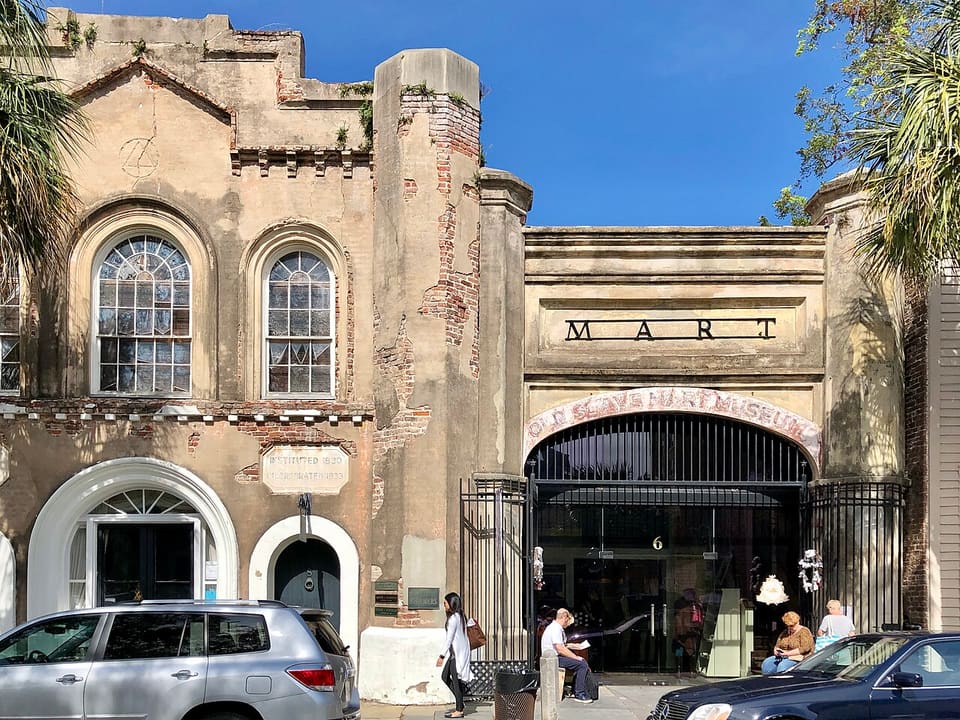
You're standing on Chalmers Street, one of the few cobblestone streets left in Charleston, in front of a narrow stuccoed building with a tall arch in the middle and an octagonal pillar at each end. Look at that arch, and the iron gate inside it. Just behind that gate, enslaved people were sold.
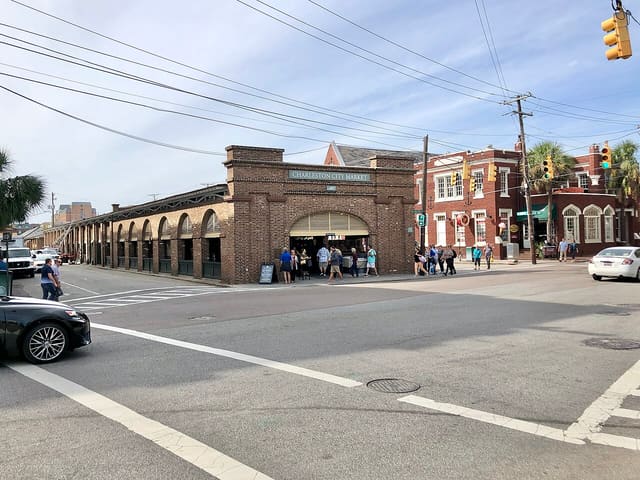
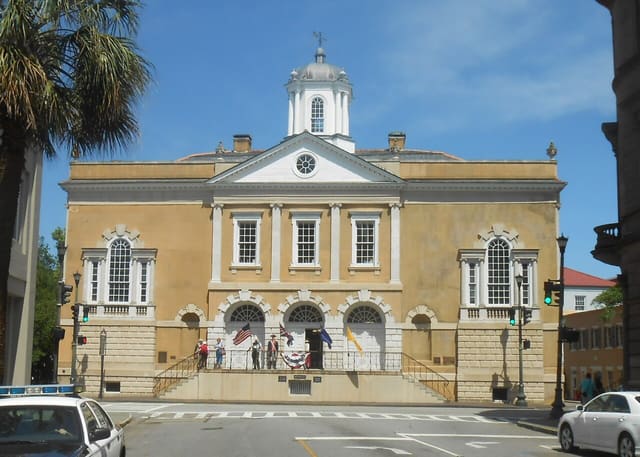
You've just come from the City Market, and many visitors assume sales happened there. They didn't. For the first half of the 1800s, Charleston auctioned enslaved people in public, on the north side of the Exchange building, a few blocks from here. Then, in 1856, the city banned public slave auctions. The ban didn't end the selling. It moved it out of sight.
That same year, a city councilman and broker named Thomas Ryan opened a private, enclosed market on this block, with his partner James Marsh. Ryan's Mart stretched back toward Queen Street. Behind this building stood a four-story barracoon, a jail where people were held before sale, along with a kitchen and what records call a dead house, a morgue.
In 1859, an auction master named Z. B. Oakes bought Ryan's Mart and built the building in front of you as the auction gallery. Inside was one large room with a 20-foot ceiling. Just past the archway stood the auction table, about three feet high and ten feet long. People stood on it to be inspected and sold. The same room sold real estate and stock. Ryan's Mart advertised its sales as far away as Galveston, Texas.
The auctions ran until about 1863. In February 1865, the Union Army occupied Charleston, and the people Ryan's Mart still held were freed. The jail and kitchen behind this building are gone now. That ground is a parking lot.
What happened next to the building is its own lesson in how a city remembers. It became a tenement in 1878, with a second floor added. In the 1920s it was a car showroom. Then in 1938 a woman from Ohio named Miriam Wilson bought it and opened the Old Slave Mart Museum. It's considered the first museum on the history of slavery in the United States. But under Wilson, the museum leaned into the local belief that slavery had been good for the people it held, and she sold candy called Colonial Belle Goodies to draw visitors. When she died in 1959, she left the collection to the Charleston Museum, which declined it.
The museum closed in 1987. The City of Charleston and the state's African American Heritage Commission restored the building in the late 1990s, and today the museum tells what Wilson's version left out: the domestic slave trade, plainly. It's believed to be the last surviving slave auction building in South Carolina.
The iron gate in that arch was put back. When this was an auction hall, a gate stood there too.
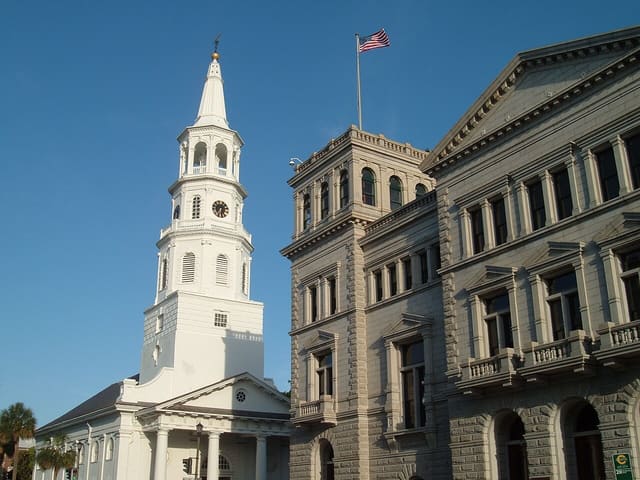
When you're ready, walk west about seven minutes to the Four Corners of Law, where one intersection holds a church and the seats of city, county and federal power.
Hear it where it happened. It plays at stop 2 of Charleston Walking Tour: Rainbow Row to the Battery (3 min), narrated as you walk. Unlock the tour for the audio, or try stop 1 free first.