The whole storyStop 6 of Charleston Walking Tour: Rainbow Row to the Battery
The Monogram on the Balcony
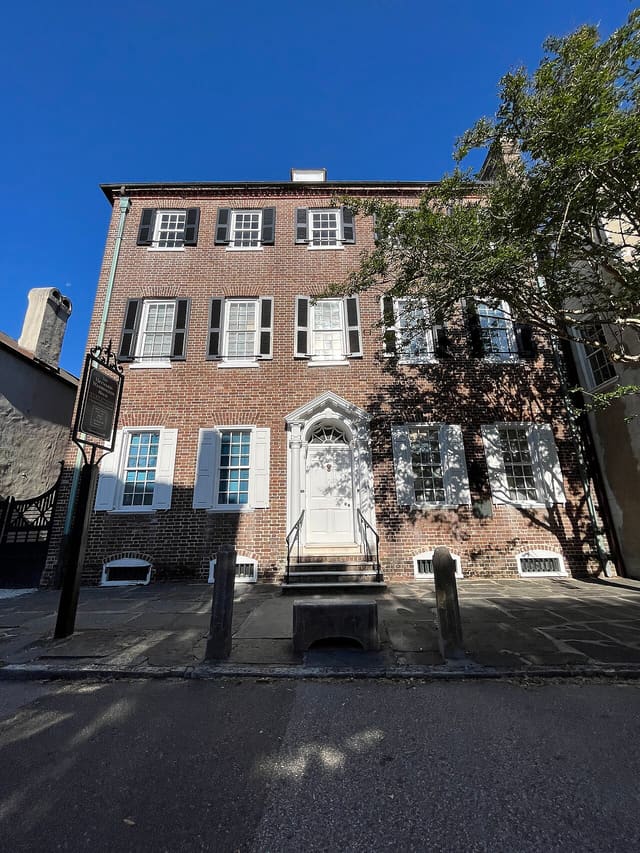
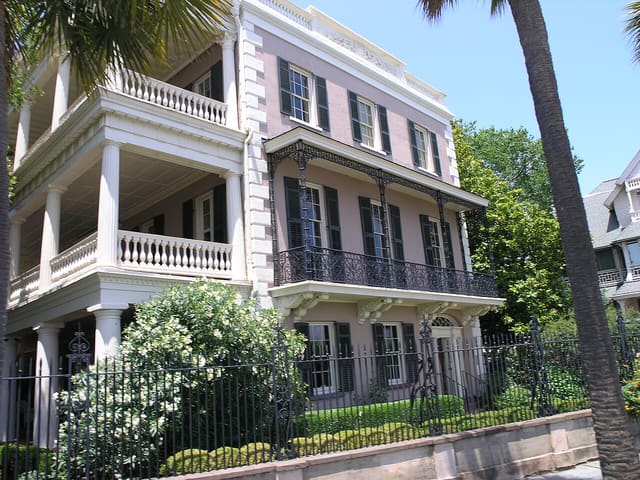
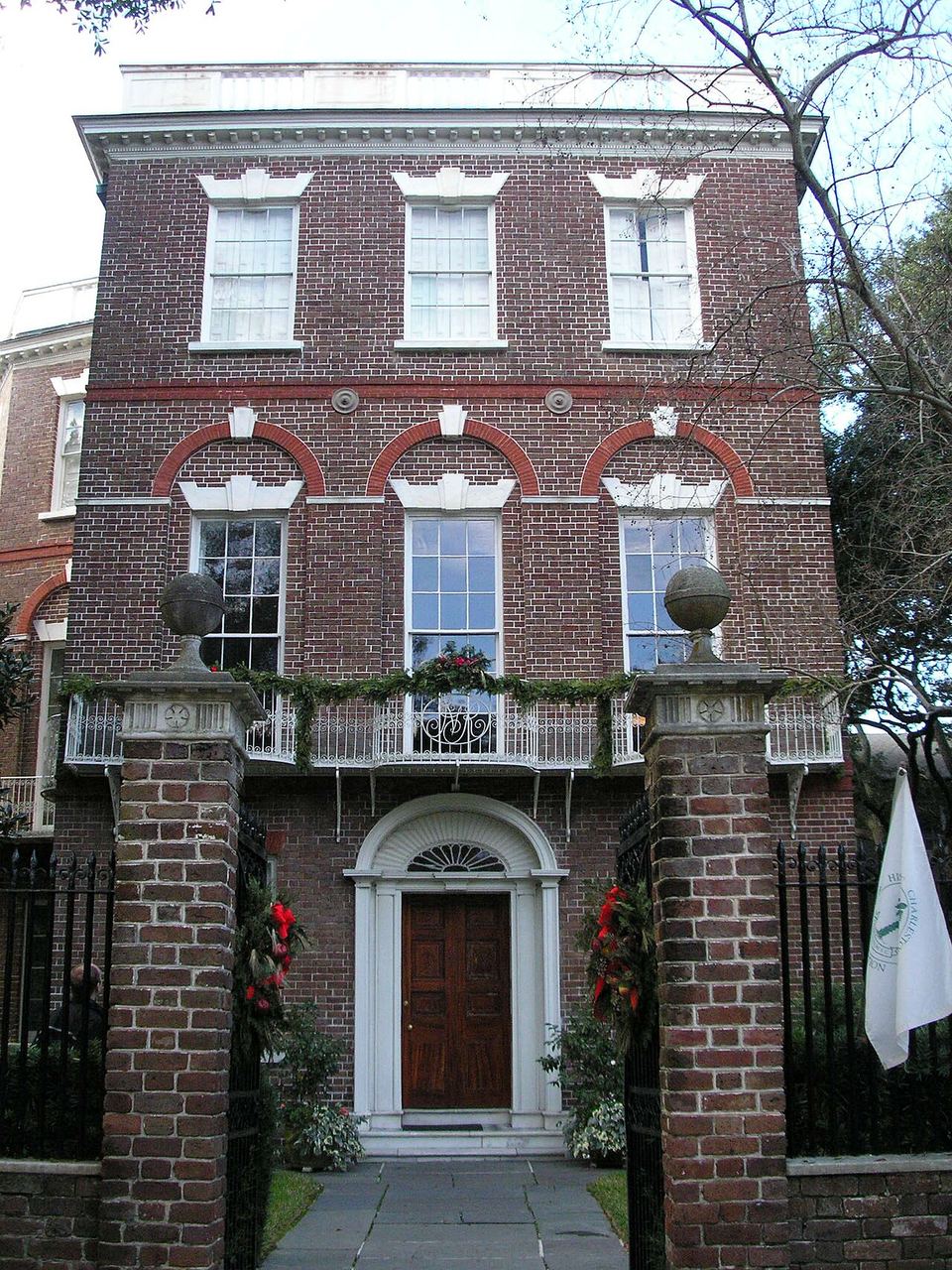
You're on Meeting Street, a short walk up from the Battery, standing outside number 51. Behind the iron fence is a tall, three-story house of gray Carolina brick. Look at the iron balcony that spans the second floor, just above the front door. Woven into the ironwork are two letters: N and R. The man who put his initials on this house wanted you to know whose it was.
Nathaniel Russell came to Charleston from Bristol, Rhode Island, in 1765. Thanks to extensive contacts back in his home colony, he established himself as a successful merchant, and part of that business was buying and selling captive Africans. He prospered in it.
He married Sarah Hopton, the daughter of an affluent Charleston family, when he was about 50. As one of the city's more prominent citizens, the thinking went, he required a residence to match his status. Russell began building in 1803 and finished five years later, in 1808, when he was 70.
It worked. The house is recognized as one of the most important neoclassical houses in the United States, and it is a National Historic Landmark. Notice the tall windows on the second floor, each capped with marble and set into a red brick arch. Inside, each floor has three rooms of different shapes: a rectangle in front, an oval in the middle and a square at the back. A staircase spirals up to the third floor, each cantilevered step supporting the one above and below it.
Here is what that elegance rested on. Russell's fortune came from a business that included trading in captive Africans. The graceful rooms you can tour were built on that trade, and the people held in bondage to run a household like this are part of the house's story too.
Here's the part that isn't on the plaque. This house has nearly been lost twice. In 1955, after the owners failed to find a buyer, they proposed subdividing the property. Historic Charleston Foundation resolved to keep it intact, raised 65 thousand dollars and bought the house and grounds. Then, in December 2023, the foundation's own board decided to sell it. Preservationists and donors pushed back hard, and in January 2024 the board reversed course and voted to keep it.
So the house survives, monogram and all, the same two letters Russell wanted you to read from the street.
Hear it where it happened. It plays at stop 6 of Charleston Walking Tour: Rainbow Row to the Battery (3 min), narrated as you walk. Unlock the tour for the audio, or try stop 1 free first.