Stories
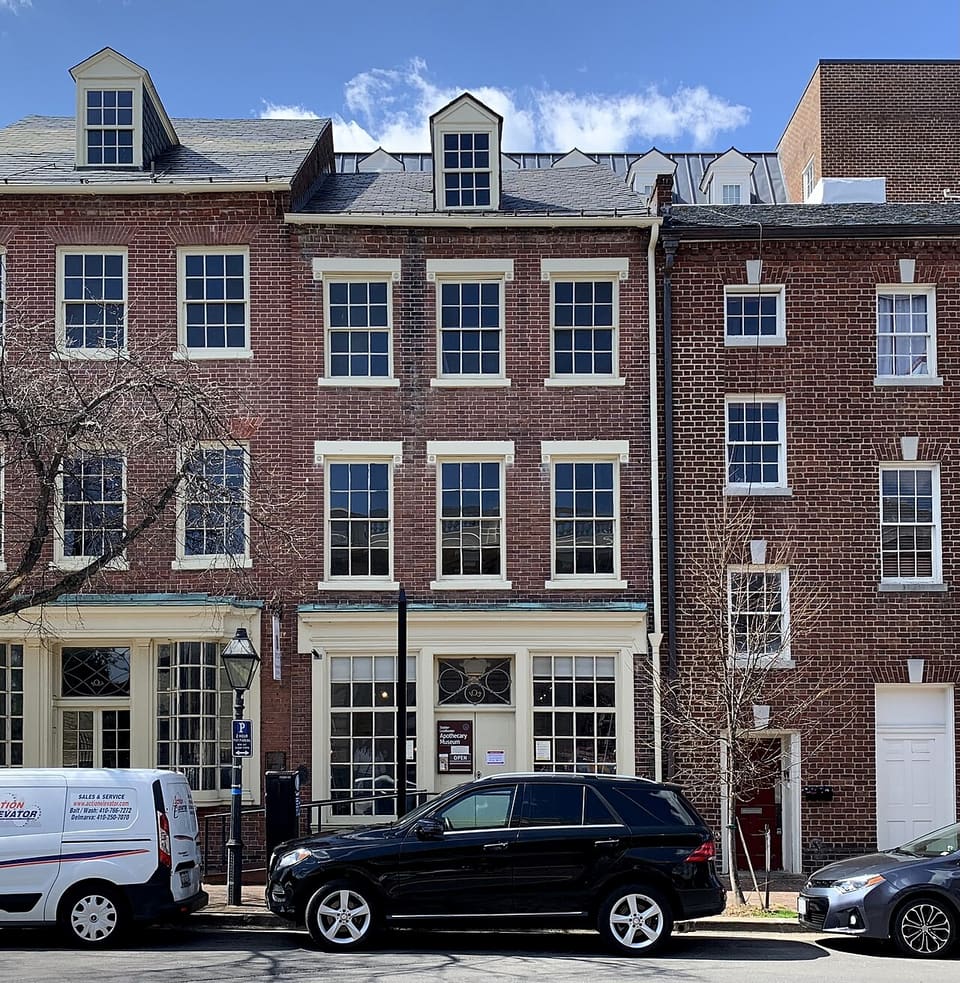
Stabler-Leadbeater Apothecary, AlexandriaPhoto: APK, CC BY-SA 4.0, via Wikimedia Commons
Museum · Alexandria

Stabler-Leadbeater Apothecary

105-107 South Fairfax Street, Alexandria, Virginia

The Apothecary Museum in Alexandria, Virginia, is a Quaker family's medicine shop at 105-107 South Fairfax Street in Old Town, in business from 1792 to 1933 and a museum since 1939. A self-guided look at the first floor costs $5, and the $8 guided tour adds the second floor from 1:15 p.m. It is closed on Tuesdays.

  • 1 story
  • On 1 tour

The story of Stabler-Leadbeater Apothecary

Free previewStop 6 of Old Town Alexandria Walking Tour: Duke Street to the Waterfront

Saved by a Baltimore Ice Cream Man

You're on Fairfax Street, a short walk from Carlyle House, standing outside the old apothecary that Alexandrians call simply the Apothecary. Look at the shopfront in front of you. From 1805 until 1933, one family sold medicine from this spot. And inside, most of the artifacts are authentic and date to the day the shop closed.

The shop was started in 1792 by Edward Stabler, a devout Quaker and a savvy businessman. He rented a corner space at King and Fairfax, then moved here. Much of what he sold he made on the spot, from plants and herbs. His customers ran from the local farmer to the local doctor, and from Martha Washington, who bought from him in 1802, to Robert E. Lee. Stabler was also a known opponent of slavery, and he often spent his own money to buy enslaved people so he could free them.

That's the opening. The rest plays at stop 6 of Old Town Alexandria Walking Tour: Duke Street to the Waterfront (3 min). Unlock the tour to hear it all, or try stop 1 free first.
Should you take the guided tour or the self-guided visit?

Take the tour if you want to see upstairs, because the second floor opens only on that tour and the day's first one starts at 1:15 p.m. Before then, or with children under 8, the self-guided visit is the one to choose.

If you like seeing how medicine was made and sold, it makes a good short indoor stop in Old Town. If you use a wheelchair, the upstairs is out of reach.

QuestionOn your ownWith a guide
What do you see?The first floor, with a staff member there to answer questionsThe first and second floors, with a guide
How long does it take?As long as you like during open hours45 minutes
What does it cost?$5 for adults and $3 for ages 5 to 12, with a souvenir booklet$8 from age 5
When can you go?Any time the museum is openAt a quarter past each hour, from 1:15 p.m. until closing
Where do you buy tickets?At the museum when you arrive; they are not sold onlineAhead of time in the city's online shop, under Events
Who is it for?Morning visitors and families with younger childrenAges 8 and older, as the city recommends

Children four and under are free with a paying adult. Arrive 5 minutes early for the tour, because a reservation is forfeited 5 minutes after the start and latecomers can see only downstairs.

What is inside the Apothecary Museum?

The collection runs from hand-blown glass bottles to herbal botanicals and medical equipment, from a business that traded for 141 years. The second floor shows what customers never saw, including the lift door of a manual freight elevator and a manufacturing room where ingredients were kept in reused flour and sugar tins and mixed for customers.

The shop is often described as frozen in 1933, and that is true of its contents more than the building around them. The curved shopfront on the street is a conjectural reconstruction by the restoration architect Thomas Tileston Waterman, who returned the buildings to his best guess at their 18th-century look before the museum opened. The Gothic Revival shelves inside are real, a mid-19th-century alteration that Virginia's Department of Historic Resources calls a rare use of the style in a shop.

Tree-ring dating places 107 South Fairfax Street around 1805 and 105 next door around 1815, according to the city. The Virginia register still dates 107 to between 1774 and 1785.

How long was the Stabler-Leadbeater Apothecary Shop in business?

It traded for 141 years, from 1792 to 1933, first under the Stablers and then under the Leadbeaters, who joined the family by marriage. At its peak it had 12 salesmen working Virginia, West Virginia and North Carolina.

YearWhat happened
1792Edward Stabler, a Quaker who trained under his brother in Leesburg, rents space in Alexandria and opens the business.
1805He buys the land at 107 South Fairfax Street, and the shop stays at this address until it closes.
1829He adds the building next door, number 105.
1831Edward dies and his son William takes over.
1852William dies, and his brother-in-law John Leadbeater buys the business from William's widow and puts his own name on it.
1865John's son Edward is running the firm, which soon supplies nearly 500 pharmacies around Washington.
1916New regulations and competition from chain drugstores push it to seek bankruptcy protection.
1933It declares bankruptcy again in May and closes. On July 19 L. Manuel Hendler, a Baltimore ice cream merchant, buys most of the contents at auction.
1934The new Landmarks Society of Alexandria buys the buildings at auction, and Hendler gives it the contents and archives.
1939The museum opens, free of charge, with support from the American Pharmaceutical Association.
2006The Landmarks Society gives the museum and its contents to the City of Alexandria.
2021The shop is designated a National Historic Landmark on January 13.

How do you fit the museum into an Old Town walk?

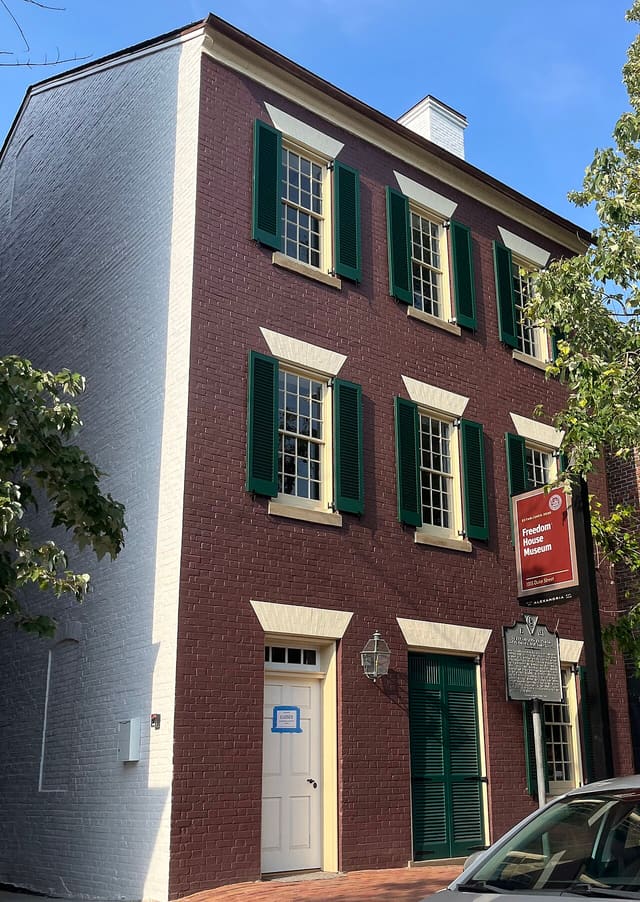
Start the Old Town Alexandria walk at Freedom House Museum by 12:15 p.m. and you reach the Apothecary, its sixth stop, about 50 minutes later, in good time for the 1:15 p.m. guided tour. Those minutes count the walking and the stories only, so start earlier if you plan to go inside another stop.

The Apothecary's story plays outside, facing the shopfront, so the walk still works on a Tuesday when the museum is closed. It doesn't include museum tickets, which you buy from the city, and if you only want to see inside you don't need the walk at all.

The walk begins at the Duke Street office of Franklin and Armfield, the largest slave-trading firm in the United States, which took over that house in 1828. Edward Stabler, who often spent his own money to buy enslaved people and free them, lived until 1831, so for three years he and the traders worked the same town, less than a mile apart.

Visiting

Hours

From November 1 to mid-March it opens Wednesday to Friday 11 a.m. to 4 p.m., Saturday 11 a.m. to 5 p.m. and Sunday 1 to 5 p.m., and is closed Monday and Tuesday. Mid-March to October 31 it also opens Monday, 1 to 5 p.m., and in June and July it stays open until 7 p.m. on Saturdays. Closed Thanksgiving, Christmas and New Year's Day.

Admission

Self-guided, first floor: $5 for adults, $3 for ages 5 to 12, under 5 free, paid at the door. Guided tour of both floors, 45 minutes: $8 from age 5, at a quarter past each hour from 1:15 p.m.; book ahead online.

Tip

105-107 South Fairfax Street. There's metered parking on South Fairfax Street, two- or three-hour parking on the residential streets nearby, and garages close by; the city says the rules are strictly enforced. Stop 6 of the Old Town Alexandria walk, between Carlyle House and the Torpedo Factory.

Checked November 2026. Check the official site before you go.

Stabler-Leadbeater Apothecary: questions people ask

What are the Apothecary Museum hours?

From November 1 to mid-March it opens Wednesday to Friday 11 a.m. to 4 p.m., Saturday 11 a.m. to 5 p.m. and Sunday 1 to 5 p.m. From mid-March to October 31 it also opens on Mondays, 1 to 5 p.m., and in June and July it stays open until 7 p.m. on Saturdays. It is closed on Tuesdays all year.

How much does the Apothecary Museum cost?

Self-guided entry downstairs is $5 for adults and $3 for children 5 to 12, paid at the door; under 5 is free. The 45-minute guided tour of both floors is $8 from age 5, every afternoon from 1:15 p.m.

Why did the Stabler-Leadbeater Apothecary close?

It went bankrupt in May 1933, in the Depression, after the death of its last owner, Edward Stabler Leadbeater Jr. A Baltimore ice cream merchant bought the contents at auction and gave them to the Landmarks Society, which opened the museum in 1939.

Can you visit the museum in a wheelchair?

The first floor is wheelchair accessible and the second floor is not. The city's visit page links Google 360 virtual tours of the museum, made in 2017, and takes accommodation requests through Alex 311 at 703-746-4554.

Who gets in free?

City of Alexandria residents and employees, active-duty military and their families, and members of the American Alliance of Museums or the Virginia Association of Museums get in free when space allows. To reserve a free guided tour, call 703-746-3852. AAA members get a discount on the self-guided visit.

Are there specialty tours?

Yes, on set dates, and they are sold through the city's Alexandria Shop under Events. Women in Medicine is listed for November 27, 2026, and the museum closes to other visitors while it runs. The hour-long Poisons tour, for ages 18 and up, ran in October 2025 at $15.

What is an apothecary?

An apothecary is both a shop like a drugstore and the person trained to make its medicines. The city's history of this shop says that until the 1930s no drug needed a doctor's prescription, so patients often skipped the doctor and described their symptoms to the apothecary, who chose the treatment.

Did Martha Washington shop here?

Yes. On April 22, 1802, a month before she died, she sent to Edward Stabler for a quart bottle of his best castor oil. The shop's records also name Nelly Custis, and Virginia's register adds James Monroe and Robert E. Lee.

The tour that stops here

Stop 6 of 7 on Old Town Alexandria Walking Tour, between Carlyle House and Torpedo Factory Art Center.

Near Stabler-Leadbeater Apothecary

200 ft away

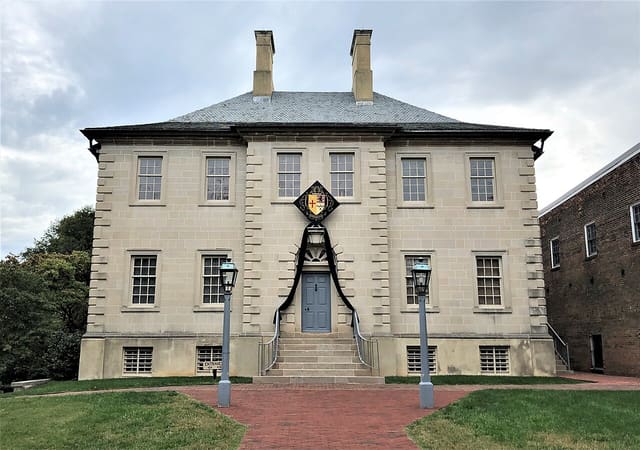
Carlyle House

Carlyle bought two lots for a front yard while making rules against front yards.

450 ft away

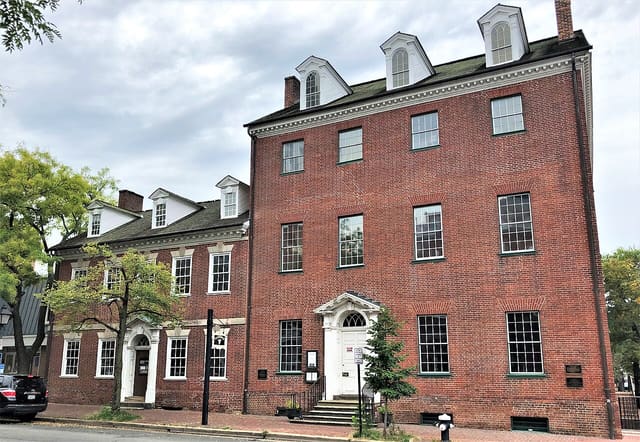
Gadsby's Tavern

In 1917, the Met bought the tavern ballroom's woodwork, down to its front doorway.

0.3 mi away

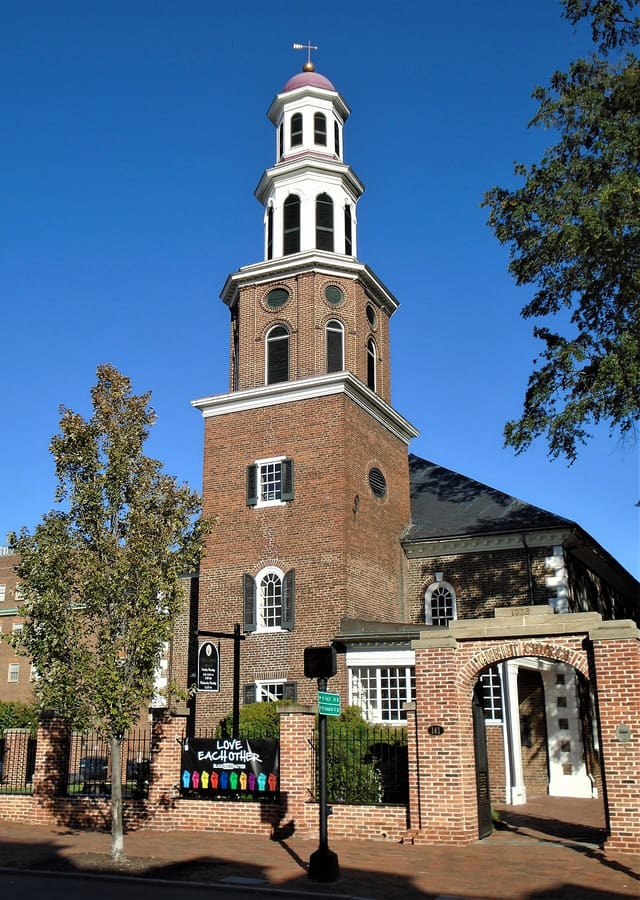
Christ Church

Christ Church was financed with 31,186 pounds of Oronoco tobacco.

0.4 mi away

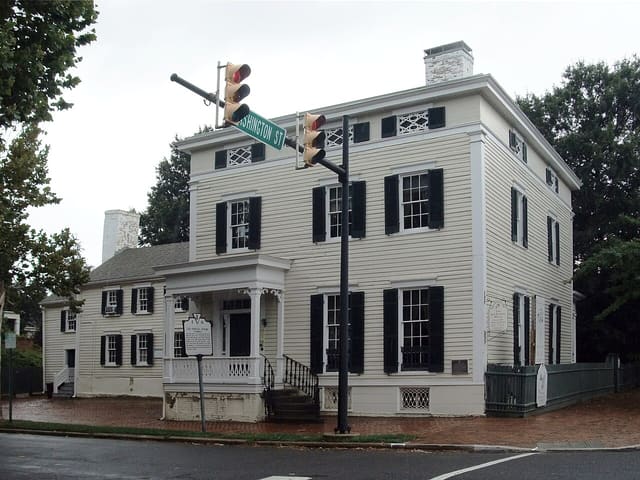
Lee–Fendall House

Henry Lee wrote Alexandria’s farewell to George Washington while staying at the house.

0.7 mi away

Freedom House Museum

At least 5,000 enslaved people were trafficked through this townhouse and its pens.

Sources