The whole storyStop 3 of Old Town Alexandria Walking Tour: Duke Street to the Waterfront
First in War, Written on Lee Corner
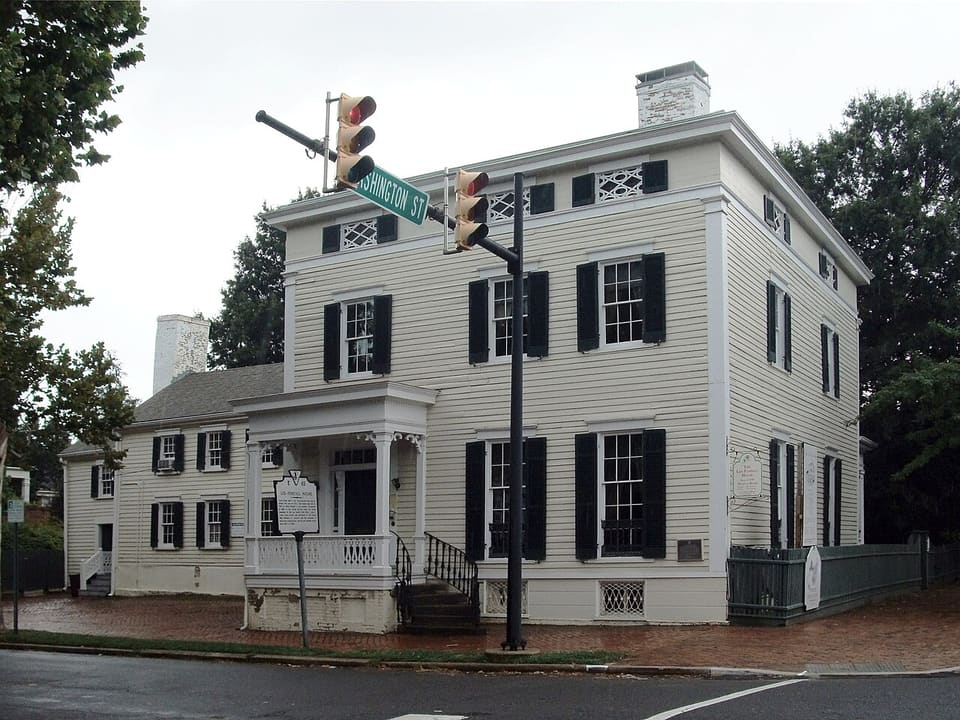
You're standing at the corner of North Washington and Oronoco Streets, a crossing Alexandrians once called Lee Corner. Face the house on the southeast corner, the one on its original half-acre lot. That's the Lee–Fendall House, built in 1785. Now turn and look across Oronoco Street at number 607. Keep both houses in view, because this story travels between them.
Philip Fendall built the house on your corner for his second wife, Elizabeth. Enslaved laborers did the building, and enslaved and free servants worked here for generations. Back then this was the edge of town, with uninterrupted views of Oronoco Bay and the ships docked there. George Washington dined here at least seven times in two years. In his diaries of 1785 and 1786, the Fendalls are mentioned more than anyone outside his own family.
The relative who mattered most was Henry Lee, called Light Horse Harry. He had led a famous cavalry unit in the Revolution, and he was Elizabeth Fendall's son-in-law. He and his wife spent the winter of 1788 to 1789 with the Fendalls. And in April 1789, while he was still at this house, Washington left Virginia to become the first President. Alexandria's mayor asked Harry Lee to write the town's farewell address, which the mayor delivered at a dinner for Washington at Wise's Tavern.
So picture it: a farewell to the country's greatest soldier, composed under this roof.
A decade later, Harry Lee, by then a senator, wrote Washington's eulogy. That's where the line comes from that every American schoolchild once knew: "first in war, first in peace, and first in the hearts of his countrymen."
But Harry Lee could write a nation's grief and still not manage money. He was imprisoned for debt. So was Philip Fendall. Fendall was Harry's cousin, and Elizabeth was Harry's mother-in-law, so the family dinners here were tangled indeed.
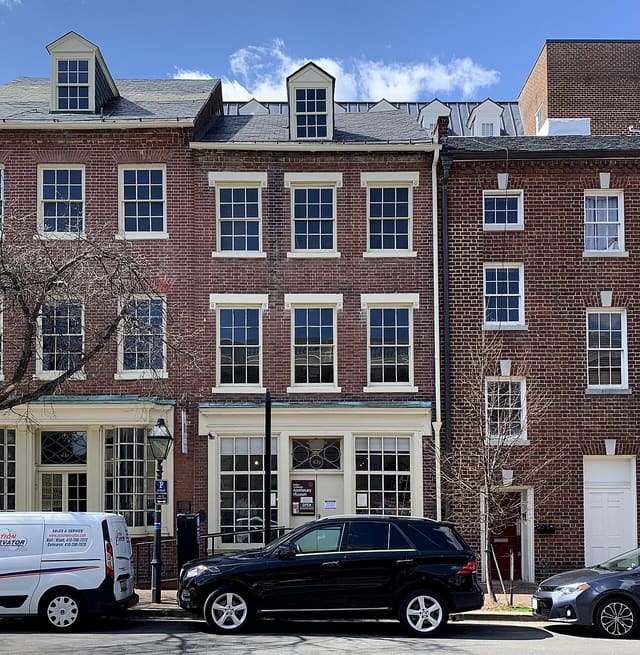
Now look again across Oronoco Street. Number 607 was Harry Lee's last home in Alexandria, and it is known as Robert E. Lee's boyhood home. The son of the man who wrote Washington's farewell grew up in sight of the house where it was written.
Then comes the reversal. Robert E. Lee went on to command the Confederate army. Yet from 1863 to 1865, this Lee family house, the one on your corner, sheltered hundreds of convalescing Union soldiers. The house where Washington's farewell was written became a place where the Union army's wounded recovered, just steps from the boyhood home of the general they were fighting.
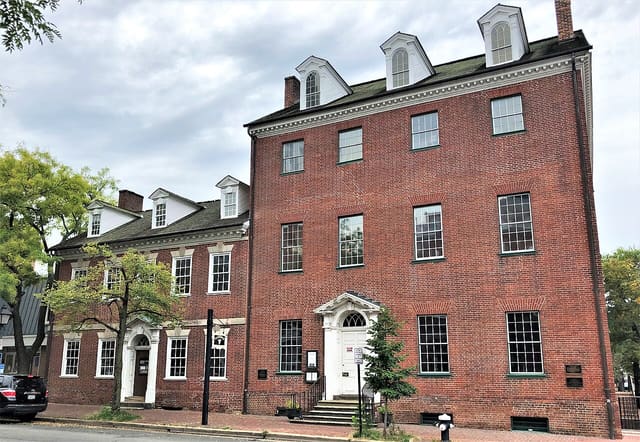
When you're ready, walk south on North Washington Street, about ten minutes, to Gadsby's Tavern, where Washington's Alexandria went to eat, drink and talk politics.
Hear it where it happened. It plays at stop 3 of Old Town Alexandria Walking Tour: Duke Street to the Waterfront (3 min), narrated as you walk. Unlock the tour for the audio, or try stop 1 free first.