The whole storyStop 2 of Old Town Alexandria Walking Tour: Duke Street to the Waterfront
A Church Paid for in Tobacco
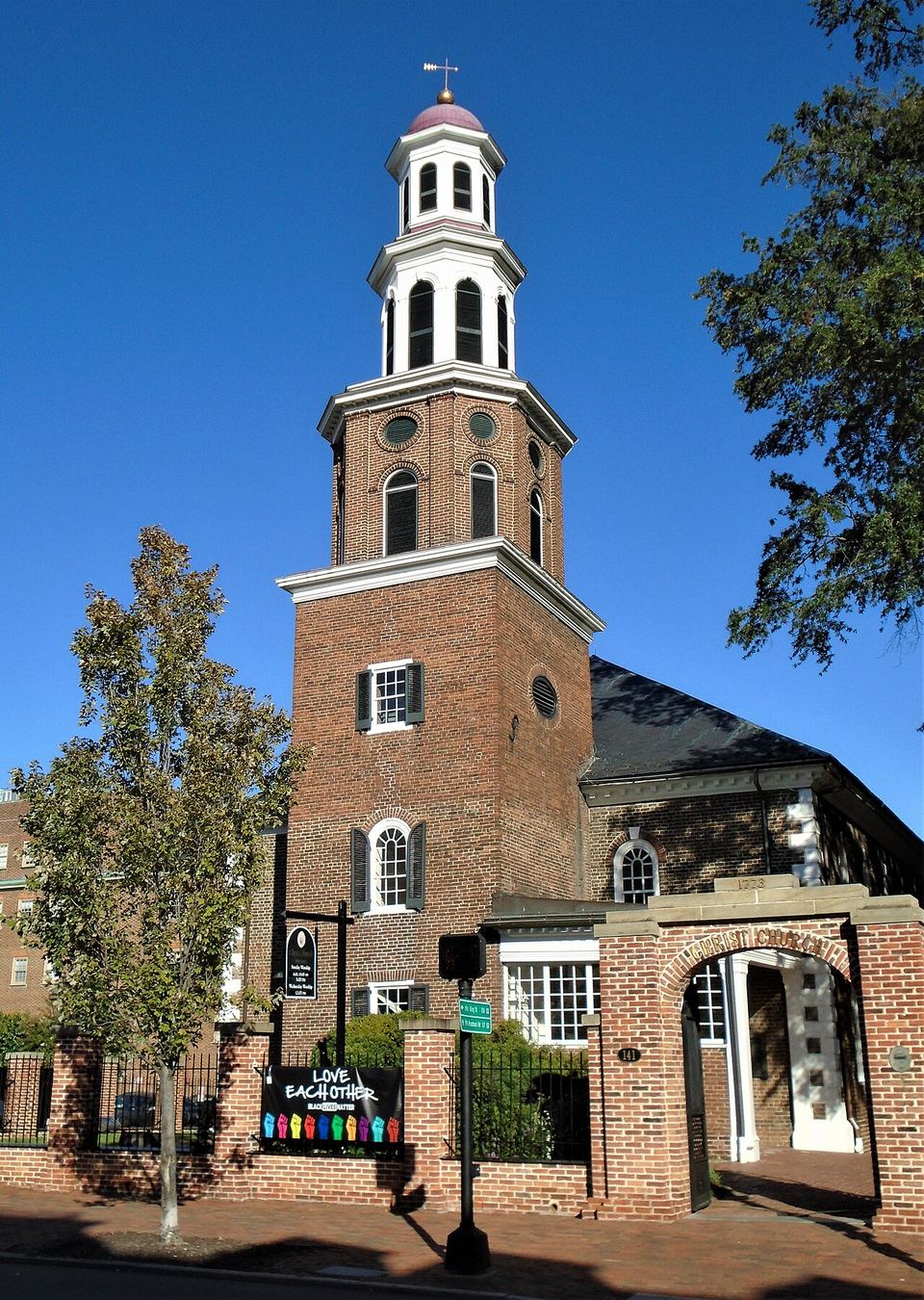
You're standing at the Columbus Street side of Christ Church, the brick church in its walled churchyard that Old Town simply calls Christ Church. Look at the corners of the building. Those pale blocks stacked up the edges, set against the red brick, are stone quoins, cut at the Aquia quarry nearby. And this building was paid for, in a way, with leaves.
In 1765 the Church of England created a new parish here, Fairfax Parish. Its vestry wanted two new churches: this one, and another out at Falls Church. The architect was Colonel James Wren, a descendant of Sir Christopher Wren, the man who rebuilt London's churches.
Money was the next problem, and the vestry solved it with a crop. They raised 31,186 pounds of Oronoco tobacco from parishioners to finance the church in Alexandria. Tobacco in colonial Virginia was commonly grown by enslaved labor, so that wealth was built on people who never got to sit in these pews as equals.
Construction began in 1765 under the direction of James Parsons. After four years the church was still unfinished, and the vestry relieved Parsons of his duties as overseer of the construction.
John Carlyle accepted the position. Carlyle was the Scottish merchant whose mansion you'll see near the waterfront. In February 1773 he handed the keys of the completed building over to the vestry. The finished church is a two-story brick building measuring about 60 feet by 50.
James Wren left one more mark you can't see from out here. Inside, on both sides of the chancel, hang hand-lettered plaques displaying the Ten Commandments, the Lord's Prayer, the Apostles' Creed and the Golden Rule. They're original to the church, and Wren painted them himself. Apparently the architect also did the signage.
George Washington worshipped here, and his pew is still marked inside. After independence, the Church of England stopped being Virginia's state church, and a congregation founded on parish tobacco had to depend on its members. Christ Church survived disestablishment in large part thanks to private support from parishioners, including Washington.
So look once more at those stone corners. A church paid for in a colonial crop was kept going by what its members chose to give.
When you're ready, walk east about 440 meters, roughly seven minutes, to the Lee–Fendall House.
Hear it where it happened. It plays at stop 2 of Old Town Alexandria Walking Tour: Duke Street to the Waterfront (2 min), narrated as you walk. Unlock the tour for the audio, or try stop 1 free first.