Stories
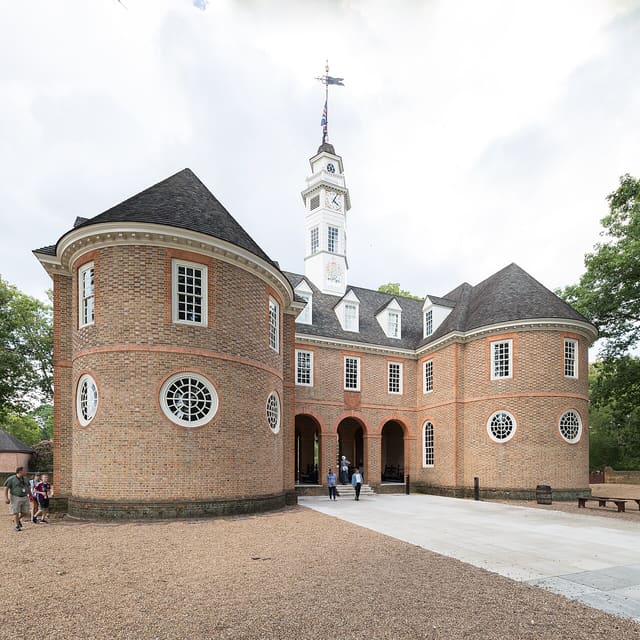
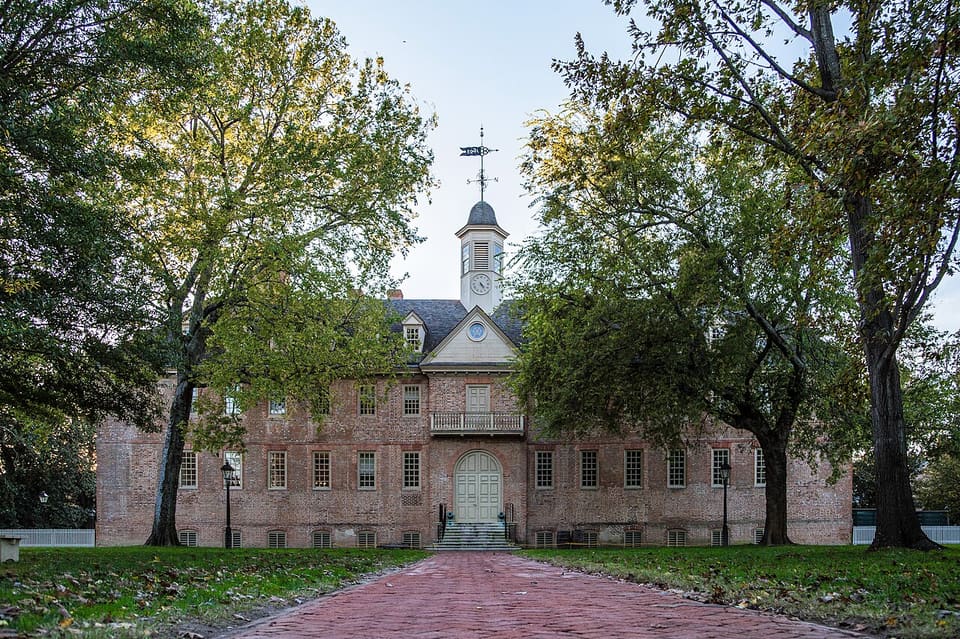
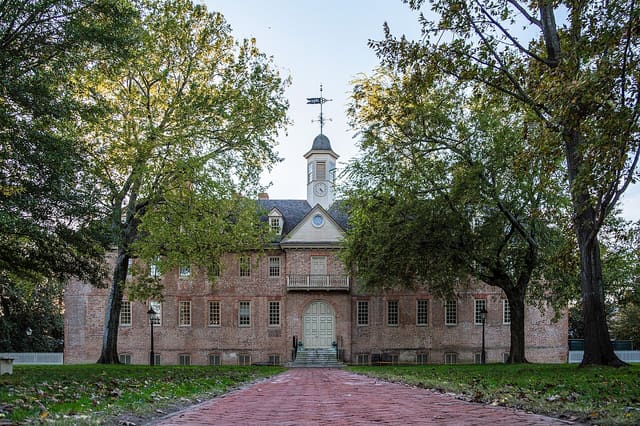
The Wren BuildingPhoto: MiguelYerena, CC BY-SA 4.0, via Wikimedia Commons
Walking tour · Williamsburg

Colonial Williamsburg Walking Tour: Duke of Gloucester Street

Virginia’s capital along Duke of Gloucester Street

58 min7 stops1.6 mi

Start the walk

Stop 1 is free, no sign-up. All 7 for $4.99, refunded within 7 days if it isn't for you.

See the 7 stops

The 7 stops

  1. 1Start hereFree

    The Wren Building

    The Building Older Than Its Town

    Free sample · 2:11
    0:002:11

    You're standing at the west end of Duke of Gloucester Street, at the College of William and Mary, facing the old brick building everyone here calls the Wren. Look at the long brick front, then follow it up to the little white cupola on the roof. That building is older than the town you're about to walk through.

    It went up between 1695 and 1700. Williamsburg had not yet been founded. Virginia's capital was still down at Jamestown, and this was open land between the James and York rivers. It is the oldest college building still standing in the United States.

    The name comes from Sir Christopher Wren, the English architect behind St. Paul's Cathedral in London. Tradition holds that Wren designed it. Notice the word: tradition. The drawings are not what carries the claim, so treat the name as a family legend that stuck.

    What is solid is how close this building came to being lost. In 1705, fire gutted it. Within a few years of opening, the place had to be rebuilt from a shell. Then it burned again in 1859. And in 1862, during the Civil War, Union soldiers set it on fire. Three times, a building meant to teach students became a pile of smoking brick.

    So which Wren are you looking at? Between 1928 and 1931 it was restored, and the restorers had a clear target: the building's exterior as it appeared in 1705, which is well documented. They did not aim for the grand old version, or the Civil War version, or the one the 1859 fire left. They picked one year and returned the exterior to it.

    That choice is a good key to the rest of Williamsburg. Much of what you're about to see is a careful restoration of a past that had faded away.

    So look once more at that cupola and that brick. This is a building that was gutted, burned again, burned a third time, and then deliberately set back to how it looked in 1705. It's original and it's restored, and both are true.

    When you're ready, walk west for about ten minutes, roughly 660 meters, to the next stop.
The whole walk

7 stories across Williamsburg

58 min · 7 stops · 1.6 mi

Starts at The Wren Building and ends at The Capitol.

  • Plays right here in your browser, or in the app
  • One purchase for your group, on up to 4 phones
  • Refunded within 7 days if it isn't for you

Plan your walk

    How long

    About 58 min for 1.6 mi with all 7 stories. Going inside the sites adds time.

    Start and finish

    Starts at The Wren Building and ends at The Capitol.

    Add it to my calendar

    Know someone who'd love this walk? or see more gift ideas.

    Questions people ask

    Can you walk Colonial Williamsburg for free?

    Yes. The streets of the Historic Area, Duke of Gloucester Street included, are open to walk without a ticket. You need a ticket to go inside most of the historic buildings and trade shops; this tour tells their stories from the street.

    How long does it take to walk Duke of Gloucester Street?

    The street runs about a mile from the Wren Building at William & Mary to the Capitol. This tour covers it in 1.6 miles and about 58 minutes with the stories.

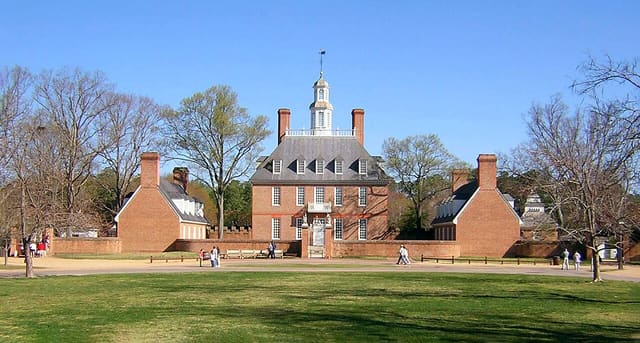
    Is the Governor's Palace an original building?

    No. The original palace burned in 1781. The building you see is a reconstruction from the 1930s restoration, built on the original foundations.

    What are the stops on the Colonial Williamsburg walk?

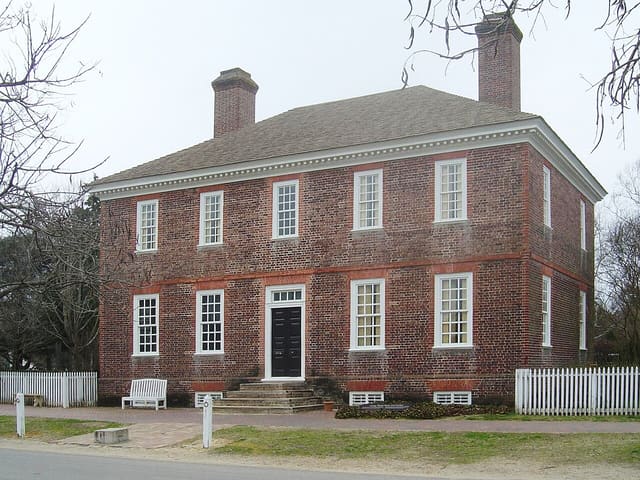
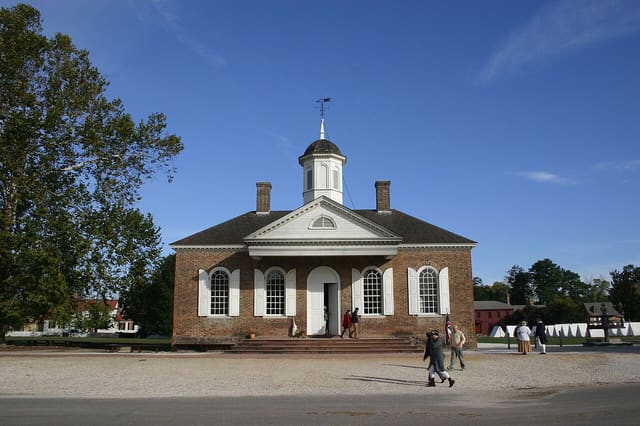
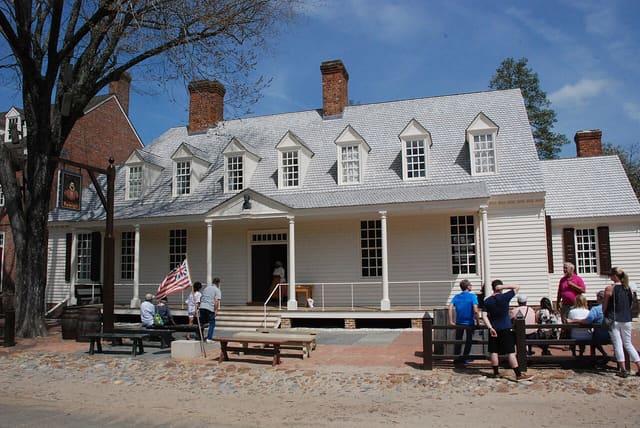
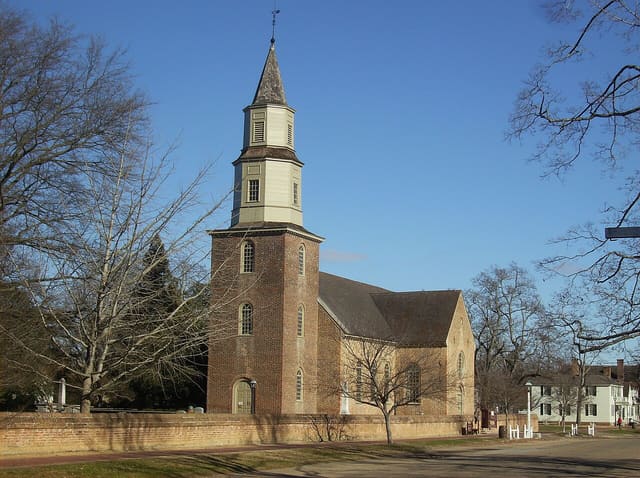
    The Wren Building, Bruton Parish Church, the Wythe House, the Governor's Palace, the Courthouse and Market Square, Raleigh Tavern and the Capitol.

    Do I need the app?

    No. After you unlock, the tour plays right here in your browser: keep the screen on and tap each stop. The free Stories app adds GPS auto-play, so each story starts by itself when you arrive, with your phone in your pocket, and works offline.

    How many people can listen?

    One purchase covers your group on up to 4 phones. Share the link from your receipt, or everyone can sign in to the app with the same email.

    Does it work offline?

    In the app, yes: download the tour on Wi-Fi before you go. In the browser you need a signal, which is fine on most city streets; open the tour once before you leave.

    When can I start?

    Any time. It is self-guided, so there are no departure times and no group to keep up with. Pause for coffee and pick up where you left off.

    Can I give this tour as a gift?

    Yes. Tap "Give it as a gift", type their email and a note, and pick the day it arrives (Christmas morning works). They open it in their phone's browser; you get the receipt.

    Can I get a refund?

    Yes. If the tour did not work for you, email support@getstories.app within 7 days and we will refund it.

    Who made this tour?

    Stories writes each tour from public sources, checks every claim against them, and narrates it with a synthetic voice. The sources are listed at the end of this page; if you spot a mistake, tell us at support@getstories.app.

    About this tour and its sources

    You're standing in front of the Wren Building, at the College of William and Mary. Look at the brick, the steep roof, the little cupola on top. Builders put it up between 1695 and 1700, back when Virginia's capital was still at Jamestown and Williamsburg had not been founded. This is the oldest college building still standing in the United States. Before the town existed, this place was a settlement called Middle Plantation.

    Turn around and look down Duke of Gloucester Street. It runs about a mile, straight, from this college to the Capitol at the far end. In 1699 Virginia moved its capital here, and the street filled up with the business of a colony. Along the way you'll pass Bruton Parish Church, the Governor's Palace, the courthouse, and the Raleigh Tavern, where burgesses met in 1769 after the governor dissolved their assembly.

    As you walk, ask one question: who got to speak on this street, and who didn't? In the Capitol, Virginians argued over who was entitled to justice, representation and liberty. Roughly half the people of colonial Williamsburg were enslaved, and they were not part of that debate.

    The first stop is right here, with a building that was standing before the town it now belongs to.

    Written from public sources, every claim checked against them, narrated by a synthetic voice. Last checked October 2026.

    Share this walk