The whole storyStop 6 of Colonial Williamsburg Walking Tour: Duke of Gloucester Street
Where the Burgesses Went Next Door
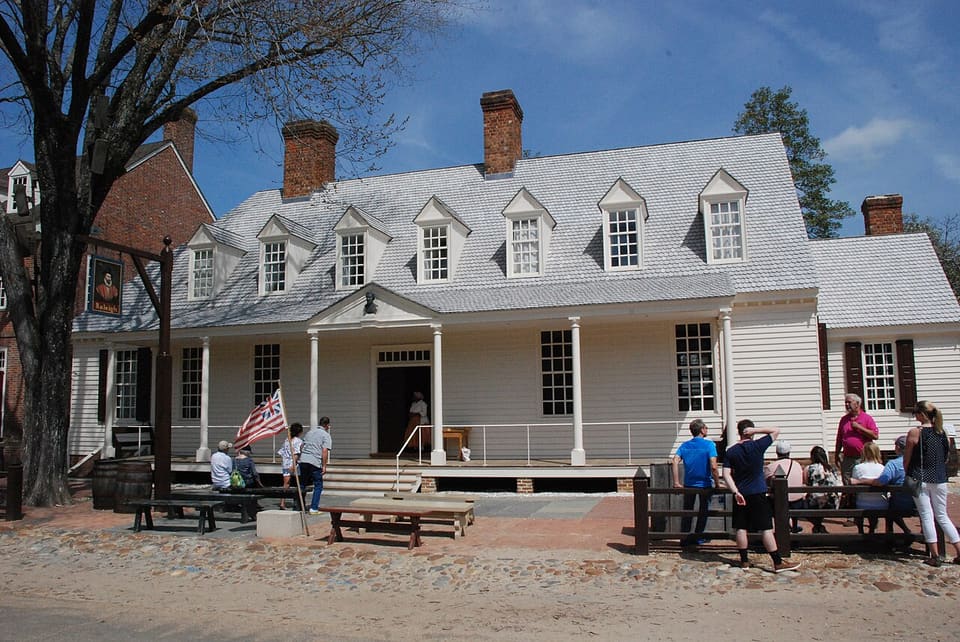
You're on Duke of Gloucester Street, close to the Capitol end of town, outside the long white clapboard building with the dormer windows. Look just above the front door. That small figure is a bust of Sir Walter Raleigh, the Elizabethan adventurer the tavern was named for. He has watched this doorway through a great deal of trouble.
The Raleigh was established around 1717, and it became a mainstay of Duke of Gloucester Street, a public house that served as far more than a place to drink. It was, as one account puts it, the stage for much of Virginia's revolutionary drama. When the House of Burgesses, Virginia's elected assembly, was in session just up the street, the Raleigh was close at hand.
That mattered in May of 1769. The burgesses had passed resolutions against British taxation. The royal governor, Lord Botetourt, responded by dissolving the assembly. In law, the House of Burgesses had stopped existing.
So the burgesses walked down the street to the Raleigh. They gathered in the Apollo Room and carried on without their chamber. There they signed an agreement to stop buying British goods. George Washington presented the plan, which his fellow Virginian George Mason had drafted. A governor could close their chamber. He couldn't close a tavern.
The Apollo Room, along with its neighbor the Daphne Room, is where liberty became a dinner-table subject. But there is a harder truth to hold beside it. Like the rest of this town, Williamsburg ran on the work of enslaved people, and the talk of liberty in a place like this sat uneasily beside that fact.
One more thing about the building in front of you: it isn't the original. What you see is a reconstruction, a re-creation of the eighteenth-century tavern. Raleigh, at least, got his spot back over the door.
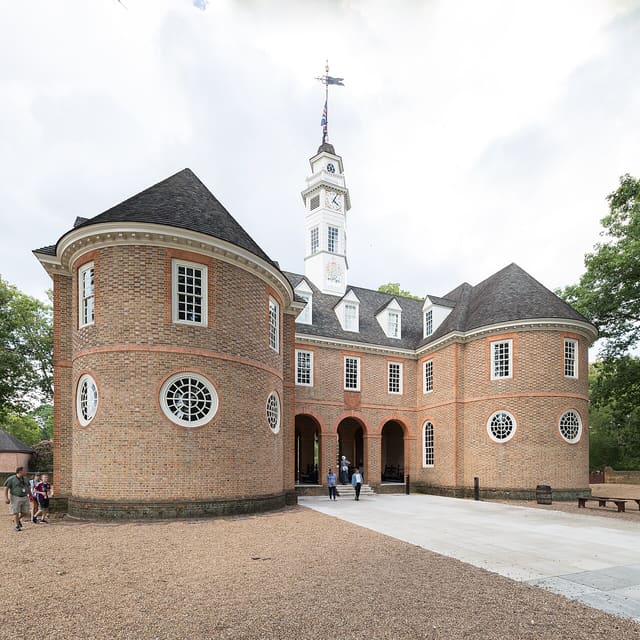
When you're ready, walk east about four minutes, roughly 290 meters, to the end of the street and the Capitol, the chamber those burgesses kept getting sent home from.
Hear it where it happened. It plays at stop 6 of Colonial Williamsburg Walking Tour: Duke of Gloucester Street (2 min), narrated as you walk. Unlock the tour for the audio, or try stop 1 free first.