Free previewStop 3 of Colonial Williamsburg Walking Tour: Duke of Gloucester Street
The Witness Virginia Wouldn't Hear
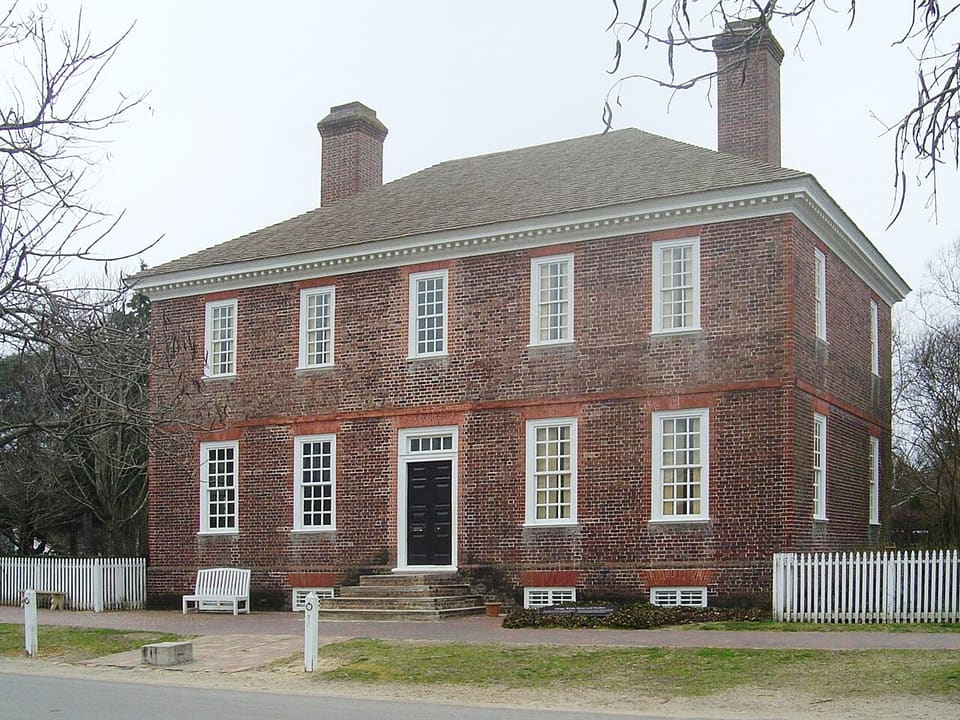
You're on the Palace Green now, the long lawn running up toward the Governor's Palace, and the big red brick house facing it is the Wythe House. Look at the windows on the ground floor. The bricks framing them are a lighter, rosier color than the rest. They're called rubbed bricks, because masons would rub one side of the bricks against each other until a rosy color showed. Two windows on each side of the door, five above, lined up exactly.
That symmetry was planned from the start. Richard Taliaferro, a wealthy planter, built this house between 1752 and 1754, and when his daughter Elizabeth married George Wythe in 1755, the couple received it as a wedding present. Wythe was a lawyer, later a signer of the Declaration of Independence, and the man who taught Thomas Jefferson law. Washington used this house as headquarters in 1781, just before Yorktown.
That's the opening. The rest plays at stop 3 of Colonial Williamsburg Walking Tour: Duke of Gloucester Street (2 min). Unlock the tour to hear it all, or try stop 1 free first.