The story
The Rustic Bridge That Replaced Another
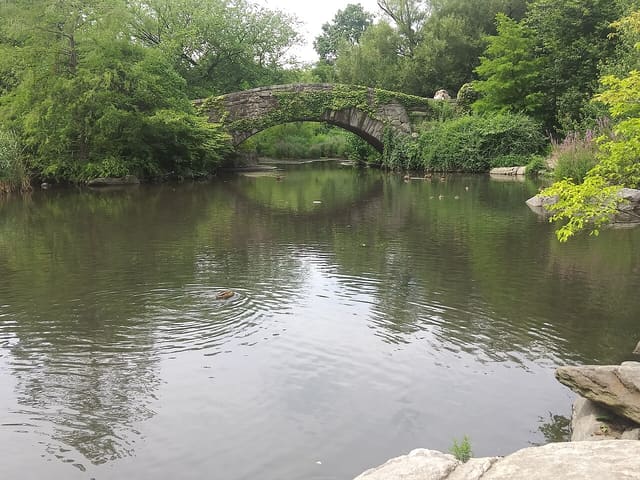
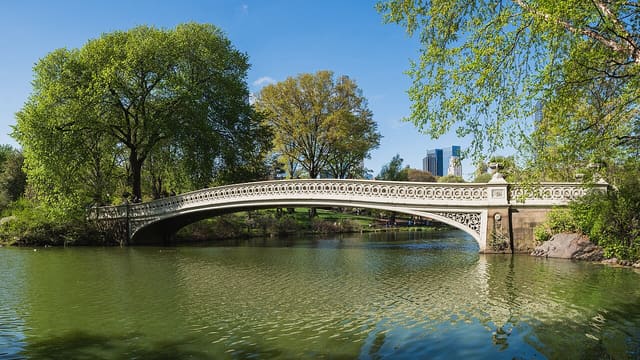
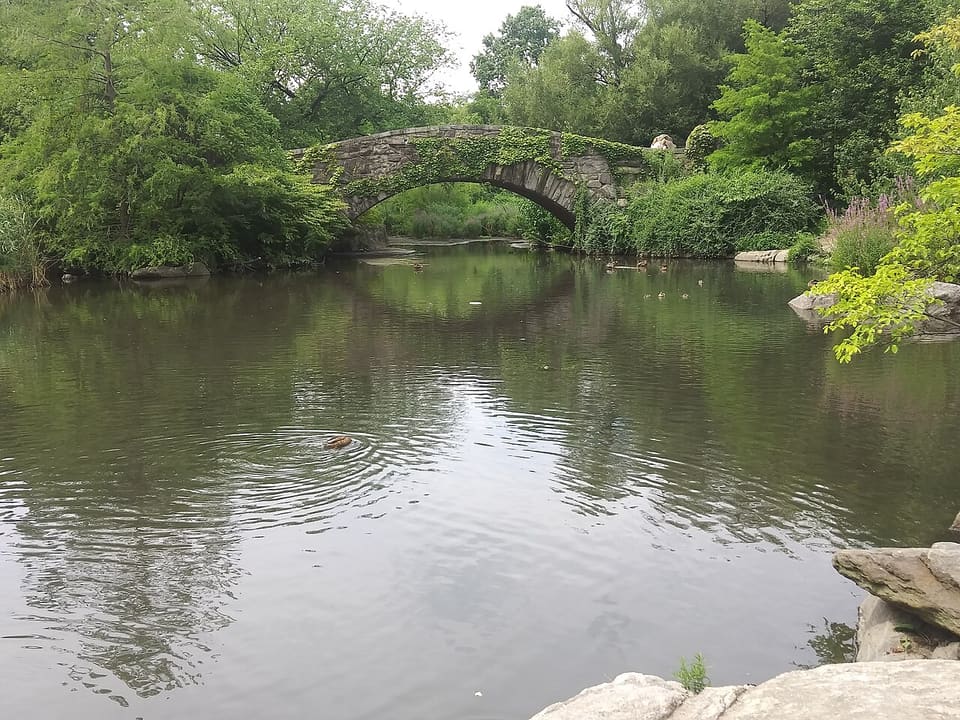
Stop 1 · The Pond and Gapstow Bridge · 2:41You're standing at the Pond, in the southeast corner of Central Park, just a few steps in from the noise of Fifth Avenue and Central Park South. Find the small arched stone bridge crossing the water. That's Gapstow Bridge. Now let your eyes rise above it, to the towers of Midtown stacked behind the trees. That pairing, old stone against new glass, makes this one of the most photographed spots in New York.
It looks like the bridge has always been here, and the Pond with it, as if the park simply fenced off a bit of countryside. That's the illusion, and it was built on purpose.
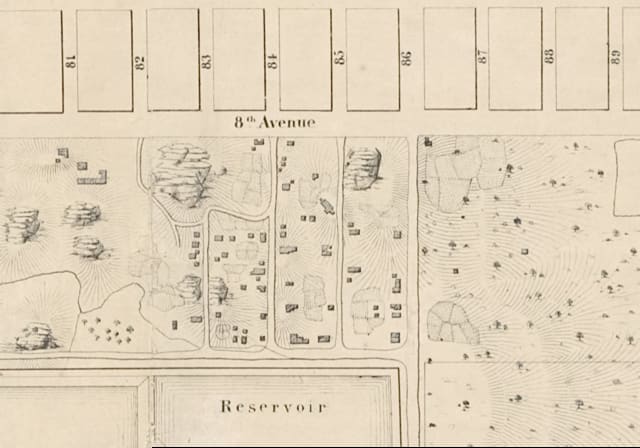
In 1858, a landscape writer named Frederick Law Olmsted and an English-born architect named Calvert Vaux won the competition to design Central Park with a plan they called Greensward. The land they were handed was no meadow. Much of it was rocky ridge, swamp and scrub, and parts of it were homes. A few stops from now you'll hear about Seneca Village, the mostly African American community cleared to make way for this park.
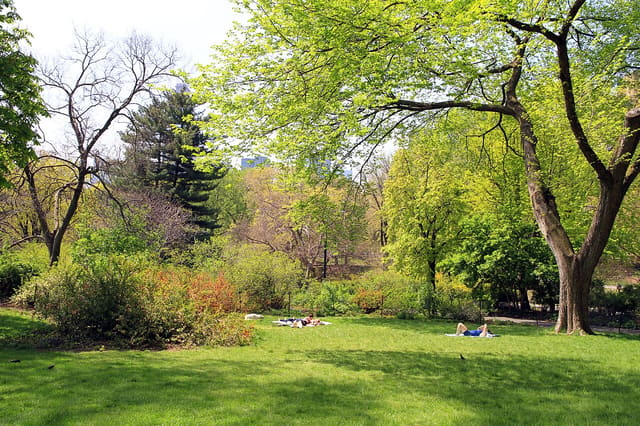
Olmsted and Vaux didn't preserve nature here. They manufactured it. Workers blasted rock with gunpowder and moved earth by hand and by cart, reshaping the ground into hills, hollows and shorelines. Even the water is not what it seems. The Pond and the park's other lakes look spring-fed, but they're topped up by the city's own water supply. A country pond, plumbed in.
Now back to that bridge. The first Gapstow Bridge, from the 1870s, was nothing like this one. It was designed by Jacob Wrey Mould, Vaux's collaborator on much of the park's ornament, and it was a fanciful thing of wood and cast iron. Elegant, and not built to last. Within about twenty years it had deteriorated so badly the city took it down.
Its replacement, the bridge in front of you, went up in 1896, made of rough-cut stone. And that's the quiet twist. The park's most rustic, most natural-looking crossing is the newer one. Somebody looked at a decaying showpiece and decided what this corner really needed was something that looked old.
It worked. Generations have taken it for a remnant of the countryside. Hollywood did too: Home Alone 2 sent young Kevin wandering through this very scene.
So look once more at the bridge and the towers behind it. Neither one grew here. Both were built by people, with real labor, on real land.
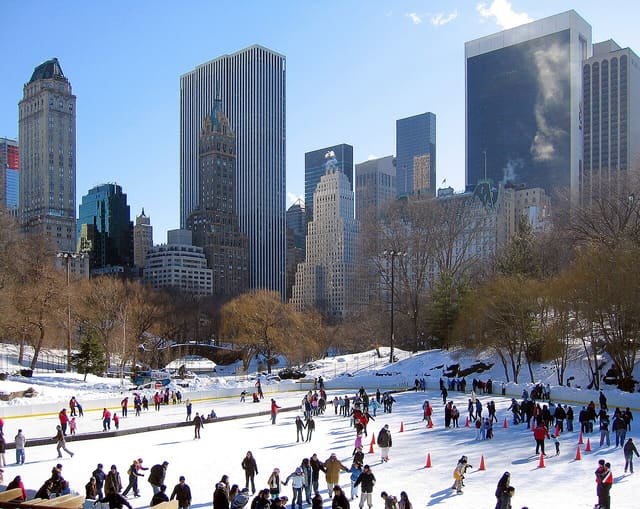
When you're ready, walk north about three minutes to Wollman Rink, where a family's gift put New Yorkers on the ice.