Free previewStop 4 of Harpers Ferry Walking Tour: John Brown's Fort to Jefferson Rock
The Church the War Left Standing
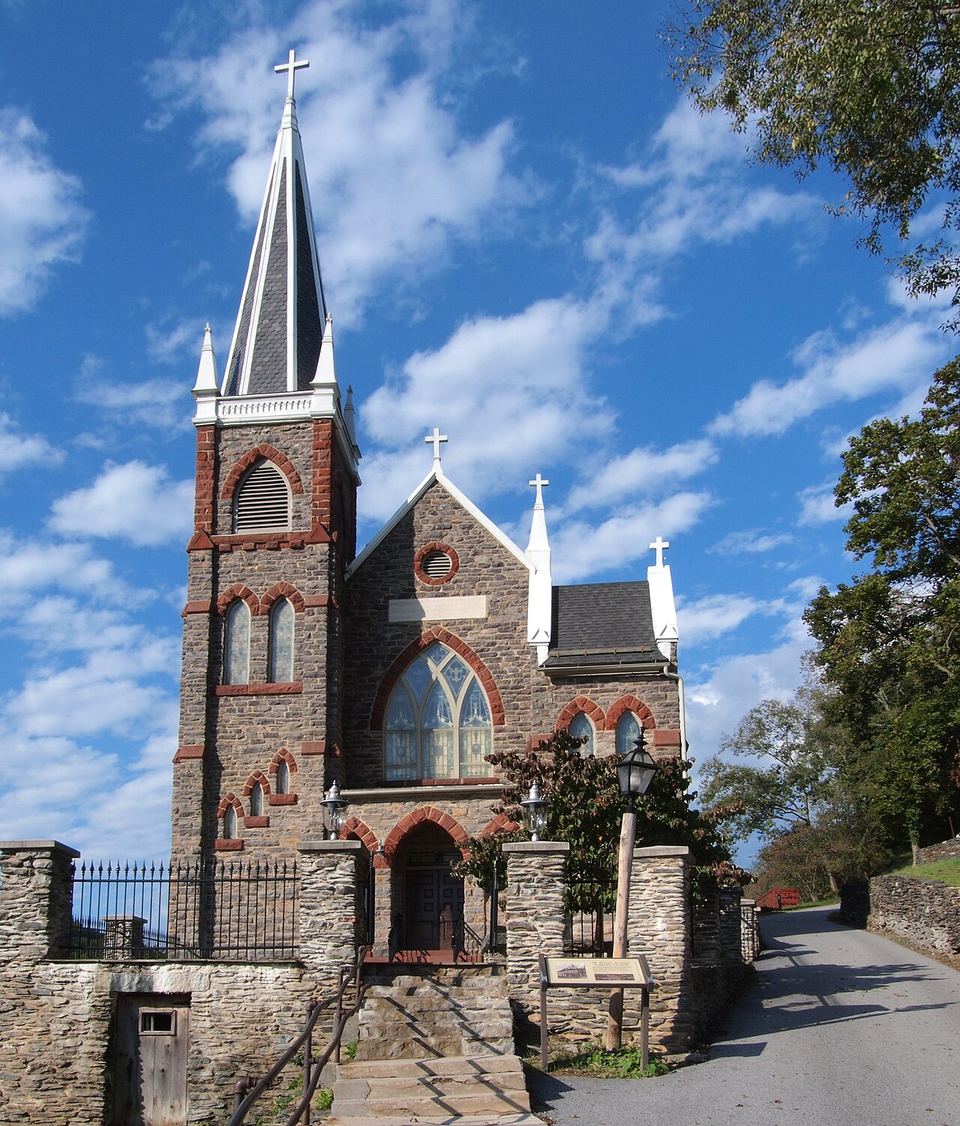
You've climbed up onto Cliff Street, and the church in front of you is St. Peter's. Look at that tall spire. It stands right at the edge of the cliff, over the gorge of the Shenandoah River, just above where it meets the Potomac. Now look at the walls: gray stone, trimmed in red sandstone.
This building has a trick up its sleeve. The church that came through the Civil War is not quite the one you're looking at.
It began with Irish immigrants. They settled in Harpers Ferry while the Chesapeake and Ohio Canal and the Baltimore and Ohio Railroad were being built, and the majority of them were Roman Catholic. They attended Mass at St. Peter's. Construction started in 1830, and the church was completed in 1833, an early Gothic Revival church that resembled a reduced version of a seminary chapel in Baltimore.
Then the war arrived.
That's the opening. The rest plays at stop 4 of Harpers Ferry Walking Tour: John Brown's Fort to Jefferson Rock (2 min). Unlock the tour to hear it all, or try stop 1 free first.