The whole storyStop 5 of Seattle Walking Tour: Pike Place Market to Pioneer Square
The Building That Was Waiting for Stone
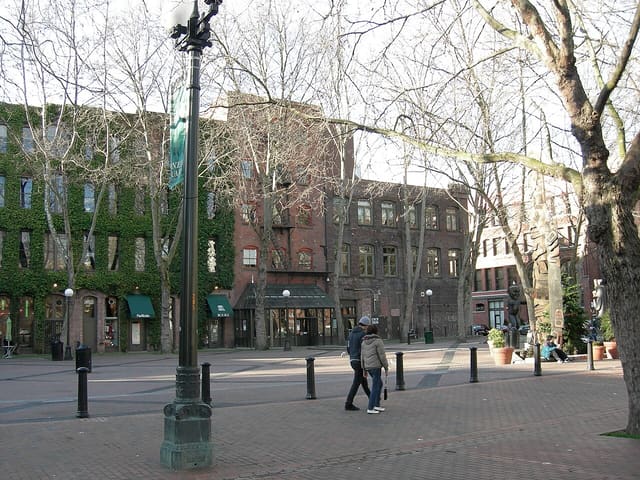
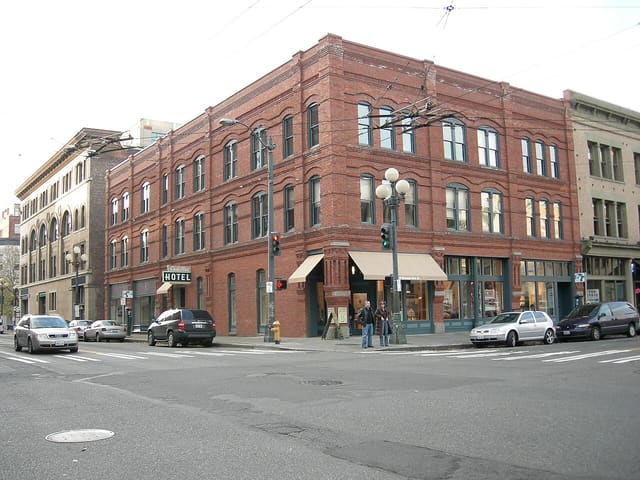
You're standing in Pioneer Square, at the little triangular park where First Avenue meets Yesler Way. Face the big building on the corner of First and James, the Pioneer Building. Look at how it's made. The bottom two levels are rough gray sandstone. Above that, five floors of red brick. Keep that line where the stone stops in mind, because this whole story is about stone.
This corner once held the house and orchard of Henry Yesler. He built the first steam-powered sawmill in the Pacific Northwest, right across the way, and his home was the social center of early Seattle. One plain sentence belongs here too: all of this was built on the homeland of the Duwamish and other Coast Salish people, who were here long before Yesler's mill.
By 1888 Yesler had moved to a mansion a few blocks uphill, and he wanted something grand on his old corner. He hired the architect Elmer Fisher, and that December the drawings went on public display. The local papers declared it would be one of the finest buildings in the country, the largest north of San Francisco. That was a promise about a building nobody had started yet.
In early 1889 the digging began. Yesler's old home was torn down. Then the job stalled. The city was short of rough stone, and of the 800 tons Yesler had ordered, only about 140 arrived. So the most ambitious building in Seattle sat there, a hole and some foundations, waiting.
On June 6, 1889, a glue pot overheated in a carpentry shop a few blocks north. By night the Great Fire had leveled 32 blocks of a town built almost entirely of wood, down to its log water pipes. Here's the part people get backwards. The Pioneer Building is often treated as Seattle's answer to the fire. In fact Fisher had drawn it the year before. The fire didn't inspire it. The fire caught it half-born, and the city that rebuilt around it decided everything downtown would be built the way Yesler had already planned: in stone and brick. Fisher went on to design several of the district's new buildings.
It opened in 1892. By the Klondike rush of 1897, 48 mining companies had offices inside.
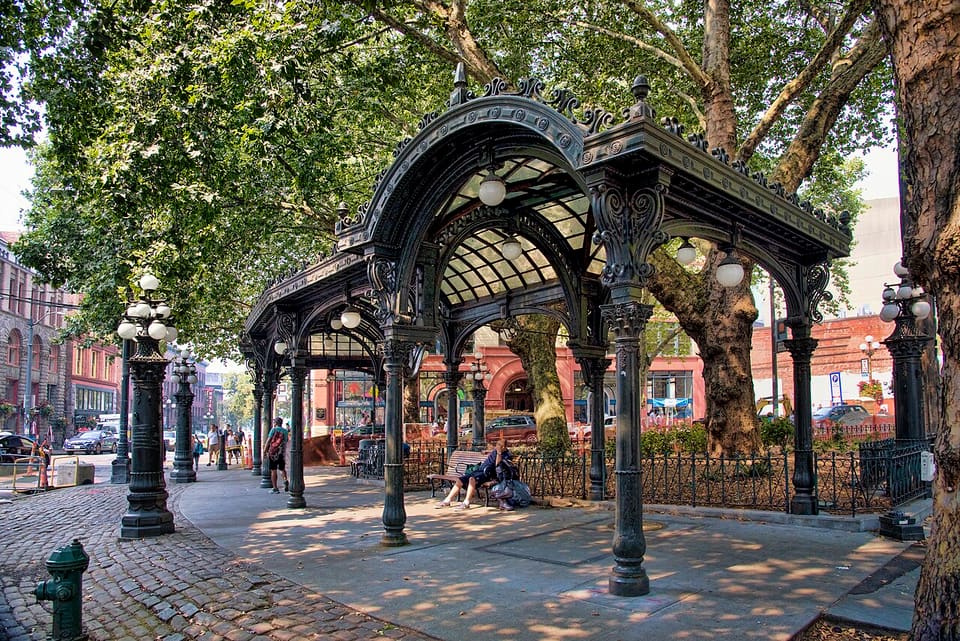
Now the small cast-iron and glass shelter in front of you, the pergola. It went up in 1909 for cable car riders, and below it sat an underground public restroom with marble stalls, once called the most lavish west of the Mississippi. A semi-truck flattened the pergola in 2001, and it was rebuilt from its own original iron. The totem pole nearby is a 1940 replica of a Tlingit pole that Seattle businessmen stole from an Alaskan village in 1899.
Look back at that sandstone base. That's the stone the building waited months for, while the wooden town around it was still standing.
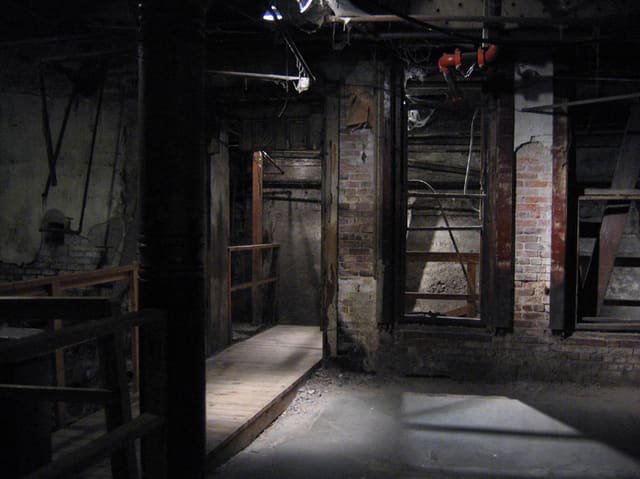
Walk southeast about a minute, roughly 90 meters, to the Seattle Underground, where the sidewalks of the fire-era city are still down there, a story below your feet.
Hear it where it happened. It plays at stop 5 of Seattle Walking Tour: Pike Place Market to Pioneer Square (3 min), narrated as you walk. Unlock the tour for the audio, or try stop 1 free first.