The whole storyStop 8 of Seattle Walking Tour: Pike Place Market to Pioneer Square
A Picnic That Became Seattle Pride
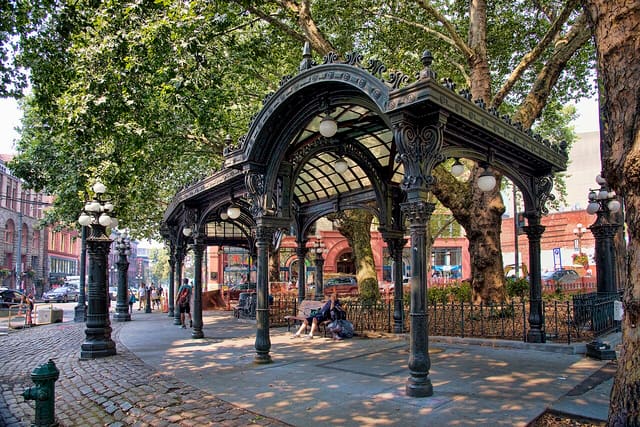
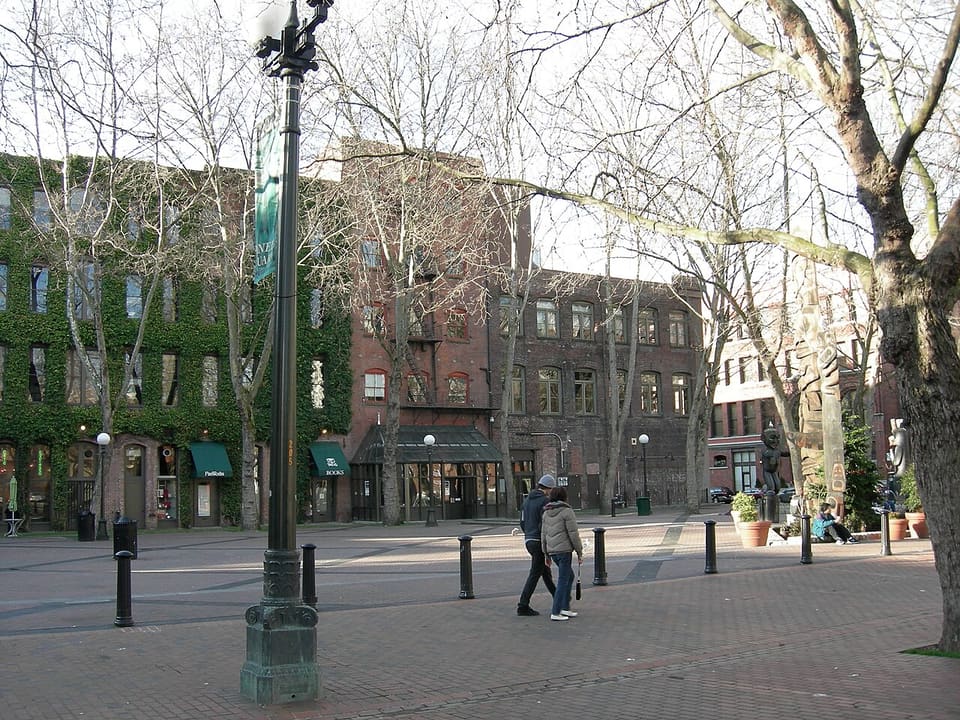
You're standing in Occidental Park, the open square in the middle of Pioneer Square, shaded by tall London plane trees with their patchy, peeling bark. Find the group of bronze firefighters. We'll come back to them. First, look at the ground under your feet.
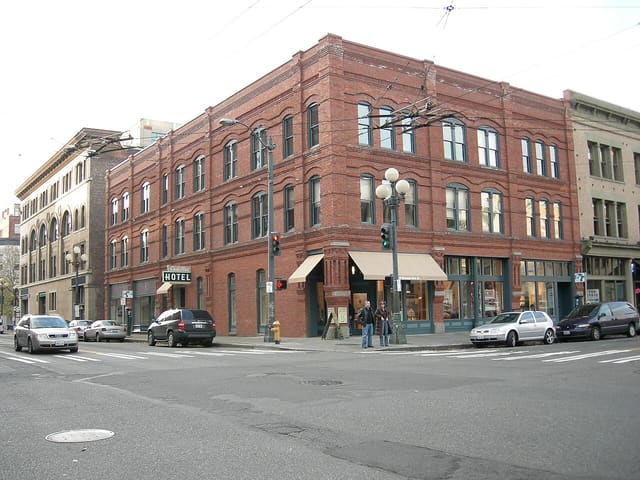
For years this was a parking lot. Before that, part of this block held the Carrollton Hotel, run by a Japanese American family and remembered in Monica Sone's memoir, Nisei Daughter. Sone was a Seattle girl who grew up here, and her family was among the Japanese Americans forced out of the city in 1942. The hotel was torn down in 1956. Then, in 1971, the city used federal money to turn the lot into a public square, designed by a landscape architect named Ilze Jones.
The square was only three years old when it got its most important job.
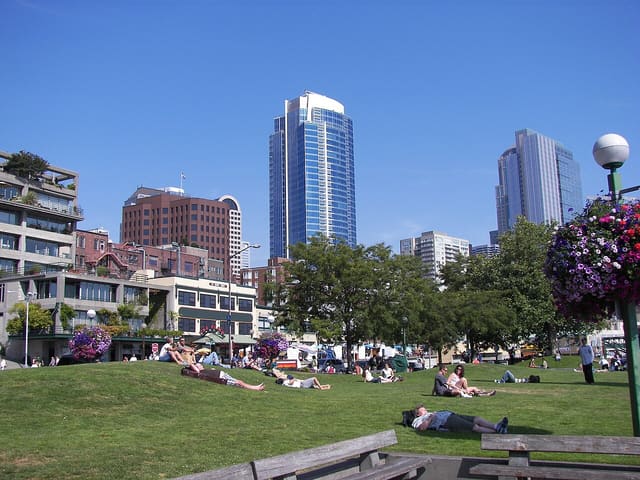
In 1974, an organizer named David Neth and a handful of others planned something Seattle had never had: a Pride Week. Its big public moment was modest. About 200 gay and lesbian people came here, to Occidental Park, for a picnic and a dance party. No permits for a parade, no corporate floats. Just food on the grass and music in a brand-new square, in a city where simply being seen together took nerve.
That picnic kept growing. In 1977 the city officially adopted a Pride parade route, and it ended right here. A year later the stakes got real. In 1978, activists rallied in this park against a local ballot initiative aimed at stripping protections from gay and lesbian Seattleites. They won.
The parade kept finishing in Occidental Park until the 1980s, when it moved up the hill to Capitol Hill. Today Seattle Pride fills a whole month. It's easy to forget it started as a picnic for 200 people in a square that, three years earlier, had been for parking cars.
The square still gathers crowds. Before every Seattle Sounders home game, soccer fans assemble here and march five blocks to the stadium, which is a fairly loud way to walk five blocks.
Now, those bronze firefighters. They're the Fallen Firefighters Memorial, by the sculptor Hai Ying Wu. They honor four Seattle firefighters who died on January 5, 1995, fighting a fire at the Mary Pang warehouse in the International District, just south of here. In a neighborhood that burned to the ground in 1889, it's fitting that the people who run toward fire have a place in its central square.
So look around: a hotel, a parking lot, a picnic, a protest, a memorial. Pioneer Square keeps rebuilding itself, and this patch of ground has been rebuilt more than most.
When you're ready, walk south on Occidental Avenue South, about a minute, to the Klondike Gold Rush Museum, where Seattle sold a stampede of dreamers everything they needed for the gold fields.
Hear it where it happened. It plays at stop 8 of Seattle Walking Tour: Pike Place Market to Pioneer Square (3 min), narrated as you walk. Unlock the tour for the audio, or try stop 1 free first.