Hollywood Walk of Fame Walking Tour: Chinese Theatre to Hollywood and Vine
Walk the boulevard where movie premieres turned into spectacles and sidewalk stars became Hollywood ambitions.
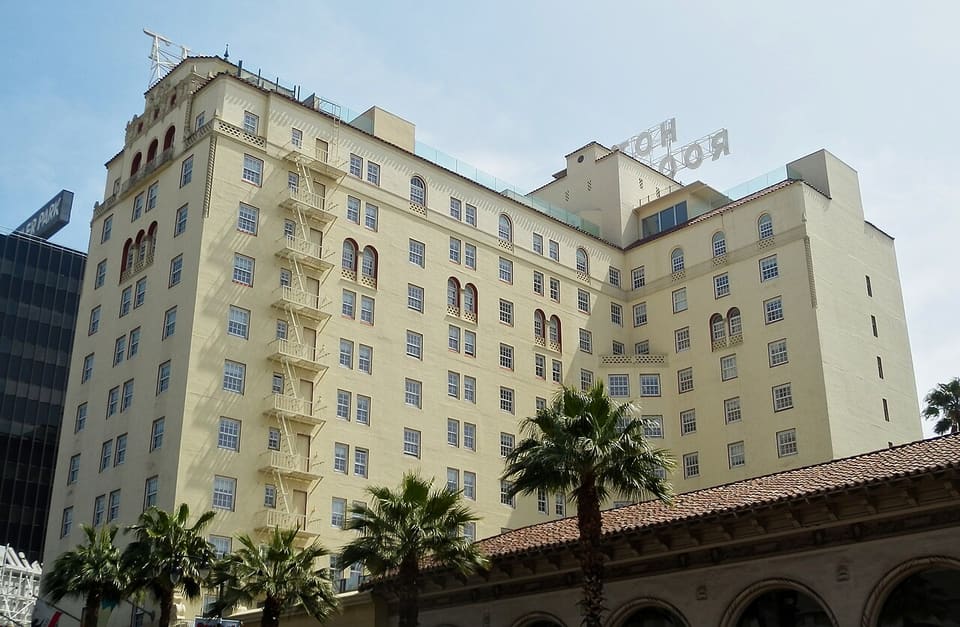 Photo: Alexander Migl, CC BY-SA 4.0, via Wikimedia Commons
The first Academy Awards ceremony took place in the Hollywood Roosevelt Hotel's Blossom Ballroom on May 16, 1929. Hosted by Academy president Douglas Fairbanks, it was open only to Academy members and drew about 270 people. The winners had already been announced three months earlier.
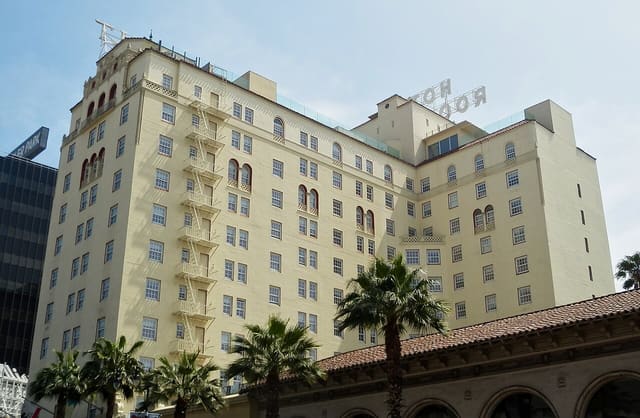
You're standing on Hollywood Boulevard outside the Hollywood Roosevelt, the twelve-story hotel straight across the street from the Chinese Theatre. Look up toward the roofline, where the hotel's name stands against the sky. That building is where Hollywood first handed itself a prize.
The Roosevelt opened on May 15, 1927, financed by a group that included the studio boss Louis B. Mayer, the theater showman Sid Grauman, and Hollywood's most famous married couple, Mary Pickford and Douglas Fairbanks. It was named for Theodore Roosevelt.
Two years and one day after it opened, on May 16, 1929, the industry came calling. Inside the hotel's Blossom Ballroom, the Academy of Motion Picture Arts and Sciences held its first awards. The host was the Academy's president, that same Douglas Fairbanks, so in a sense he was throwing a party at his own hotel.
It was nothing like the night you picture. It was a private ceremony open only to Academy members, with 270 people in attendance. And there was no suspense at all, because the winners had been announced three months earlier. Everyone in the room already knew who was going home with a statuette. Nobody even called it an Oscar yet. The nickname would be introduced four years later.
Now jump ahead to 1986, when one of those statuettes turned up for sale. Lyle Wheeler was a five-time Academy Award winner, and he was facing heavy debt. He sold boxes of his possessions, including his five Oscars. The one he'd won for art direction on The Diary of Anne Frank was auctioned for $21,250 to a buyer named William Kaiser.
Then Kaiser did something unusual. He gave it back. In 1989, he returned the award to Lyle Wheeler at a ceremony held right here at the Roosevelt, in the hotel where the Academy Awards were born. Sixty years after that first quiet banquet, one statuette came home.
The hotel itself nearly lost its looks. It went into decline in the 1950s, and an owner around that time demolished its archways, covered up its painted ceilings, and painted the entire place seafoam green. In the 1980s, a renovation working from original blueprints and historic photos restored the Spanish Colonial architecture. And if you hear that Marilyn Monroe is part of the building's story, that one is true: she lived here for two years early in her career.
When you're ready, walk north, turn left onto the Walk of Fame, then turn left onto Ovation Parking, about 330 meters and five minutes, to the next stop.
Walk the boulevard where movie premieres turned into spectacles and sidewalk stars became Hollywood ambitions.
Stop 1 of 10 on Hollywood Walk of Fame Walking Tour, before The Chinese Theatre.
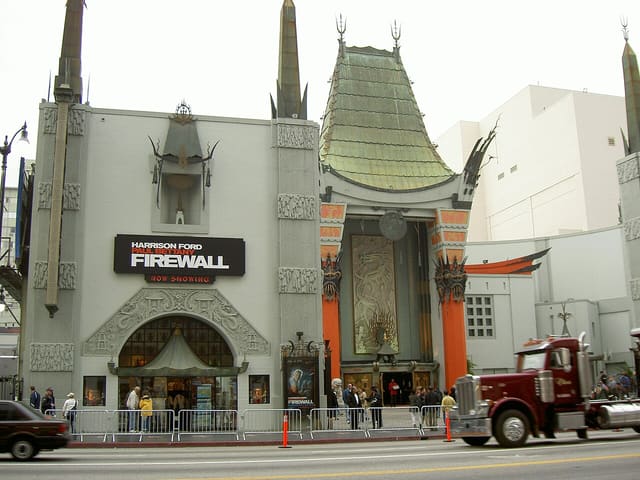
Sid Grauman said he accidentally stepped into the Chinese Theatre's wet concrete.
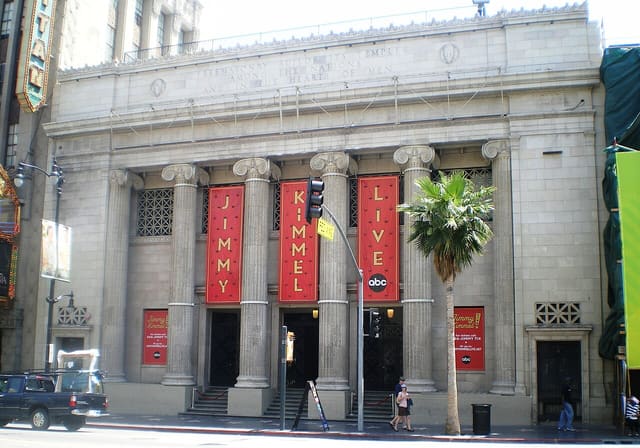
The Masons sold their Hollywood temple because they couldn't afford required safety upgrades.
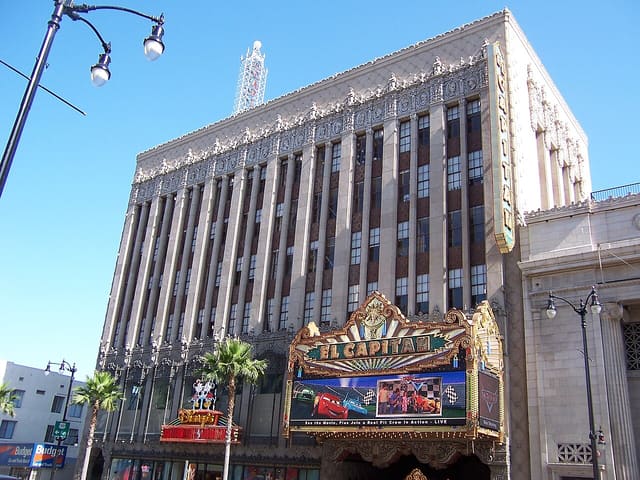
Citizen Kane had its world premiere at the El Capitan Theatre in 1941.
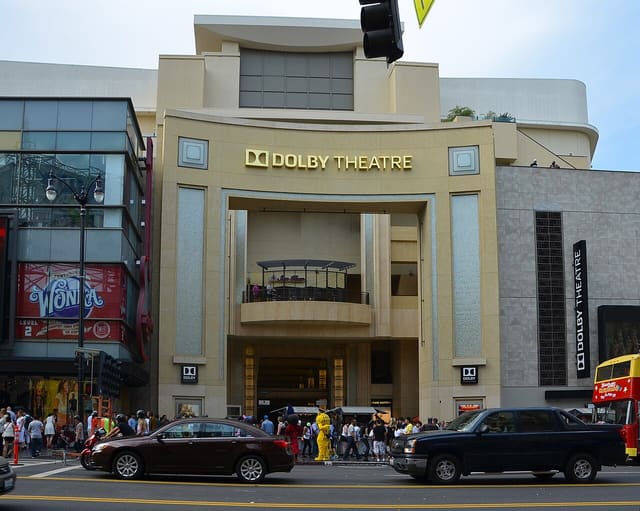
Its Best Picture columns have spaces through 2071, but the Oscars will move in 2029.
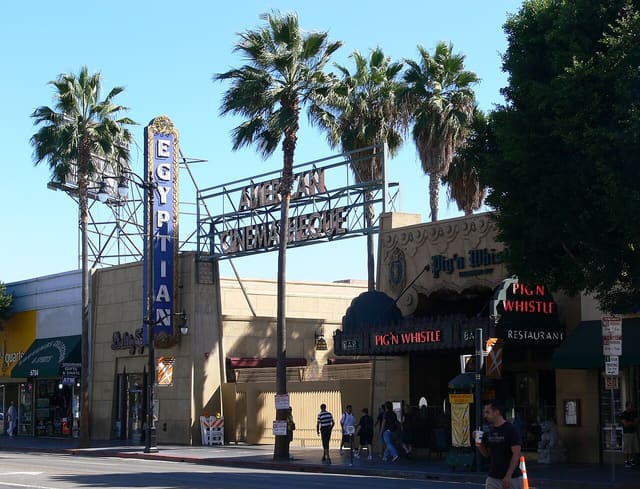
The Egyptian hosted what is remembered as Hollywood's first movie premiere.
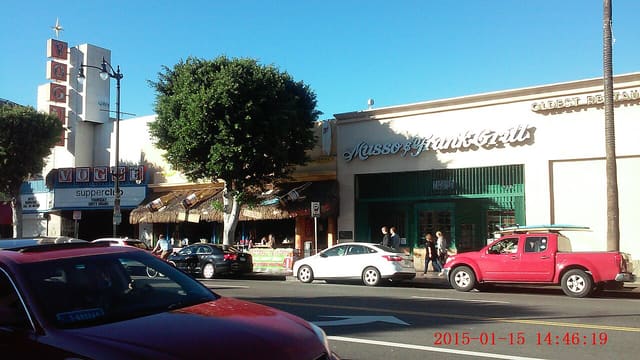
A later owner named Mosso was no relation to the Musso in the restaurant's name.
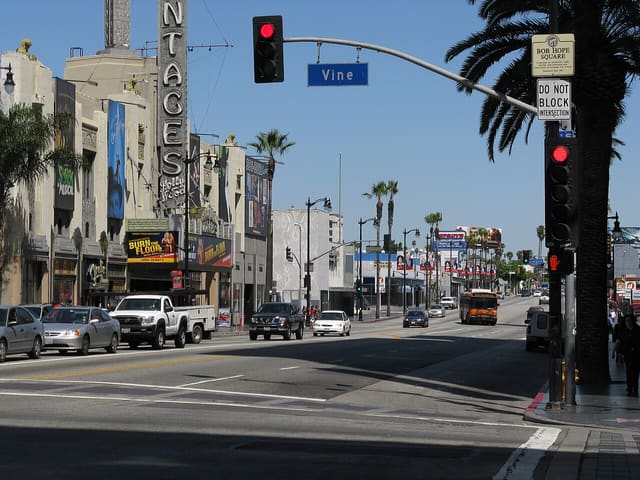
Before 1903, Hollywood and Vine was part of Daeida Beveridge’s lemon grove.
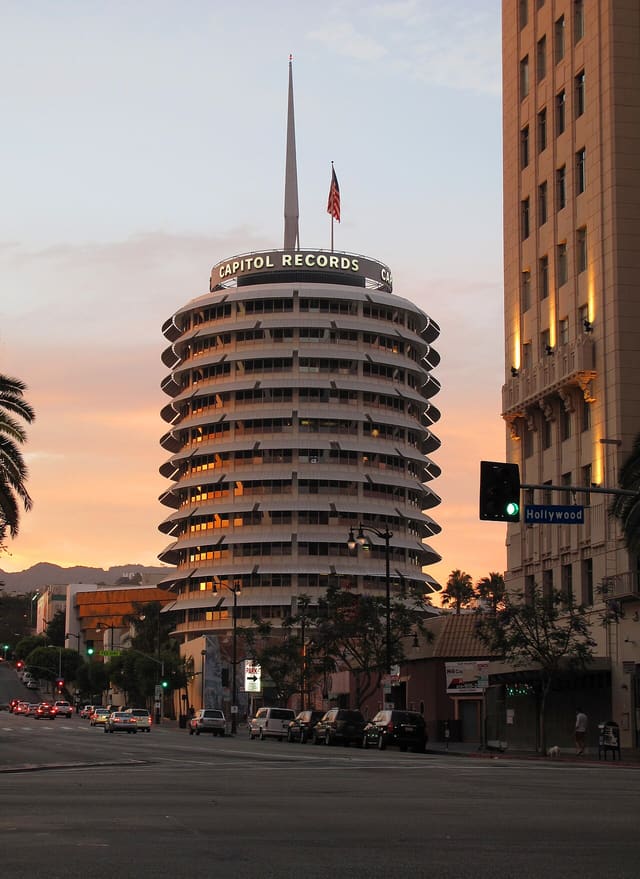
Capitol's president wanted a rectangular building, but the lender preferred it round.