 Photo: MusikAnimal, CC BY-SA 4.0, via Wikimedia Commons
1Start hereFree
Lafayette Cemetery No. 1
The Judge Behind the Wall
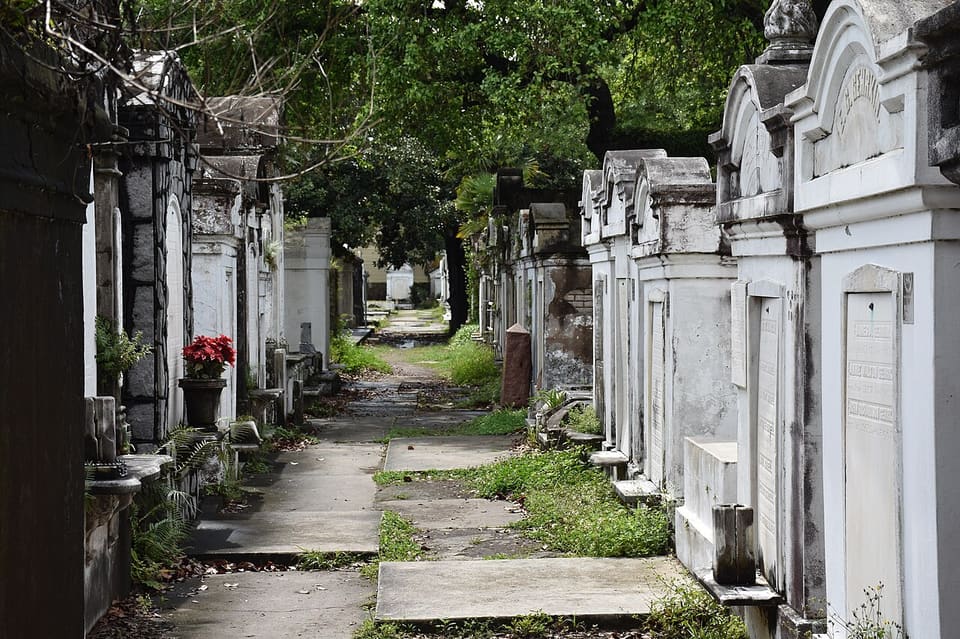
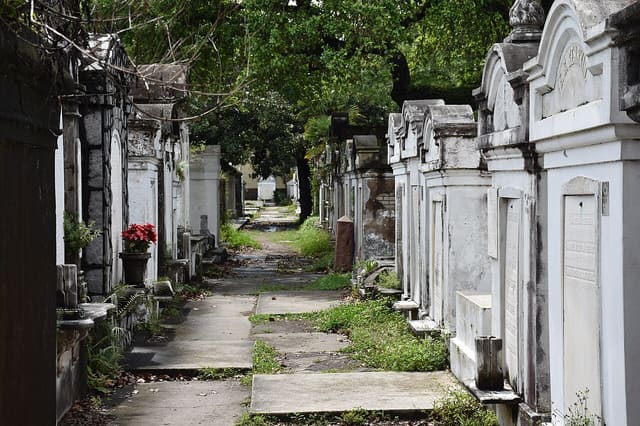
Free sample · 2:35You're standing at the wall of Lafayette Cemetery No. 1, in the Garden District. Look over or through it at the whitewashed tombs packed shoulder to shoulder, little houses for the dead. This one city block holds about 1,100 family tombs and some 7,000 people. When it was laid out in 1833, this ground wasn't New Orleans at all. It belonged to the separate City of Lafayette, which New Orleans swallowed in 1852. It was the city's first planned cemetery, built in the shape of a cross so funeral processions could pass down its center aisles.
Somewhere in there lies John Howard Ferguson. His name is in nearly every American history textbook, and almost nobody knows who he was. He's the Ferguson in Plessy versus Ferguson.
It began with a trap set on purpose. In 1890 Louisiana passed the Separate Car Act, forcing Black and white passengers into separate railroad cars. A group of Creoles of color in New Orleans, the Comité des Citoyens, decided to fight it in court, and they needed a test case. In 1892 a shoemaker named Homer Plessy volunteered. He bought a first-class ticket, sat in the car reserved for white passengers, and was arrested, exactly as planned.
Ferguson was the judge who heard the case, and the name stuck to it for good. Plessy lost, and the fight climbed all the way to Washington.
In 1896 the United States Supreme Court upheld segregation, seven to one. Separate, the Court said, could be equal. It wasn't. That decision gave legal cover to Jim Crow across the South for nearly 60 years: separate schools, separate waiting rooms, separate water fountains, and the daily message to millions of Black Americans that they were second-class citizens. It took Brown versus Board of Education, in 1954, to begin undoing it.
So think about the scale of it. A man resting in a quiet tomb, in a block you can cross in a minute, gave his name to a ruling that shaped American life for generations. Not far from him lies Harry T. Hays, a Confederate general who led the Louisiana Tigers. The dead here keep complicated company.
The City of New Orleans closed the cemetery to visitors in 2019, and no reopening date has been given. So for now, you can only look in from out here. The judge stays behind the wall. His ruling, unfortunately, never did.
Walk northeast, then turn right onto Washington Avenue. It's about 140 meters, a two-minute stroll.
 Photo: Bobak Ha'Eri, CC BY 3.0, via Wikimedia Commons
 Photo: APK, CC BY-SA 4.0, via Wikimedia Commons
 Photo: Elisa.rolle, CC BY-SA 3.0, via Wikimedia Commons
 Photo: APK, CC BY-SA 4.0, via Wikimedia Commons
 Photo: Reading Tom, CC BY 2.0, via Wikimedia Commons
 Photo: APK, CC BY-SA 4.0, via Wikimedia Commons