The whole storyStop 4 of Garden District Walking Tour: Mansions and Lafayette Cemetery
An Iron Cornfield on Fourth Street
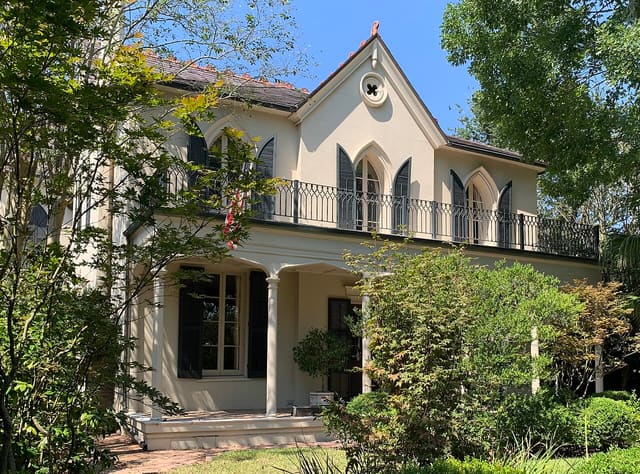
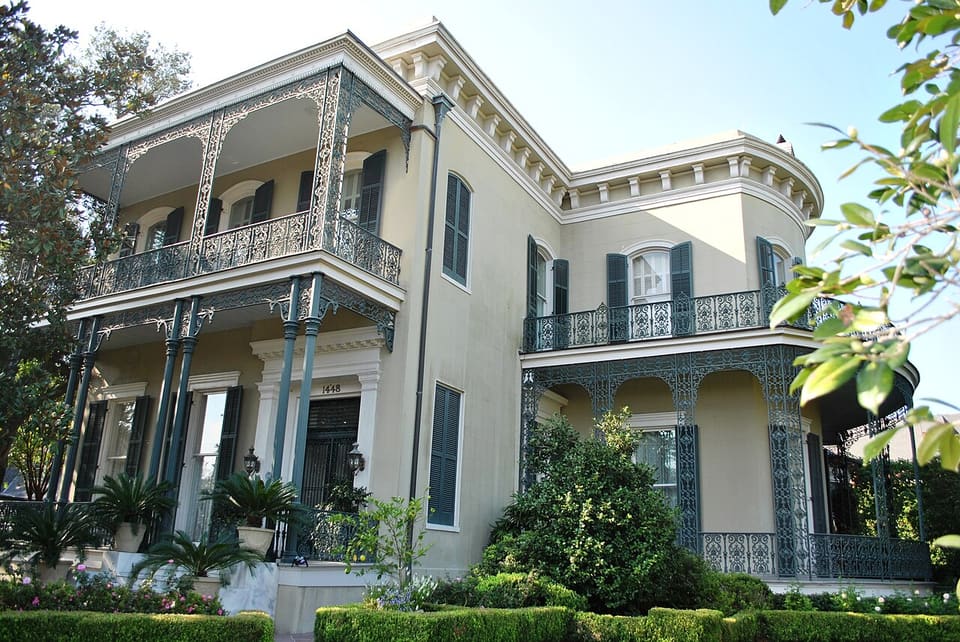
You're in front of the big house locals call Colonel Short's Villa, in the Garden District. Before you look at the house, look at the fence. Get close to it. Those aren't plain iron bars. They're cornstalks, cast in metal, standing guard on a city sidewalk. Look for the leaves and the ears of corn, and see whether you can pick out any vines winding among them.
The house went up in 1859 for Colonel Robert Short, a man from Kentucky. To design it he hired Henry Howard, an architect behind nearly 300 buildings across Louisiana, including several on this tour.
The fence is what people remember, and they come with a story. Colonel Short's wife, the legend goes, was homesick for Iowa. She missed the fields she grew up with in this hot, unfamiliar city. So the Colonel had a cornfield made for her in iron, one she could see from her window.
That's the popular legend, and it's all it is. Nothing in the evidence shows that Robert Short ordered the fence for a homesick wife. A similar cornstalk fence stands on Royal Street in the French Quarter, with no Iowa wife attached. That alone should make you suspicious. A pattern that turns up in two places was probably not invented for one lonely woman at one window.
So what do we know? A man from Kentucky built a grand house, hired a famous architect, and ended up with a fence that has been talking people into stories for generations. The romance likely came later, the way romance usually does: told and retold until it feels like history.
Here's the irony. If Mrs. Short really did miss Iowa, this would have been a strange comfort. Iron corn never grows, never gets harvested, and in a New Orleans summer it soaks up the heat like a skillet. Run a hand along a stalk on your way out, if it's shaded. The fence has outlasted every person who ever told its story, and it still hasn't confirmed a word of it.
Walk northeast on Prytania Street, turn right onto Fourth Street, turn left onto Coliseum Street, then turn right onto First Street, about nine minutes, to the house where a novelist brought her vampires home.
Hear it where it happened. It plays at stop 4 of Garden District Walking Tour: Mansions and Lafayette Cemetery (2 min), narrated as you walk. Unlock the tour for the audio, or try stop 1 free first.