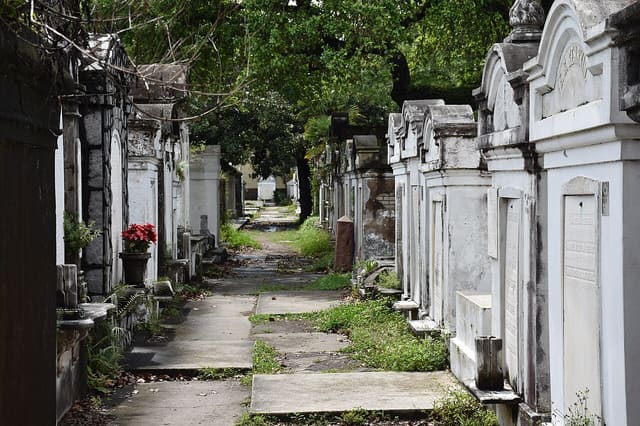
Garden District Walking Tour: Mansions and Lafayette Cemetery
Walk among the grand houses built as Americans made a city uptown from Creole New Orleans.
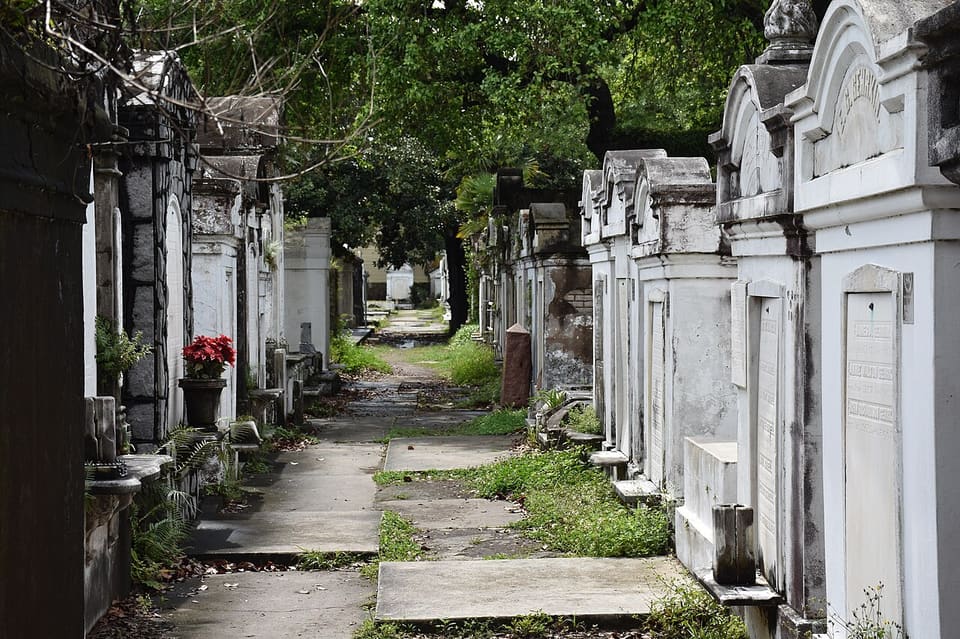 Photo: MusikAnimal, CC BY-SA 4.0, via Wikimedia Commons
Lafayette Cemetery Number 1, New Orleans, Louisiana
Judge John Howard Ferguson, who heard Plessy v. Ferguson, is buried in Lafayette Cemetery No. 1. The case followed Homer Plessy's 1892 arrest for sitting in a white railroad car; in 1896, the U.S. Supreme Court upheld segregation by a seven-to-one vote. Confederate general Harry T. Hays is also buried here.
You're standing at the wall of Lafayette Cemetery No. 1, in the Garden District. Look over or through it at the whitewashed tombs packed shoulder to shoulder, little houses for the dead. This one city block holds about 1,100 family tombs and some 7,000 people. When it was laid out in 1833, this ground wasn't New Orleans at all. It belonged to the separate City of Lafayette, which New Orleans swallowed in 1852. It was the city's first planned cemetery, built in the shape of a cross so funeral processions could pass down its center aisles.
Somewhere in there lies John Howard Ferguson. His name is in nearly every American history textbook, and almost nobody knows who he was. He's the Ferguson in Plessy versus Ferguson.
It began with a trap set on purpose. In 1890 Louisiana passed the Separate Car Act, forcing Black and white passengers into separate railroad cars. A group of Creoles of color in New Orleans, the Comité des Citoyens, decided to fight it in court, and they needed a test case. In 1892 a shoemaker named Homer Plessy volunteered. He bought a first-class ticket, sat in the car reserved for white passengers, and was arrested, exactly as planned.
Ferguson was the judge who heard the case, and the name stuck to it for good. Plessy lost, and the fight climbed all the way to Washington.
In 1896 the United States Supreme Court upheld segregation, seven to one. Separate, the Court said, could be equal. It wasn't. That decision gave legal cover to Jim Crow across the South for nearly 60 years: separate schools, separate waiting rooms, separate water fountains, and the daily message to millions of Black Americans that they were second-class citizens. It took Brown versus Board of Education, in 1954, to begin undoing it.
So think about the scale of it. A man resting in a quiet tomb, in a block you can cross in a minute, gave his name to a ruling that shaped American life for generations. Not far from him lies Harry T. Hays, a Confederate general who led the Louisiana Tigers. The dead here keep complicated company.
The city closed the cemetery to visitors in 2019. On October 1, 2026, it opened again, but only for guided tours. Save Our Cemeteries, part of the Preservation Resource Center, leads small groups inside, and you book a place ahead on the Preservation Resource Center's website. Without a tour you can't go in, but you can still look through the gate on Washington Avenue. You'll find it right across from your next stop. The judge stays behind the wall. His ruling, unfortunately, never did.
Walk northeast, then turn right onto Washington Avenue. It's about 140 meters, a two-minute stroll.
Walk among the grand houses built as Americans made a city uptown from Creole New Orleans.
Stop 1 of 8 on Garden District Walking Tour, before Commander's Palace.
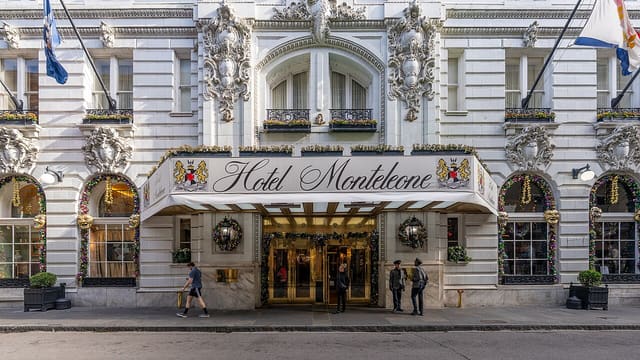
Walk the French Quarter from a grand hotel to an old convent and storied house.
Want to go inside the gates? Booking, start times and the meeting gate: Lafayette Cemetery No. 1 tours, on the comparison site we publish.
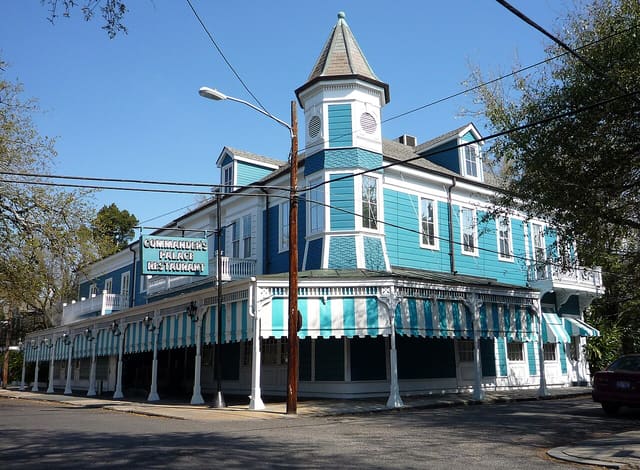
By 1900, Commander's Palace was drawing gourmets from all over the world.
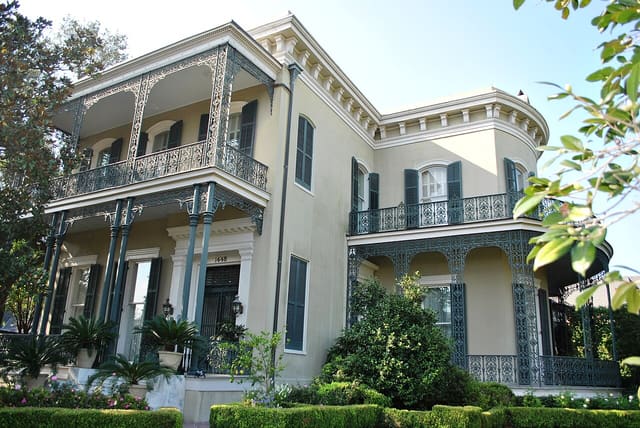
Colonel Short's Villa has an iron fence cast to look like cornstalks.
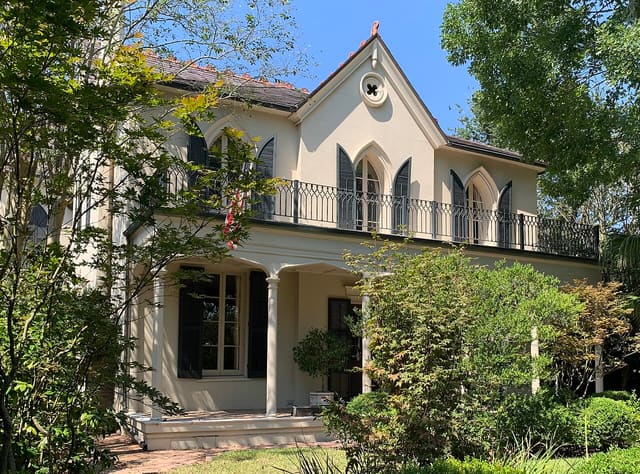
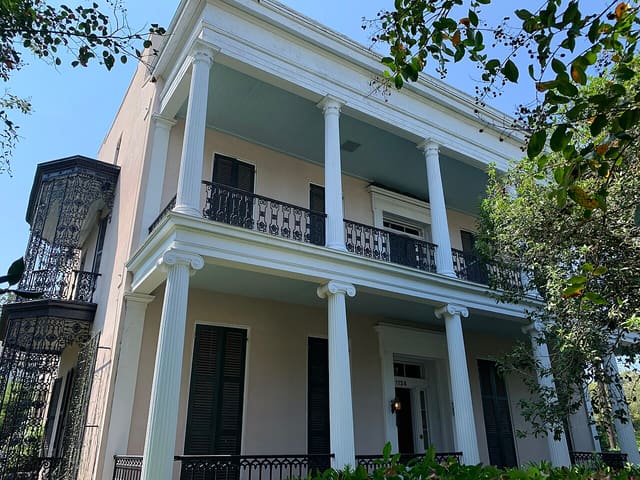
Jefferson Davis died here while staying with his friend Judge Charles Fenner.
Anne Rice began using the name Anne on her first day of school.
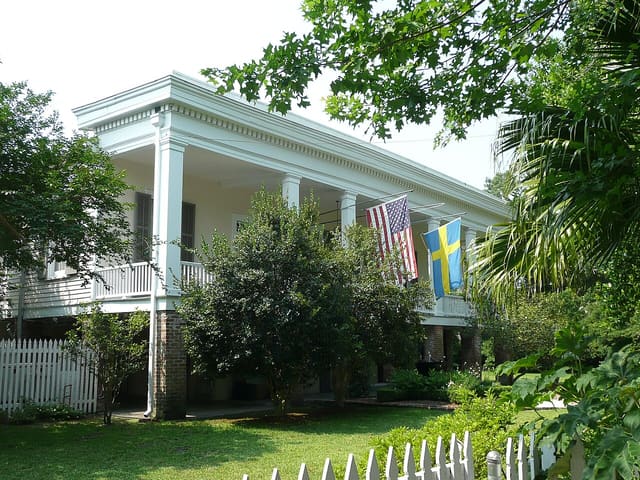
Toby's Corner is considered the oldest house still standing in the Garden District.
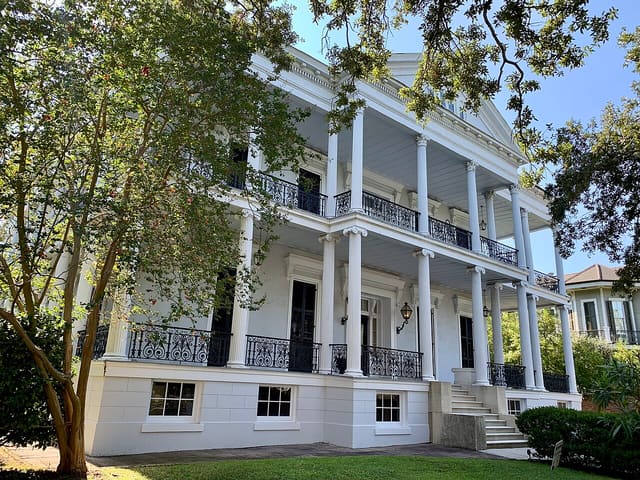
Buckner wanted to outdo a rival; his mansion later appeared as a witches' house on television.