The story
The Wrong Coat on the Post Road
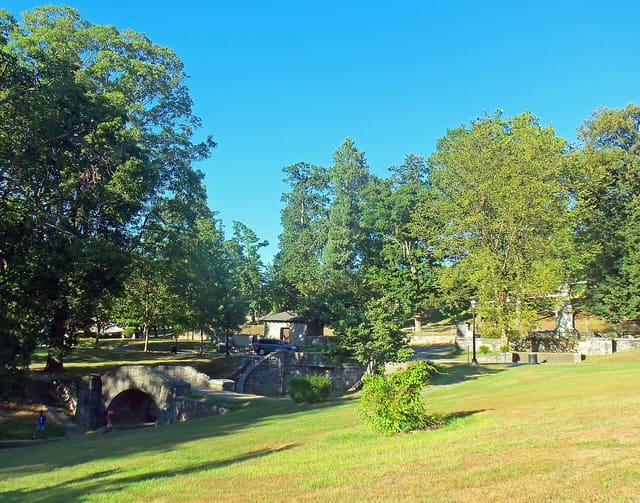
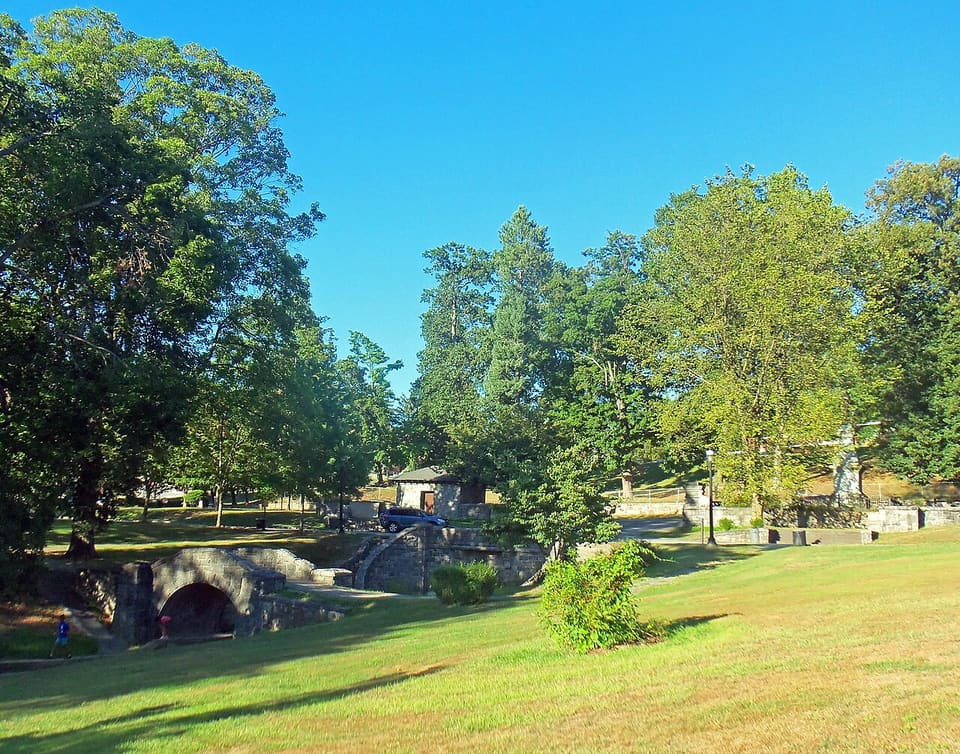
Stop 1 · Patriots Park and the Andre Monument · 2:13You're standing in Patriots Park, right on the line where Tarrytown meets Sleepy Hollow. The little stream running through the middle of the park, André Brook, is that line. Now find the bronze man on the tall pedestal near the west entrance, behind his square iron fence. That's John Paulding, one of the local militiamen who stopped a spy here. Down on the white marble below him, a bronze panel shows the moment that made him famous.
In 1780 this ground wasn't anybody's. It sat in what people called the Neutral Ground, the no-man's land between the British forces occupying New York City and the Continental Army to the north.
In September of that year, three young militiamen, John Paulding, Isaac Van Wart and David Williams, stopped a rider on the Albany Post Road in Tarrytown. The rider was Major John André, the head of British intelligence operations in the American war. He was riding back from a meeting with the American general Benedict Arnold, who had secretly offered to turn over the fort at West Point to the British. Things had gone wrong for André, and he was trying to get back to British lines through American-held country, wearing civilian clothes.
He was quickly identified, and the militiamen found papers on him that implicated him in espionage with Arnold. Those papers are why you're standing in a park named for patriots, and why a farm-boy militiaman got a statue.
The consequences were swift. Arnold defected to the British and spent his remaining years after the war in England. André was tried by a military court and hanged on George Washington's orders on October 2, 1780. He was in his early thirties at most, born in 1750 or 1751 by the records.
Now look at the pedestal again. The first monument here went up in 1853, one of the earliest to honor any event of the Revolutionary War, on land donated by William and Mary Taylor, members of the local African American community. Their names aren't on the pedestal. Now you know them.
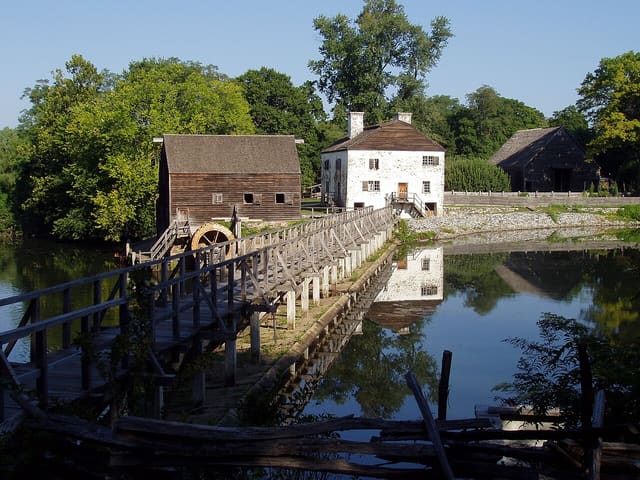
When you're ready, walk northeast, then turn left onto North Broadway, about 1.1 km and 17 minutes, to Philipsburg Manor.