The story
The Night the Ships Had to Leave
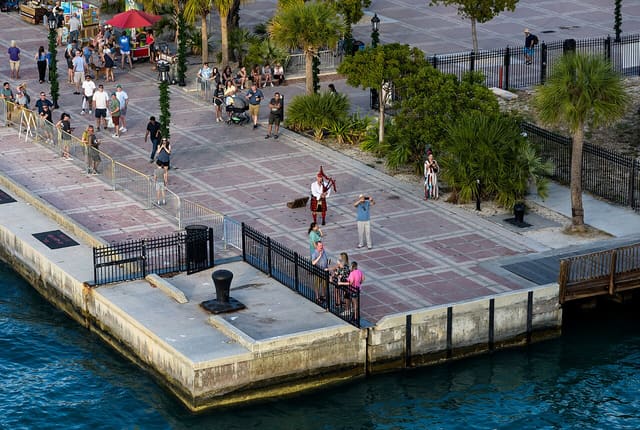
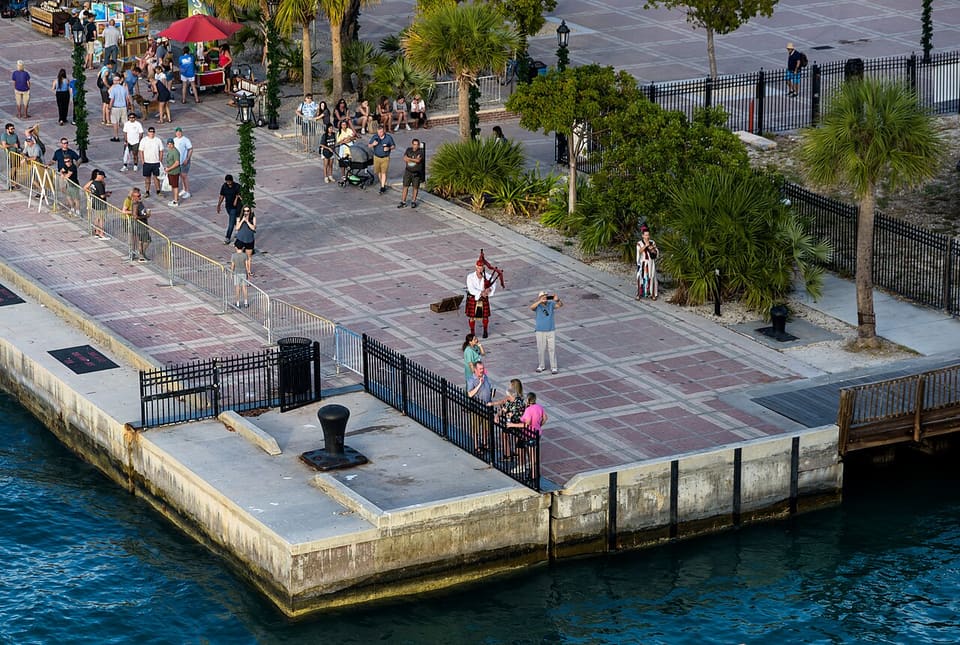
Stop 1 · Mallory Square · 2:41You're standing in Mallory Square, the brick plaza at the bottom of Wall Street, right on the water in Old Town. Face the open water. That's the Gulf of Mexico, and every evening of the year, this is where Key West turns around to watch the sun go into it. Now glance along the waterfront to the cruise ship pier. That pier is the other half of this story.
The Sunset Celebration starts here two hours before sundown, every single day. Hundreds of people drift in. Street performers set up, artists lay out their crafts, food carts start frying things. Then, at the moment the sun touches the horizon, the whole square goes quiet and looks west. It's one of the city's best-loved rituals, and nobody sells a ticket to it.
In 1984, that ritual nearly got blocked by a wall of steel. The city opened a cruise ship pier right here on Mallory Square. Big ships meant big money for an island town. But a ship tied up at the waterfront meant something else, too: a floating apartment building parked between the crowd and the sunset.
People pushed back, and hard. To plenty of locals, the evening gathering wasn't a tourist show. It was the island's living room. Opening a pier on top of it felt like letting someone park a truck in front of the television during the best part.
So Key West did something only Key West would do. The city passed an ordinance requiring cruise ships to leave port two hours before sunset. And to make the medicine go down, the ships could come back after dark without paying another docking fee. In other words, a city with a major port told some of the largest vessels on the sea to step aside, politely, so everyone could see the view.
That's the insight worth carrying with you down the rest of this walk. Key West has always lived off the water, and it has always argued about who gets the waterfront. The busy port and the quiet sunset share this square, and the rule settling that argument is about the light, not the money.
Before you go, look for the sculpture garden here on the square, with a tall monument called "The Wreckers" and dozens of bronze busts by the sculptor James Mastin. Wreckers were the men who salvaged cargo from ships that ran aground on the reefs offshore, and for a time they made this island rich. You'll meet some of these bronze faces again today, Hemingway and Truman among them.
And tonight, if you're still in town, come back. The ships will be gone. That's the law.
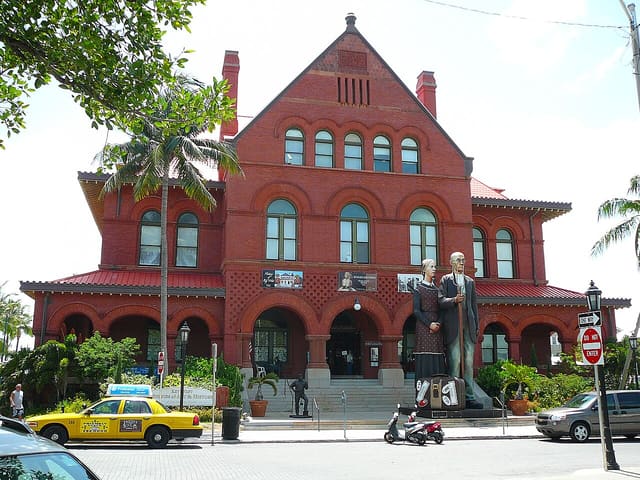
Walk east, turn right onto Wall Street, then right onto Front Street, about five minutes. The grand red-brick building waiting there almost didn't survive.