The story
The Congress That Had to Run
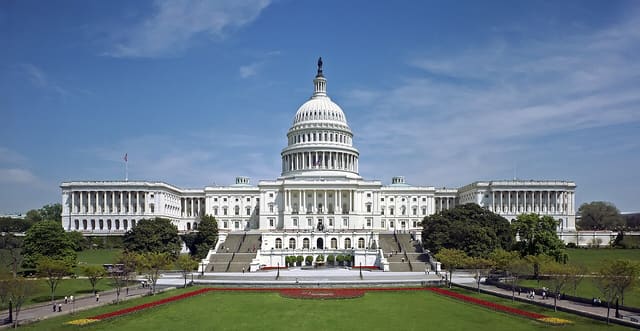
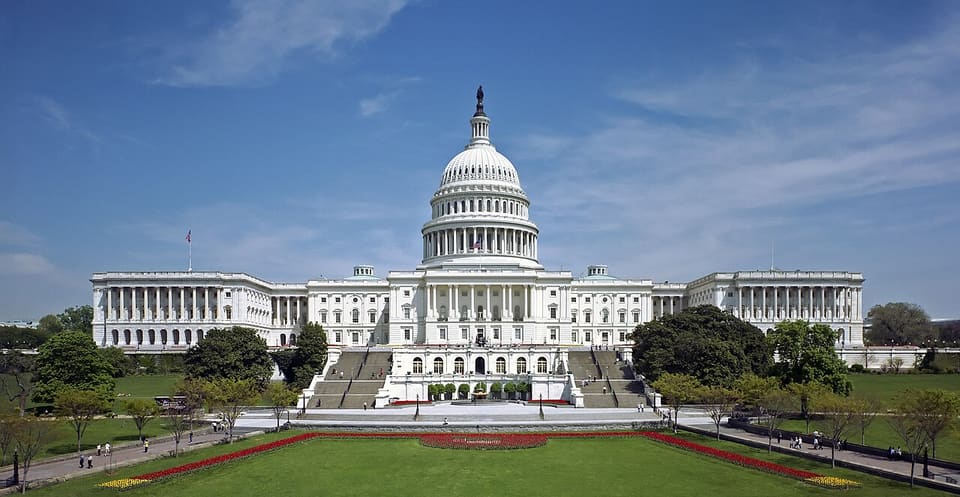
Stop 1 · U.S. Capitol, West Front · 2:23You're standing on the West Front of the United States Capitol, facing the long green lawn of the National Mall. Look up behind you at the white dome, finished around 1866, just after the Civil War. Then turn and look down the lawn. The building sits at the head of it, high on a hill, and that position has an origin story. It starts with a Congress that had no safe place to sit.
In June 1783 the Revolutionary War was won, but plenty of the men who won it hadn't been paid. Unpaid soldiers protested at Independence Hall in Philadelphia, where Congress was meeting, and demanded their money. Pennsylvania's governor, John Dickinson, sympathized with the protesters and refused to call up the militia to remove them.
So the government of the United States left town. On June 21, 1783, Congress fled to Princeton, New Jersey. Afterward it met in Annapolis, then Trenton, and then New York City. The lesson was plain: a legislature that depends on someone else's town depends on someone else's protection.
The answer was a capital of its own. The 1790 Residence Act chose a site on the Potomac, as part of a compromise brokered by Alexander Hamilton, in which the federal government assumed the states' war debts. The planner, Pierre L'Enfant, placed the Congress House on Jenkins Hill, which he described as a "pedestal awaiting a monument."
That is why you are standing where you are. A government once chased out of a borrowed room got a hill of its own, with nobody else's permission required.
The design came from William Thornton, an amateur architect, and George Washington praised it for its "Grandeur, Simplicity, and Beauty." Thomas Jefferson gave the building the name "Capitol," after Rome's Capitoline Hill, a name based on a misconception about what that hill was. So the most famous legislative building in America carries a small misunderstanding in its name, though no one has ever been able to evict it.
Before you go, take one more look down the lawn, away from the dome. Congress now looks out over open ground from the top of a hill, which is a long way from fleeing to Princeton.
Turn your back on the dome and leave the West Front lawn, then head north, about 1.9 kilometers, roughly 29 minutes on foot, to the next stop.