The whole storyStop 4 of Chicago Christmas Walk: Magnificent Mile Lights to the Christkindlmarket
The Contest That Lost to Second Place
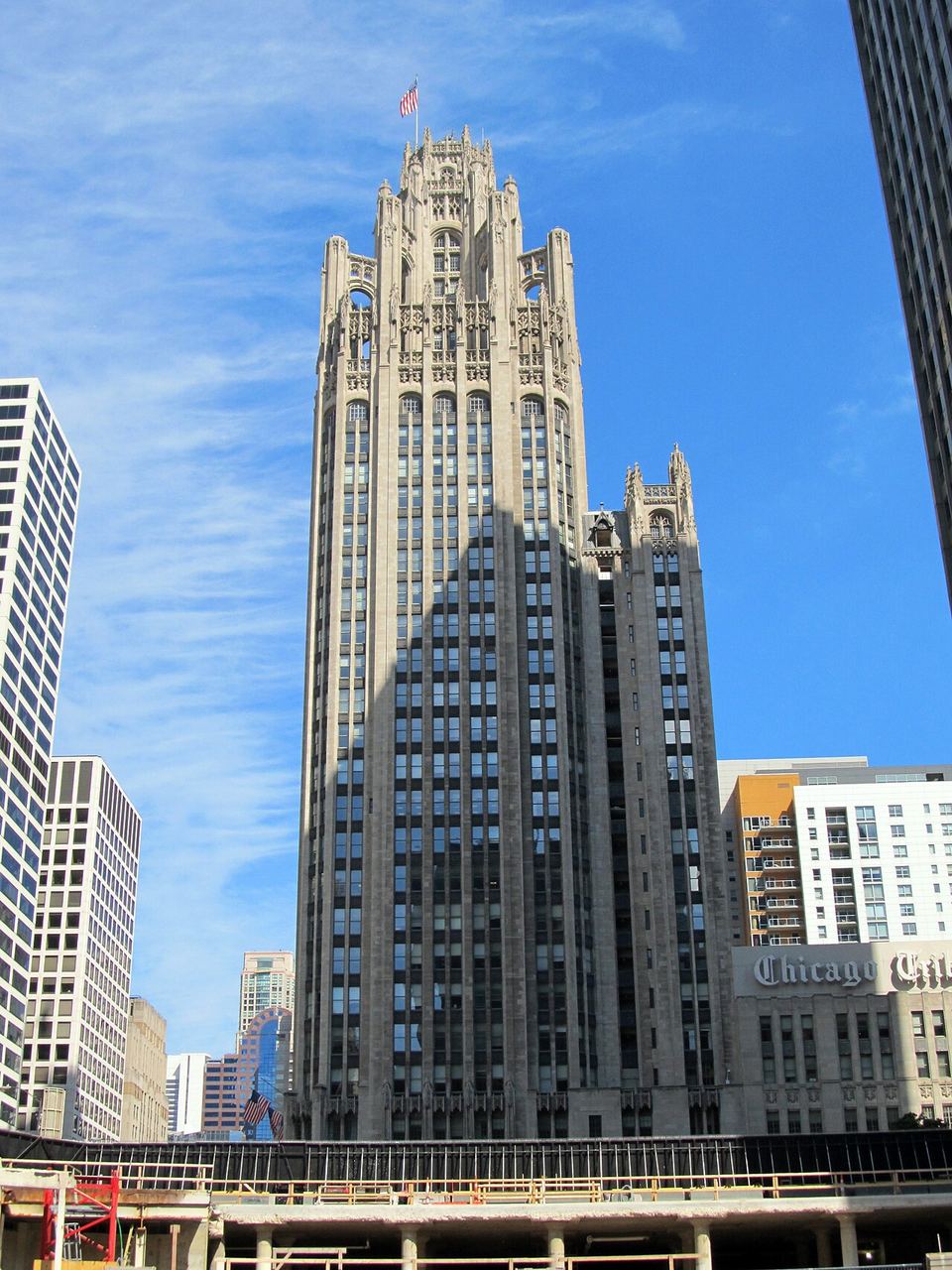
You're outside Tribune Tower, at 435 North Michigan Avenue, the pale stone skyscraper that was home to the Chicago Tribune. Tip your head all the way back and find the top. That ring of stone buttresses, rising like a crown with no spire, is where this story ends.
In 1922 the Tribune was turning 75, and its owners, Robert R. McCormick and his cousin Joseph Patterson, wanted a new headquarters. So they threw open a contest to the whole world. The prize money totaled $100,000, with $50,000 for first place, and the brief was modest: design "the most beautiful and distinctive office building in the world."
More than 260 entries poured in. Walter Gropius sent one. So did Adolf Loos. And somebody submitted a tower surmounted by a Mount Rushmore-like head of an American Indian. As a publicity stunt, the contest worked brilliantly for months, and the entries still mark a turning point in American architecture.
The winners were two New York architects, John Mead Howells and Raymond Hood. Their design is what you're looking at: a neo-Gothic tower with buttresses near the top, its crown modeled on the Butter Tower of Rouen Cathedral in France.
Here's the turn. The entry many people judged the best came second. Eliel Saarinen, a Finnish architect, sent a design with no Gothic costume at all. Architects like Louis Sullivan preferred it. Saarinen took home $20,000 and a loss that changed the future. His tower strongly influenced the next generation of skyscrapers, including Raymond Hood's own later work on the McGraw-Hill Building and Rockefeller Center. The man who won went on to build like the man who lost. This tower, finished in 1925, is a late example of the neo-Gothic skyscraper, perhaps the last important one.
The architects did leave a joke near the front door. Look for a carving of Robin Hood, for Hood, and a howling dog, for Howells. The sculptor, Rene Paul Chambellan, slipped in a frog among the gargoyles to represent himself, jokingly, since he was of French ancestry.
The building's walls hold one more surprise: fragments from famous sites around the world are set into the stone at street level. McCormick wanted the most beautiful building in the world, and he built the world into it.
The Tribune moved out in June 2018, and the tower was converted into condominiums.
Hear it where it happened. It plays at stop 4 of Chicago Christmas Walk: Magnificent Mile Lights to the Christkindlmarket (3 min), narrated as you walk. Unlock the tour for the audio, or try stop 1 free first.