The whole storyStop 3 of Chicago Christmas Walk: Magnificent Mile Lights to the Christkindlmarket
A Castle Built to Hide a Pipe
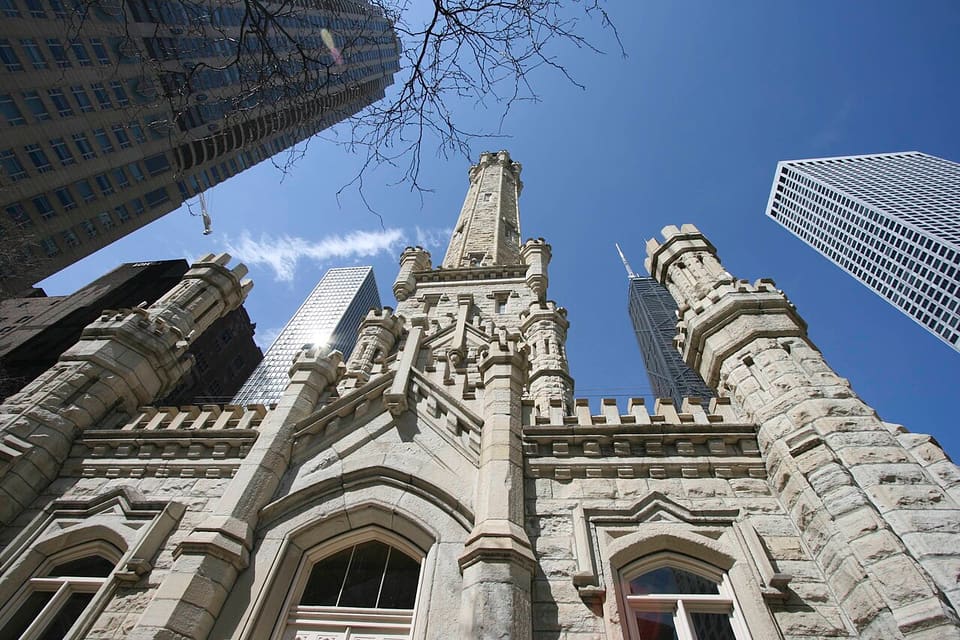
You're on North Michigan Avenue, and the little pale stone castle in front of you, in the small park named for former mayor Jane Byrne, is the Chicago Water Tower. Look up past the turrets to the slim central tower rising out of the middle. That tower exists to hide something.
When the Water Tower went up in 1869, Chicago was trying to give a fast-growing city clean water. Pumps drew water in from Lake Michigan, and inside this tower stood a tall iron standpipe, part of that pumping system, which helped keep the water pressure steady. Nobody wanted a bare iron pipe on the skyline, so the architect, William W. Boyington, wrapped it in stone and made it look like a medieval fort. In other words, the most famous castle in Chicago is a very elegant piece of plumbing.
Two years later, in October 1871, the Great Chicago Fire broke out in a neighborhood southwest of downtown. The summer had been brutally dry, about an inch of rain since early July, and most of the city was built of wood, right down to the sidewalks. Chicago had just 17 horse-drawn steam pumpers to protect the whole place. The fire jumped the river once, then again, and raced into the North Side toward this spot.
This is where the waterworks mattered. Shortly after the fire crossed the main river, a burning timber landed on the roof of the city's waterworks. Within minutes the building was engulfed. The water mains went dry, and the firefighters had nothing left to fight with. From then on, the fire simply moved from block to block. By the end, about 300 people were dead, more than 100,000 were homeless, and 17,000 buildings were gone.
The neighborhood around this tower burned to the ground. The tower itself, solid stone, came through standing.
Now, the legend. People often say the Water Tower was the only building left standing. The Chicago Architecture Center calls that a myth; other structures survived too. What really happened is that the Water Tower became the survivor everyone chose to remember, the one that stood for a city that refused to stay burned. The fire's origin has its own myth, by the way: Mrs. O'Leary's cow. City officials never found the cause, and in 1997 the City Council formally cleared Catherine O'Leary.
Today the tower is on the National Register of Historic Places, and it's the second-oldest water tower in the country, after one in Louisville. Look again at those turrets, with the glass towers of Michigan Avenue all around them. Everything you see nearby went up after the fire. This was here first.
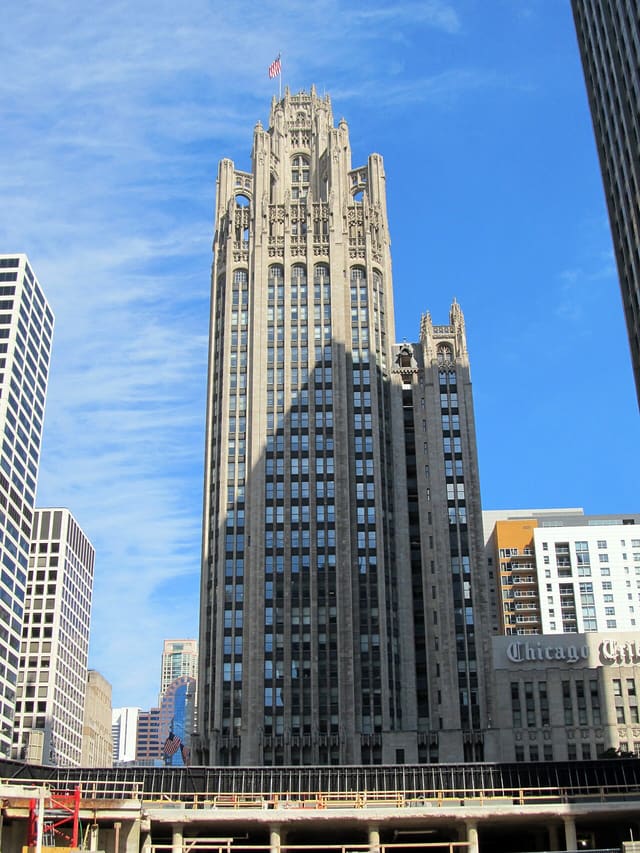
When you're ready, walk south down Michigan Avenue, about 12 minutes, to Tribune Tower, a Gothic skyscraper with pieces of famous buildings from around the world set into its walls.
Hear it where it happened. It plays at stop 3 of Chicago Christmas Walk: Magnificent Mile Lights to the Christkindlmarket (3 min), narrated as you walk. Unlock the tour for the audio, or try stop 1 free first.