Gettysburg Battlefield Driving Tour
Follow the battle from the ridges west of town to the Union line and the fields fought over on its flanks.
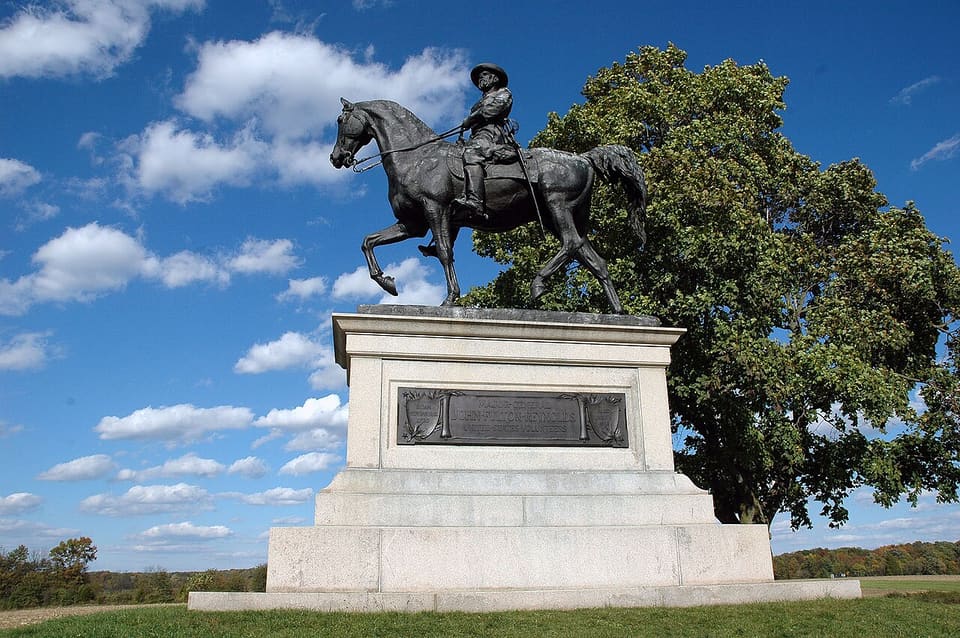 Photo: Photo: Henry Kirke Bush-Brown (Public domain), via Wikimedia Commons
Chambersburg Road, Cumberland Township, Pennsylvania
McPherson Ridge is a landform used for military engagements during the 1863 Battle of Gettysburg, when the I Corps of the Union Army had a headquarters on the ridge and was defeated by the Confederate division of Major General Henry Heth.
You're on McPherson Ridge, just west of Gettysburg, where the Chambersburg Pike crosses a long, gentle rise in the farmland. It doesn't look like much. Look along the road toward the west, where the ground dips away, and then at the dark line of woods just south of the pike. On the morning of July 1, 1863, this modest swell of ground was the whole Union army's front door.
The man holding that door was John Buford, a Union cavalry general from Kentucky. He had ridden into Gettysburg the day before, and his troopers camped just east of this ridge. Buford understood something about the town. Every road in the county met there, and just behind it was high ground, the hills south of town. Whoever held that high ground would have the better battle. So Buford decided to buy time.
Around 8 that morning, Confederate infantry came down the pike from the west. About 7,000 of them, from the division of Major General Henry Heth. Buford had about 3,200 cavalrymen. He had them get off their horses and fight on foot from this ridge, firing, falling back, firing again, making a small force look like a stubborn one. They held for roughly two and a half hours.
Here's the part that makes this morning strange. Buford and Heth knew each other. They overlapped at West Point, a class apart. And in 1855, out on the Plains, they had served together at Ash Hollow, in Nebraska, a fight against the Sioux. That's worth saying plainly. Ash Hollow is also called the Harney Massacre, after the commander, and the soldiers killed dozens of Lakota people there, many of them women and children. Eight years later the two young officers from that campaign stood on opposite ends of this road.
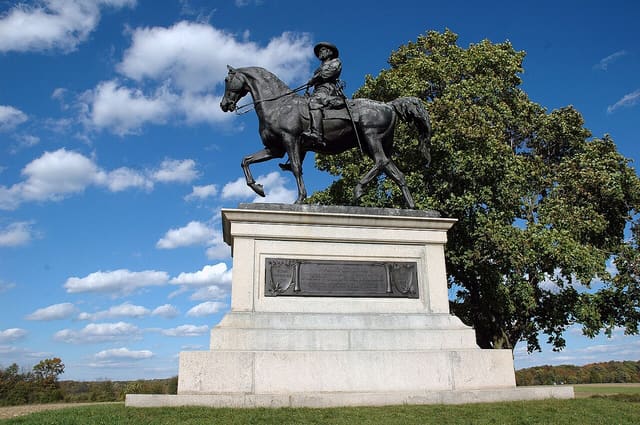
Buford's gamble worked. Around 10:30, Union infantry of the I Corps arrived, led by Major General John Reynolds, a Pennsylvanian from Lancaster and one of the most respected commanders in the army. Reynolds pushed his men into those woods south of the pike. Almost at once he was shot and killed. He was the first general to fall at Gettysburg, and a monument to him stands in that woodlot today.
By afternoon, Heth's division and the Confederate troops behind it had driven the I Corps off this ridge and back toward town. On paper, the Union lost the first day here. But Buford's morning, and the infantry's long afternoon, had bought what he wanted: the high ground south of town stayed in Union hands.
Buford never saw how much it mattered. He fell ill that fall and died in December 1863, at 37, just after Abraham Lincoln promoted him to major general for this morning's work.
And the ridge's name? It came from the McPherson family farms. One of them belonged to Edward McPherson, an attorney, who later sat on the battlefield's memorial association and helped sell this ground for a park avenue. He spent years turning his own fields into a place to remember.
When you're ready, drive southeast on US 30, turn left onto Reynolds Avenue North, then left onto Buford Avenue, about 5 minutes. A flame waits there that old veterans of both sides came to see lit.
Follow the battle from the ridges west of town to the Union line and the fields fought over on its flanks.
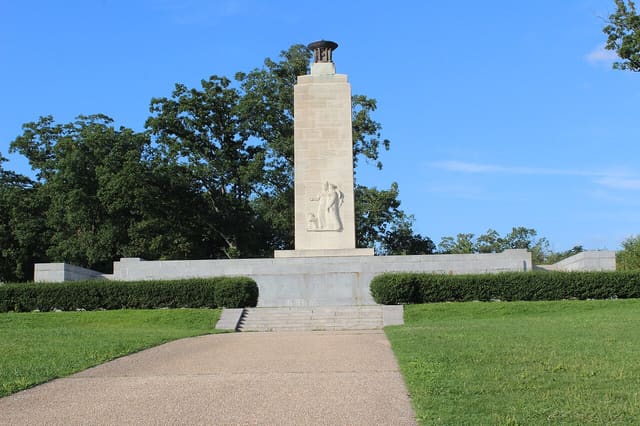
The Eternal Light Peace Memorial is a 1938 Gettysburg Battlefield monument dedicated on July 3, 1938, commemorating…
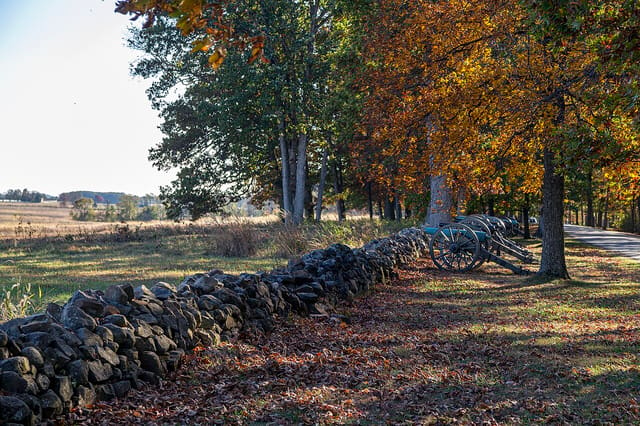
Seminary Ridge is a dendritic ridge that served as an area of military engagements during the Battle of Gettysburg…