Stories
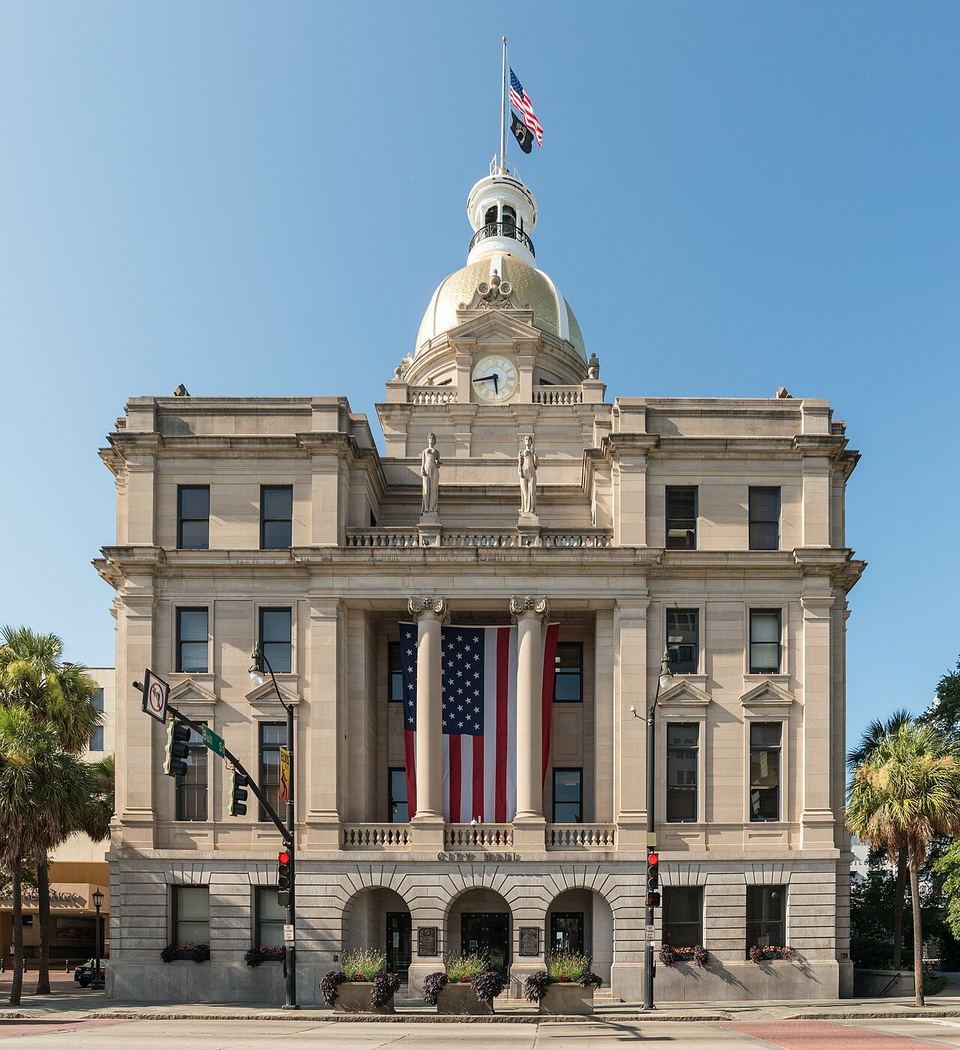
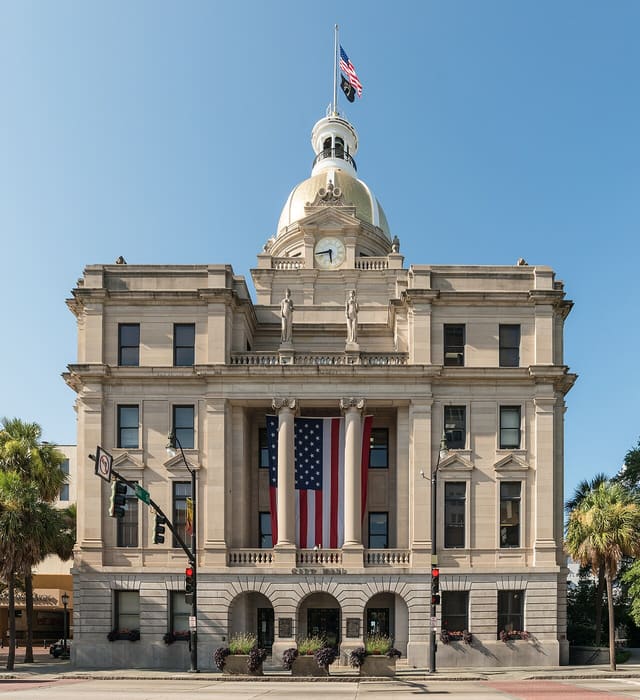
Savannah City HallPhoto: DXR, CC BY-SA 4.0, via Wikimedia Commons
Walking tour · Savannah

Savannah Walking Tour: City Hall to Forsyth Park

Squares, houses and the people who shaped Savannah

1 h 20 min8 stops2.3 mi

Start the walk

Stop 1 is free, no sign-up. All 8 for $4.99, refunded within 7 days if it isn't for you.

See the 8 stops

The 8 stops

  1. 1Start hereFree

    Savannah City Hall

    A Gold Dome and Four Missing Chariots

    Free sample · 2:41
    0:002:41

    You're standing on Bay Street at the top of the bluff, in front of Savannah City Hall. Look up at the dome. That gleam is real gold leaf, laid over the copper in 1987. Now drop your eyes to the four corners of the roofline. Notice how bare they are. Hold that thought.

    For more than a century, this spot belonged to a different building, the City Exchange, built in 1799. It was where merchants traded and where the city did much of its business. But it was never built purely to be a city hall. By the early 1900s, Savannah's mayor, Herman Myers, wanted something better. Myers was a mayor who loved public works, and he had big ideas about what this one should say.

    So in 1904 the old Exchange came down. On August 11 of that year, the city laid a new cornerstone in a large ceremony. The architect was Hyman Witcover, who designed several other buildings around Savannah. He gave the city a Renaissance Revival hall of limestone and granite, crowned with that dome. It cost more than 250,000 dollars, and it opened on January 2, 1906.

    Mayor Myers did not undersell it. He said it would typify, quote, "the twentieth century Savannah, the Savannah of indomitable energy, of punishing progressiveness." Punishing progressiveness. It is a phrase that sounds less like a slogan than a workout plan.

    And here's where those empty corners come in. Witcover's plans called for four statues of chariots, one on each corner of the roof. Picture it: bronze horses charging off the top of City Hall toward the river. The money ran out. The chariots never came. So the monument to indomitable energy was finished on a budget, which may be the most honest thing about it.

    This was also a first. In all the years since Savannah's founding, this was the first building the city had ever put up solely to serve as its seat of government. Before, the city worked out of shared and borrowed spaces.

    It's worth knowing what this bluff was before it was civic. Behind City Hall, the ground drops about 40 feet to River Street and the old warehouses of Factors Row. Factors were traders who sold goods on commission, and here the goods were mostly cotton. That cotton was grown and picked by enslaved people, and the wealth it made built much of the city around you. The government Myers was so proud of rose on a riverfront that slavery had paid for.

    So take one more look up. A golden dome, four empty corners, and a mayor's grand promise, half kept.

    When you're ready, walk south about two minutes to Johnson Square, the very first square in the plan that shaped this whole city.
The whole walk

8 stories across Savannah

1 h 20 min · 8 stops · 2.3 mi

Starts at Savannah City Hall and ends at Forsyth Park.

  • Plays right here in your browser, or in the app
  • One purchase for your group, on up to 4 phones
  • Refunded within 7 days if it isn't for you

Plan your walk

    How long

    About 1 h 20 min for 2.3 mi with all 8 stories. Going inside the sites adds time.

    Start and finish

    Starts at Savannah City Hall and ends at Forsyth Park.

    Add it to my calendar

    Know someone who'd love this walk? or see more gift ideas.

    Questions people ask

    Can you walk Savannah on your own?

    Yes. The historic district is a grid of squares a few blocks apart, and this walk plays a story at each of eight stops, from City Hall on the river bluff to Forsyth Park.

    How long does the tour take?

    About 1 hour 20 minutes in all, walking 2.3 miles and listening to all eight stories.

    Where is the Forrest Gump bench?

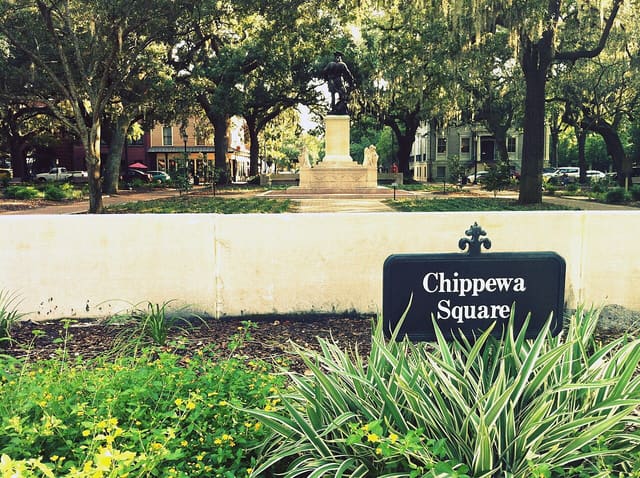
    The bench scene in Forrest Gump was filmed in Chippewa Square, the sixth stop. The bench itself was a film prop and isn't there.

    Where does the tour start and end?

    It starts at Savannah City Hall and ends at Forsyth Park.

    What stops are on the tour?

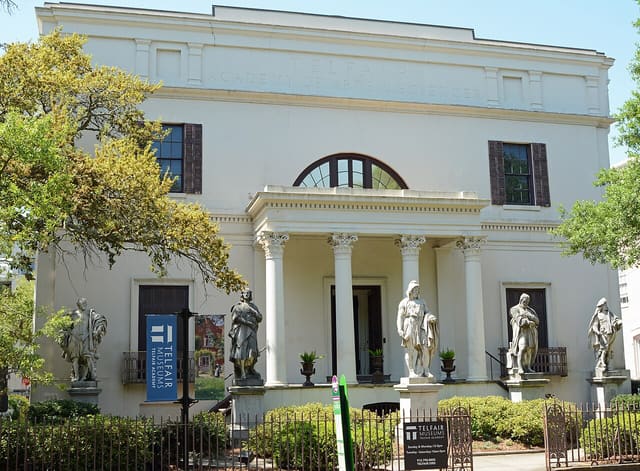
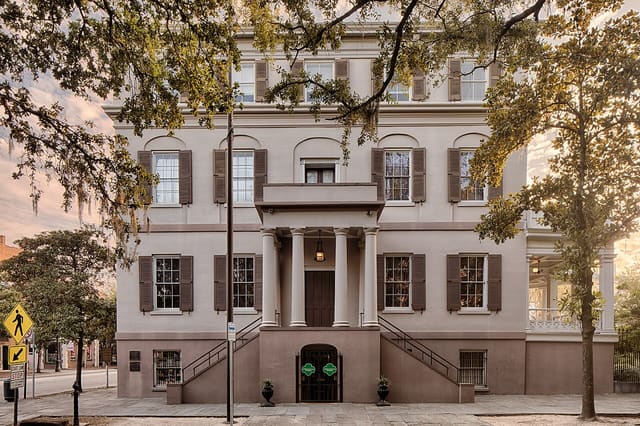
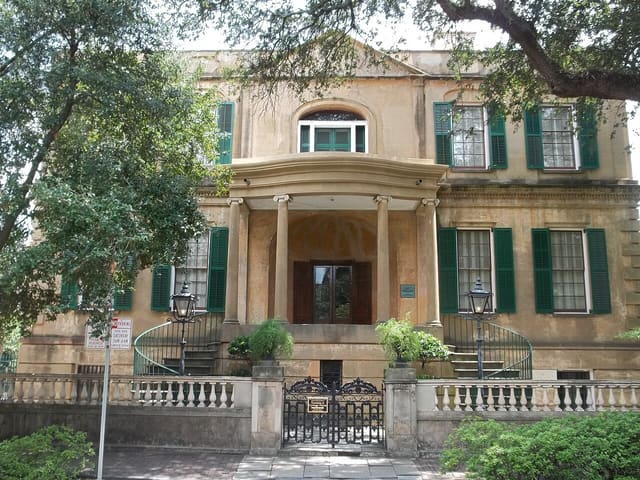
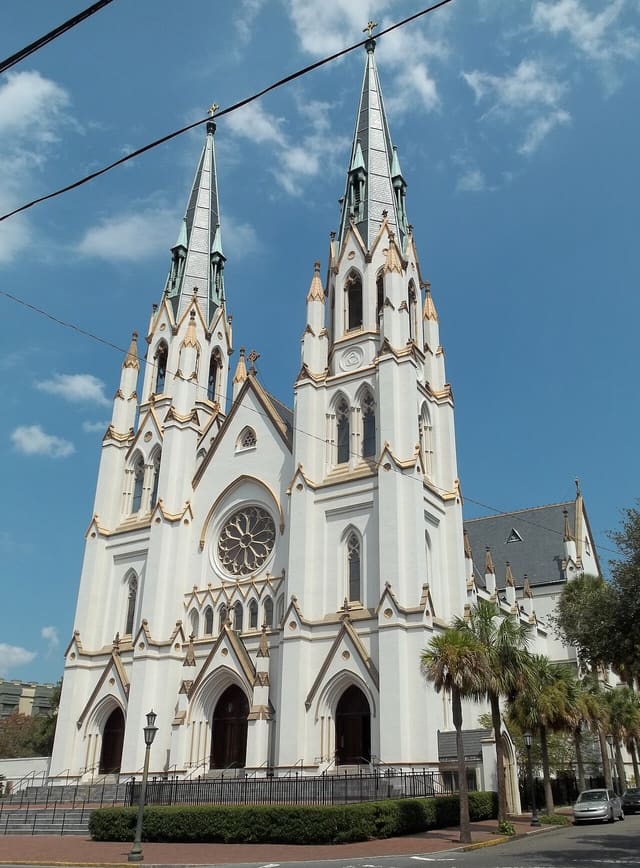
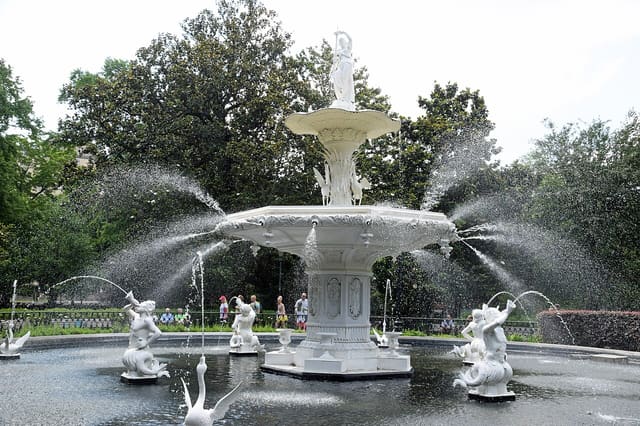
    The eight stops are Savannah City Hall, Johnson Square, Telfair Academy, Juliette Gordon Low Birthplace, Owens-Thomas House, Chippewa Square, Cathedral of St. John the Baptist and Forsyth Park.

    Do I need the app?

    No. After you unlock, the tour plays right here in your browser: keep the screen on and tap each stop. The free Stories app adds GPS auto-play, so each story starts by itself when you arrive, with your phone in your pocket, and works offline.

    How many people can listen?

    One purchase covers your group on up to 4 phones. Share the link from your receipt, or everyone can sign in to the app with the same email.

    Does it work offline?

    In the app, yes: download the tour on Wi-Fi before you go. In the browser you need a signal, which is fine on most city streets; open the tour once before you leave.

    When can I start?

    Any time. It is self-guided, so there are no departure times and no group to keep up with. Pause for coffee and pick up where you left off.

    Can I give this tour as a gift?

    Yes. Tap "Give it as a gift", type their email and a note, and pick the day it arrives (Christmas morning works). They open it in their phone's browser; you get the receipt.

    Can I get a refund?

    Yes. If the tour did not work for you, email support@getstories.app within 7 days and we will refund it.

    Who made this tour?

    Stories writes each tour from public sources, checks every claim against them, and narrates it with a synthetic voice. The sources are listed at the end of this page; if you spot a mistake, tell us at support@getstories.app.

    About this tour and its sources

    You're standing in front of Savannah City Hall, on the bluff above the river. Look up at the dome. That's real gold leaf, added in 1987, on a building designed by the architect Hyman Witcover. Behind you, the land drops toward the water, and this is where the city began.

    In 1733, James Oglethorpe, the English founder of the Georgia colony, laid out Savannah's first square, Johnson Square, as the start of a plan: repeating units called wards, each with a central square surrounded by blocks of houses and blocks for public buildings. Oglethorpe settled this site by agreement with the Yamacraw leader Tomochichi. He banned slavery in early Georgia, yet the colony's later story is not so tidy, and you'll meet its hard truths in the houses ahead.

    Here is the question to carry with you: does Oglethorpe's plan still hold? You'll follow it south through his squares, past the mansions built along it, and into the lives of people who bent it, broke it, or saved it. That includes a colony whose 1732 charter barred Catholics, which makes the twin spires of the cathedral on this walk a bit of a plot twist.

    The walk finishes at Forsyth Park. Cross with the lights, and take your time.

    Your first story starts right here, with that gold dome.

    Written from public sources, every claim checked against them, narrated by a synthetic voice. Last checked October 2026.

    Share this walk