The story
The Townhouse That Sold Thousands
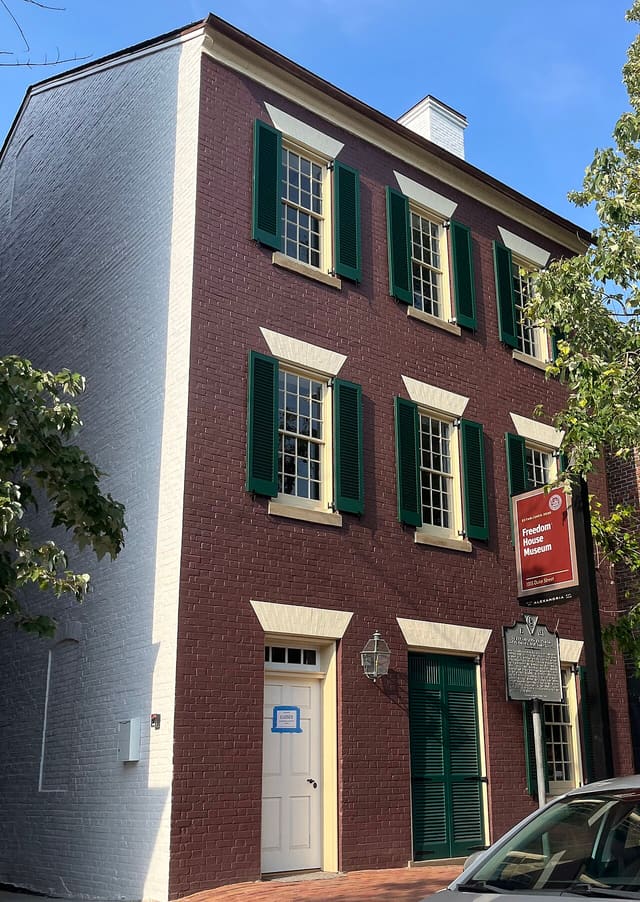
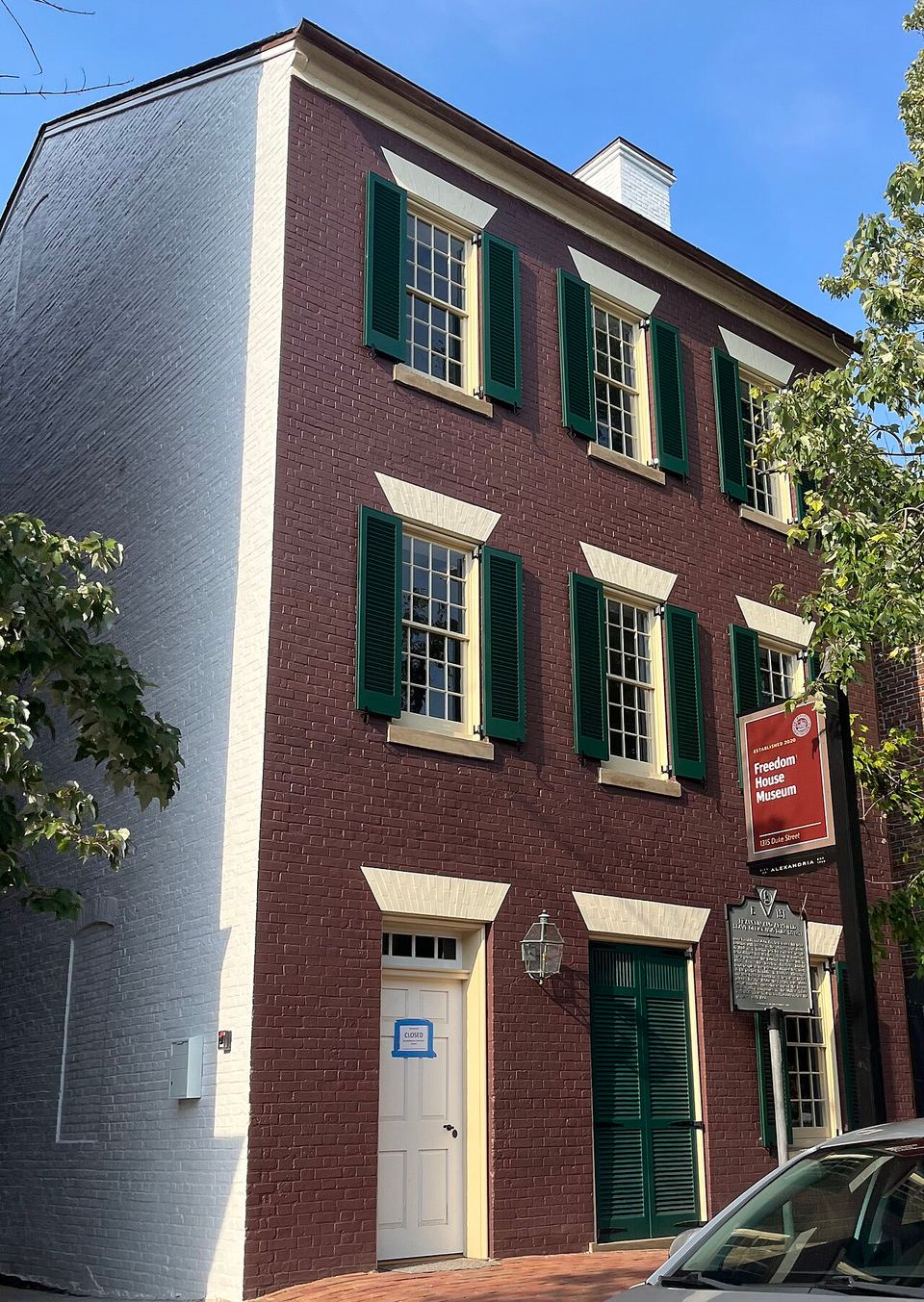
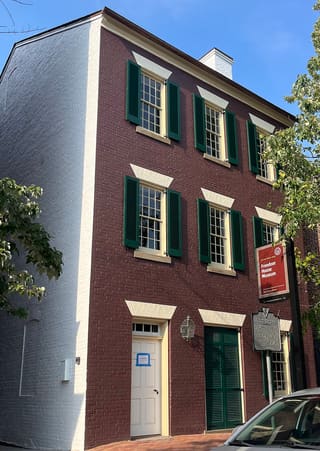
Stop 1 · Freedom House Museum · 3:03You're standing on Duke Street, just west of Old Town, in front of 1315: a tidy three-story brick townhouse with a plain, handsome face. Look at the front wall and notice how the bricks are laid, long sides and short ends alternating in neat rows. That careful pattern is the look of a respectable Federal-era home. It was restored only in 2025, and the reason it was restored is the story of this stop.
The house went up in the 1810s for Robert Young, a brigadier general in the District of Columbia militia. Yes, the District. Until 1846, Alexandria was part of the nation's capital. Young soon ran into money trouble and had to sell.
In 1828 two men took the house. Isaac Franklin was a slave trader. John Armfield was his partner and nephew by marriage. They ran a newspaper notice saying they'd leased the large brick house on Duke Street formerly occupied by General Young. They wanted to buy 150 young Black people of both sexes, between the ages of 8 and 25. Sellers could find them at the house at all times.
So a family home became the Washington-area office of the largest slave-trading firm in the United States. Behind it and to the east, Franklin and Armfield built holding pens with high walls and cells with grated doors and windows. Armfield lived here and ran the buying. He sent agents door to door through Virginia, Maryland and Delaware, asking owners whom they might like to sell. People bought cheaply here were put on the firm's own ships, sailing twice a month, to Franklin in Natchez and New Orleans, where they were sold for more. By the 1830s the firm often sold a thousand people a year. Ship records show at least 5,000 people passed through this one office. Franklin and Armfield separated more families and made more money from it than almost anyone in the country, and became two of the richest men in America.
This is the part the history books often skip. The slave trade wasn't only something that happened in the Deep South. It ran out of a polite townhouse within sight of the Capitol, as an export business.
The partners sold out by 1836, but slave traders owned this property until 1861. That May, Union troops arrived at the office of the last firm, Price, Birch and Company. The traders had fled and taken everyone with them except one old man, chained by the leg to the middle of the floor. The sources don't record his name.
The Army turned the building into a prison, and late in the war it served as a hospital for Black soldiers. Around 1905 someone gave it a fashionable new front. In 2025 the city deliberately removed that, putting back the face it wore during the years of the trade, so that what you see now is exactly what the people held here saw.
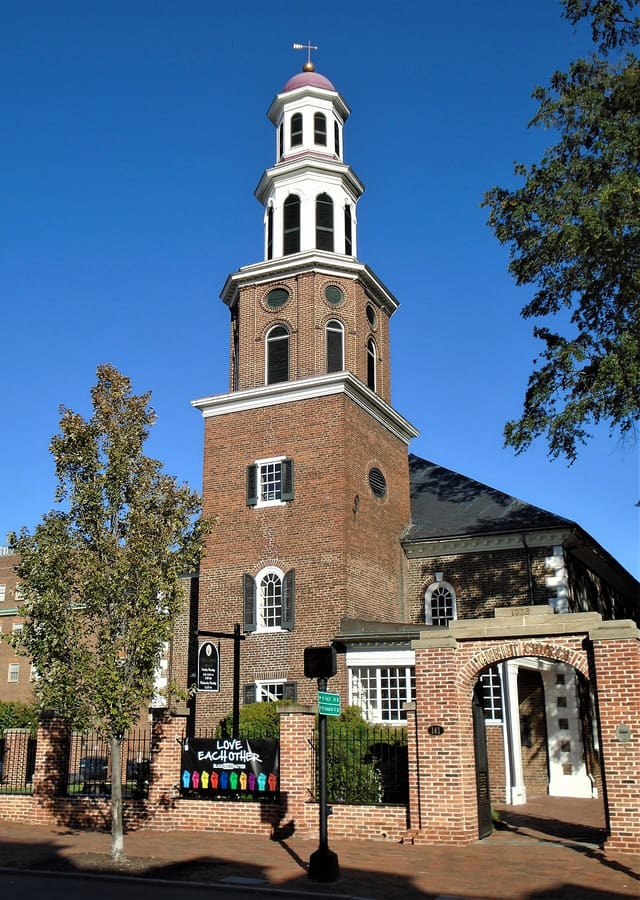
When you're ready, walk east along Duke Street about 13 minutes to Christ Church, where George Washington rented a pew.