The story
The Tower That Wears Its Bones Outside
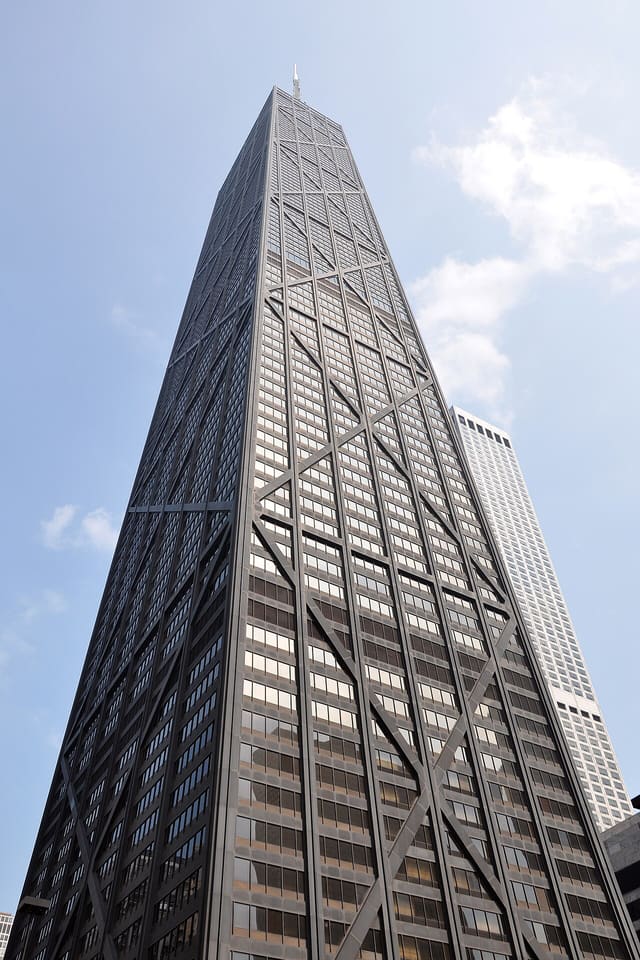
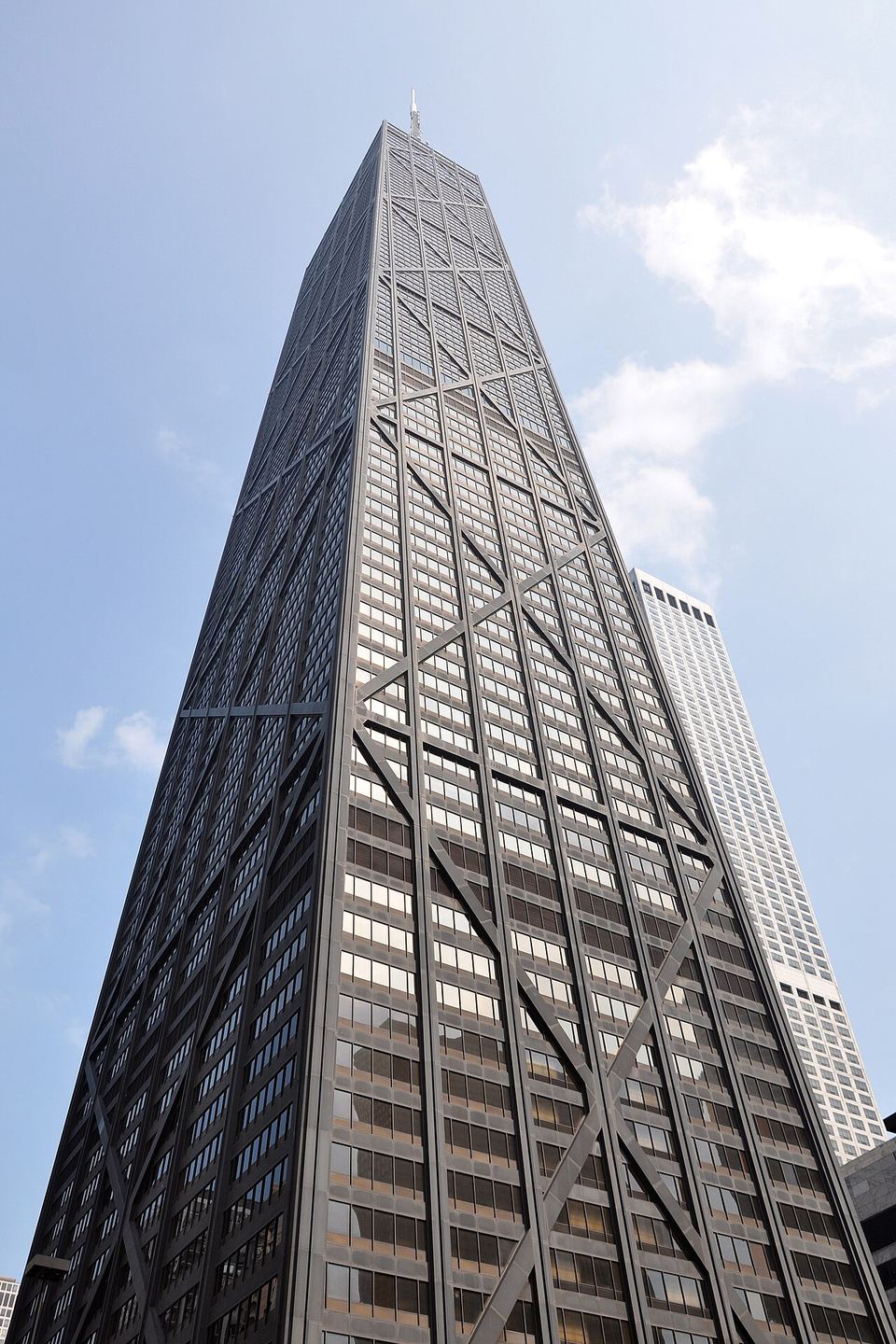
Stop 1 · The John Hancock Center · 2:18You're standing at the north end of the Magnificent Mile, at the foot of the tall black tower Chicagoans still call the Hancock. Tilt your head back and follow the giant X's climbing its sides, one stacked on top of the next, all the way to the twin antennas. Those X's aren't decoration. They're the reason this building exists.
In the 1960s the John Hancock Mutual Life Insurance Company, which commissioned and financed the building, wanted something enormous on Michigan Avenue: a hundred stories, mixing offices and residences in a single tower. Skidmore, Owings and Merrill designed it, with Bruce Graham as designer. The structural engineer, the man who had to keep a hundred stories standing in the wind off Lake Michigan, was Fazlur Rahman Khan.
Khan's answer was to put the structure on the outside. Instead of hiding the bracing inside, he wrapped the tower in a diagonally braced exterior tube. Those huge diagonals are the X's you're looking at. The building's skin is its skeleton, which is why the bones show.
The climb wasn't smooth. In 1967, with the tower about twenty stories up, construction stopped. Engineers had found a flaw in the method used to pour the concrete in stages, and nobody wanted to stack another eighty floors on top of a doubt. Imagine standing here then, looking at a stalled stump of a skyscraper, waiting for an answer.
Now look at how the tower tapers as it rises, wider at the bottom, narrower at the top. It's a mixed-use building, offices and residences under one roof, and the shape is part of what makes it read as a single, bold object against the skyline.
And the name has its own twist. The insurance company's name came off the building, and its official address is now just 875 North Michigan Avenue. Chicago has politely ignored this. Ask anyone on this sidewalk for directions and they'll still point you to the Hancock.
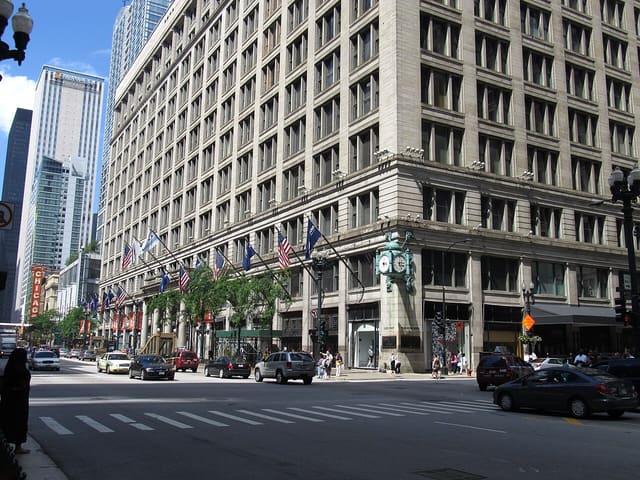
The street at your feet got its own nickname in 1947, when developer Arthur Rubloff gave it the name the Magnificent Mile. Your next stop is just down it.
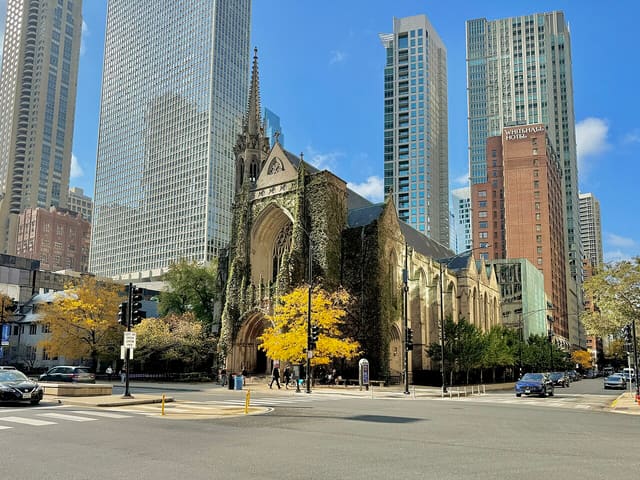
Walk south along Michigan Avenue, about 200 meters and three minutes, to Fourth Presbyterian Church, a stone church that holds its own right across from all this glass and steel.