The story
The Quarrel That Put It Here
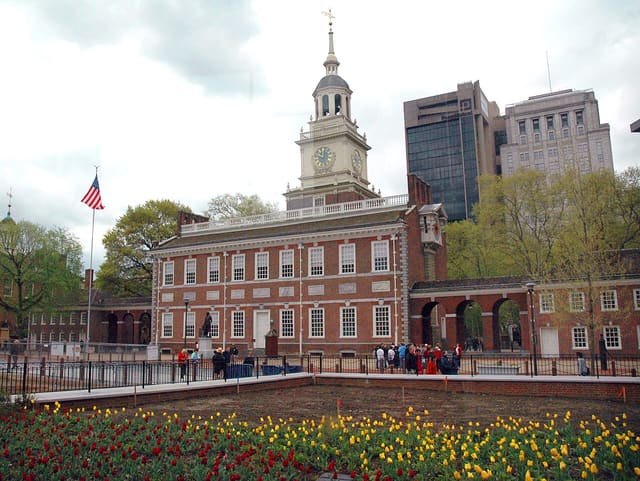
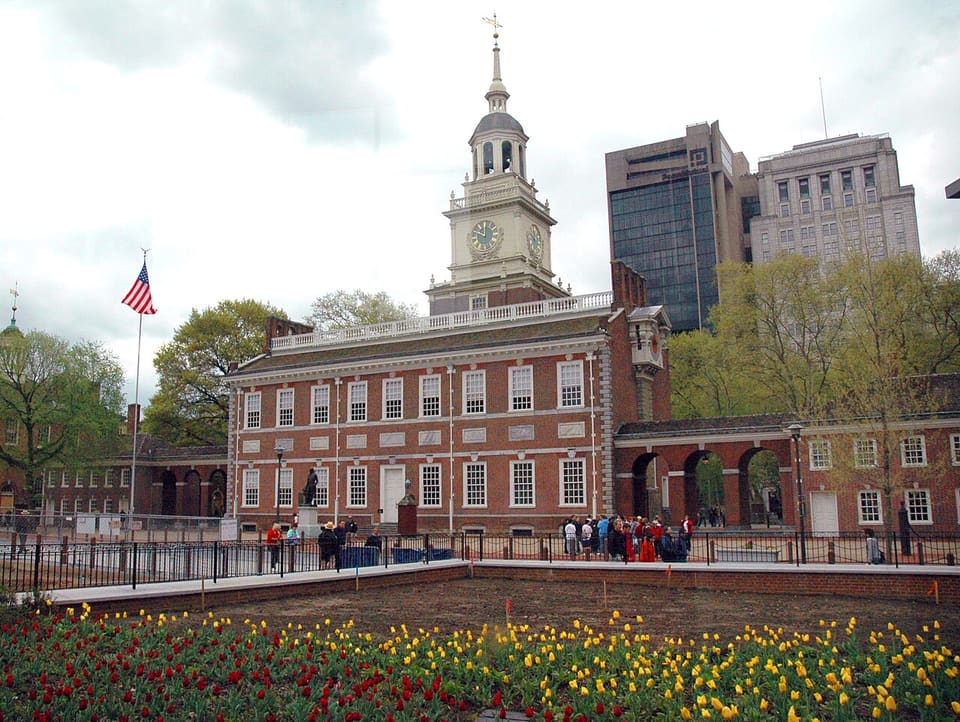
Stop 1 · Independence Hall · 2:54You're standing on Chestnut Street, between Fifth and Sixth, facing the red brick building Philadelphians still sometimes call by its first name, the State House. Look at the tall steeple with the clock face, then let your eyes run out along the low arcades to the two smaller wings on either side. Everything is balanced, left against right. It looks calm and inevitable. It was neither.
In spring 1729, proposals went in for a state house, and the colonial Assembly committed roughly 2,000 pounds to it. A committee that included Thomas Lawrence, John Kearsley and Andrew Hamilton was charged with choosing a site, getting plans, and hiring builders. Two of those three could not agree.
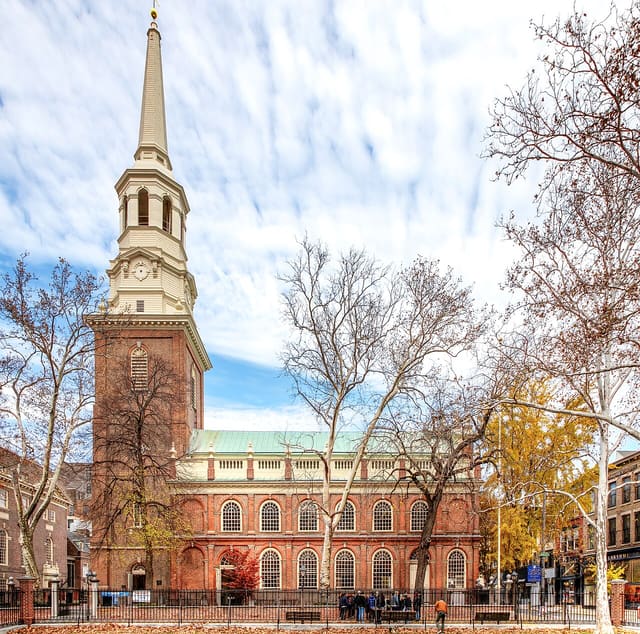
Hamilton was a power in the Assembly. Kearsley, a doctor, is credited with Christ Church and St. Peter's Church. Each man had plans for the State House, and they couldn't agree on where it should go. Kearsley wanted it on High Street, today's Market Street, in the thick of town. Hamilton wanted Chestnut Street, here, at the edge of the city. Lawrence said nothing on the matter of the location, which may have been the most peaceful seat on the committee.
Hamilton had a head start. He and his future son-in-law, William Allen, had been named trustees with authority to buy land, and by October 1730 they had purchased lots on Chestnut Street. By 1732 Hamilton held the deed to one of them. The quarrel was really about a site he already owned. In the end, on August 14, 1733, the Assembly voted to give Hamilton full authority, and the State House would rise right here.
Here's what the plaque leaves out. This gently sloping, overgrown ground at the edge of town had been a camp for American Indians. The building that became a symbol of liberty went up on land Native people had used before the city spread outward. It was, as one description puts it, more suburban than urban.
And the winner didn't get a quick victory. The State House was built piecemeal, over about 20 years, and was completed in 1753. Even then it was seen as "the greatest ornament in the town."
Then came the history that made it famous. The Declaration of Independence was adopted in this building on July 4, 1776. In the summer of 1787, from May 25 to September 17, the Constitutional Convention met inside. Two of the great arguments in American history took place in a building that exists because of an argument between two men and a vote to settle it. Kearsley lost the site. The country got the room.
Walk west, about 310 meters and five minutes, to the next stop.