The story

The Factory That Armed Both Sides
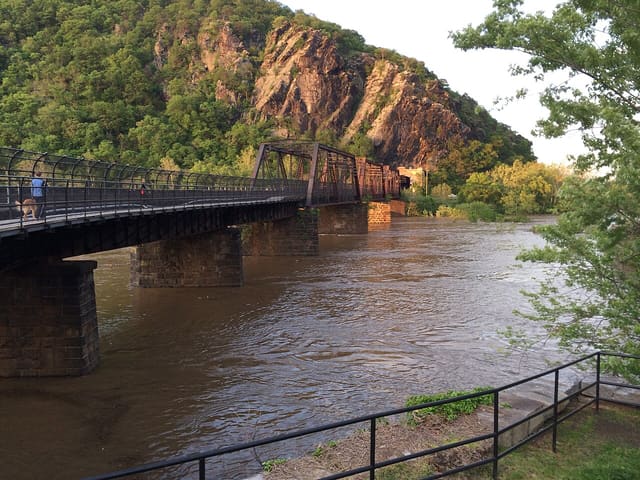
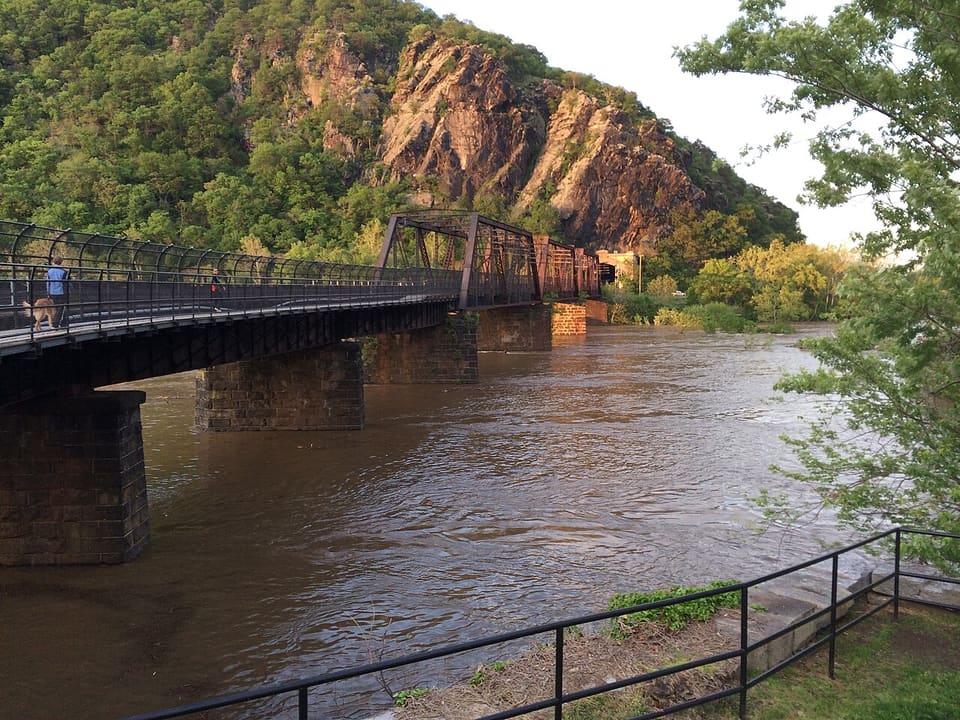
Stop 1 · The Point and the Armory Grounds · 2:42You're standing at the Point, the low tip of Harpers Ferry where two rivers meet. The Shenandoah comes in on one side, the Potomac on the other, and right in front of you they become one river. Now look along the Potomac side, at the railroad embankment running beside the water. Under that bank of earth and track lies one of the most important factories in early America.
It began small. In 1794, Congress told President George Washington to set up arsenals for the new nation, and left the locations largely up to him. Washington had passed through this spot in 1785, looking for a water route west. He believed an inland site would be easier to defend against foreign attack. And there was another pull: his friends had an interest in the Potomac Company, and the sources say that influenced his decision. Strategy was part of it, and so was who he knew.
The government bought 125 acres from the heirs of Robert Harper, the man who ran the ferry that gave the town its name. Construction began in 1799. The opening was modest: one room, about 25 workers, and machinery driven by the river power at your feet.
The place did not stay modest. Meriwether Lewis got most of the Lewis and Clark expedition's guns here, and the blacksmiths built him a collapsible iron boat frame. Between 1820 and 1840, John H. Hall worked here developing interchangeable parts for firearms, a dull-sounding idea that helped change how things are made. By 1859, the armory had about 400 workers and had manufactured some 600,000 firearms.
Now picture April 1861. Virginia has just voted to secede. The outnumbered Union soldiers here, cut off from reinforcements, set fire to their own armory rather than let an advancing Confederate militia have it. Flames spread through the workshops.
Then the townspeople went to work. Many of them earned their living from the armory, and they put out the fires fast enough to save most of the weapon-making machinery. It was a kind of loyalty to their jobs, and it had a heavy result. The Confederates took the machinery and shipped it south by rail, to Winchester and on to Richmond. The South had virtually no small-arms production of its own, and that salvaged equipment became the foundation of Confederate arms manufacturing.
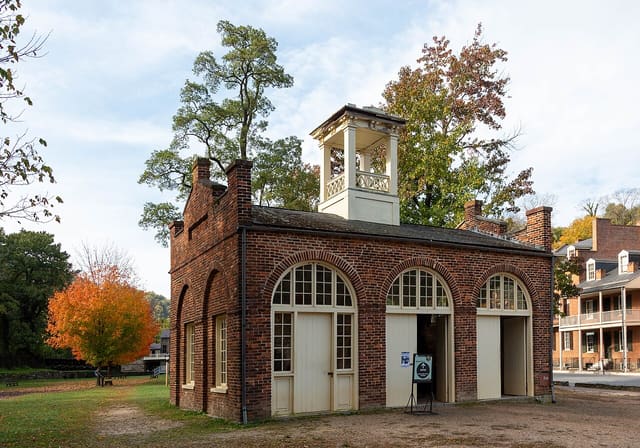
The armory was never rebuilt. The Civil War destroyed it, and the railroad now covers much of the site. Just one of its buildings survived, and it's only a minute away.
Walk west about 70 meters, a one-minute stroll, to John Brown's Fort, the armory's old fire engine house, which today is no longer in its original location.