The whole storyStop 8 of Haunted French Quarter Walking Tour
The General Who Rented a Room
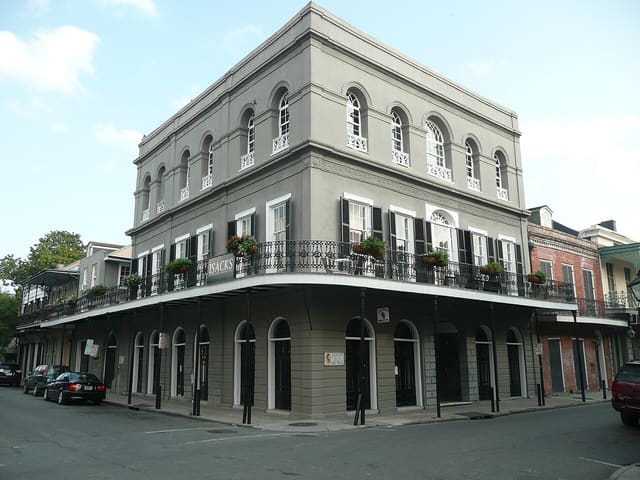
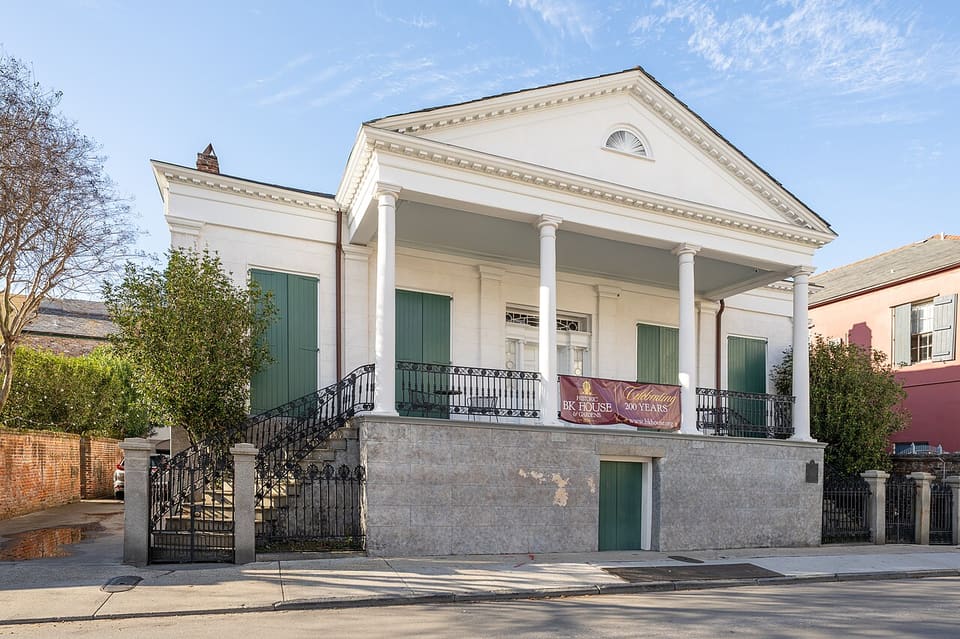
You're on Chartres Street, at the corner of Ursulines, and the house across from the old convent is the Beauregard-Keyes House. Look at its front: a raised cottage dressed up with Greek columns, built in 1826. Now look for the bronze plaque nearby, put up in 1958, and the brick wall wrapping the garden. That wall matters to how this story ends.
First, the ground. This land belonged to the Ursuline nuns you just met. They sold off parcels in 1825, and an auctioneer named Joseph LeCarpentier had this house built here. Like many wealthy Creole households in the Quarter, the families who lived here enslaved people, and the museum inside now tells their story along with everyone else's.
The man whose name is on the door never owned it. Pierre Gustave Toutant Beauregard was a Louisiana Creole, raised speaking French, trained at West Point. In 1860 he married his second wife, Caroline Deslonde, and the newlyweds spent a short honeymoon here, as tenants. The next spring Beauregard commanded the guns that fired on Fort Sumter. He started the Civil War on the Confederate side, fighting to keep slavery, and he fought through all four years of it.
Caroline didn't live to see the end. She died in New Orleans in 1864, after a long illness. So when Beauregard came home in 1866, defeated and widowed for the second time, he came back to this same house and rented rooms. He stayed about two years. Then he moved on, became a railroad man, and got rich promoting the Louisiana Lottery.
By 1925 an owner wanted the house torn down for factories. A group of local women formed the Beauregard Memorial Association and saved it, though not the garden. Then, after the Second World War, the novelist Frances Parkinson Keyes bought it. And yes, her name rhymes with eyes, not keys. She restored the rooms, replanted the garden to its antebellum look, and rebuilt that brick wall.
Then Keyes did something stranger. She wrote Beauregard back into the house. Her 1962 novel, Madame Castel's Lodger, is set right here and imagines the general as a twice-widowed veteran, wrestling with whether to swear loyalty to the Union. Keyes also collected dolls and rare porcelain teapots, and they're still inside, which may be the only thing in this house that has outlived the general's reputation.
We've spent this walk sorting ghosts from records. So here's an honest ending. The presence that lingers at this house isn't a spirit anyone has proven. It's a man brought back on purpose, by a novelist who lived in his old rooms, and by a museum that now sets him beside the people who were enslaved here. That's how the Quarter is really haunted: by what we choose to remember, and how.
That's the end of our walk. The Quarter keeps its stories in its walls, so take your time heading out, and keep looking up.
Hear it where it happened. It plays at stop 8 of Haunted French Quarter Walking Tour (3 min), narrated as you walk. Unlock the tour for the audio, or try stop 1 free first.